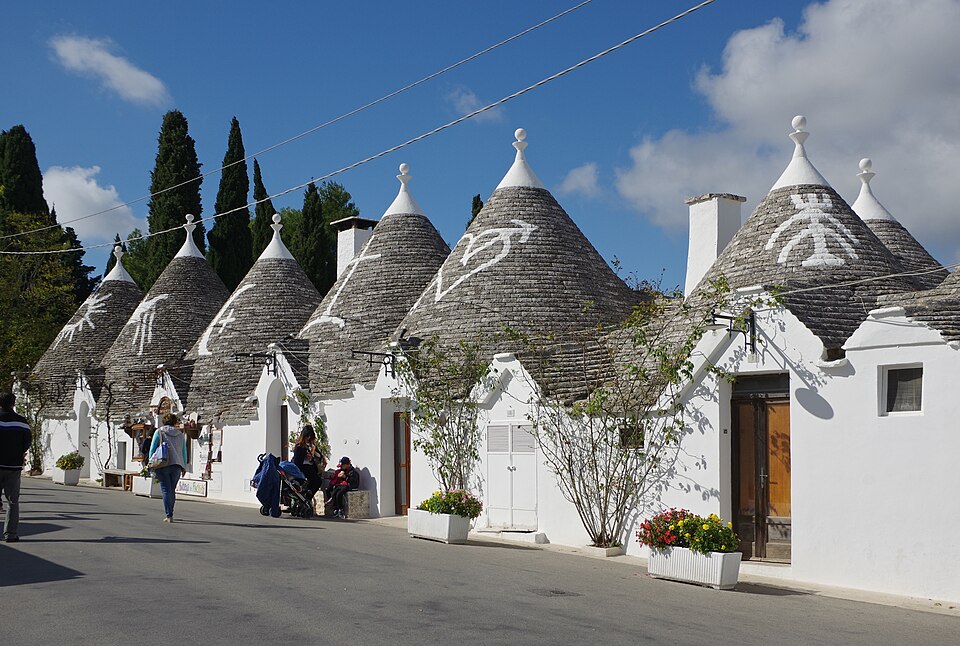
Alberobello: Where Stone Cone Meets Living Roof
I stand in the upper district at 8:00 on a June morning. The whitewashed walls still hold the night’s cool. An espresso costs one euro fifteen at a small bar tucked between two cone-shaped roofs. I look outward — row upon row of dry-stone dwellings climb the slope, smooth grey cones rising from bright white bases, some topped with painted symbols, all fitted together without mortar. Alberobello sits in the Valle d’Itria in central Puglia, home to the densest collection of trulli in the world. People come for the shapes. They find a settlement built not for show, but for survival — simple, clever, and still lived in centuries later.
Why Alberobello Matters
The trulli tradition grew from local need. Limestone lay everywhere — cleared from fields and stacked into walls. Conical roofs shed rain and resisted wind. In past centuries, local rulers taxed permanent dwellings; dry-stone construction could be taken apart quickly, helping families avoid payment. Over time the settlement grew, and families added rooms, passed homes down, and painted symbols on roofs for protection or pride. Today the district is a UNESCO World Heritage site — preserved, recognised, and visited worldwide. That fame brings real pressure. The main lanes fill fast by mid-morning. Some trulli have become souvenir shops rather than homes. Restoration balances authenticity with tourism — and that balance is delicate.
The Best Time to Experience Alberobello
Late April through June brings fresh green valleys, blooming wildflowers, and thin crowds. Temperatures sit between 13°C and 25°C (55°F–77°F). Morning light hits the white walls and grey cones beautifully. July and August warm to 21°C and 32°C (70°F–90°F). Stone absorbs heat and the narrow lanes feel crowded from morning until late. September offers golden light and softer days — 17°C to 28°C (63°F–82°F). The air stays clear and visitors thin out. Early October remains mild — 14°C to 23°C (57°F–73°F) — but evenings cool fast. Winter holds quiet, crisp days: 6°C to 14°C (43°F–57°F). You may share the steep lanes with only a handful of locals. Arrive before 9:00 AM any time of year — that is when Alberobello feels most itself.
Approximate Budget for a 7-Day Trip
Prices below are per person, in euros, based on staying in Alberobello or nearby.
- Accommodation: 7 nights in a trullo or guesthouse — €75–165 per night. Total: €525–1,155. Staying in Martina Franca or Locorotondo costs 30–40% less; driving or taking a bus in takes 15–20 minutes longer.
- Food & Drink: Breakfast, two meals daily — €28–52 daily. Total: €196–364. Restaurants right on the main tourist lanes charge premium prices; walk one lane back for home-made orecchiette, grilled meat, and local white wine at fair rates.
- Transport & Tickets: Train from Bari — €6–12 return; local bus — €1.50 per ride; trullo museum entry — €3–5. Parking near the historic districts is limited and fills fast — arrive early or use public transport.
- Activities: Valle d’Itria villages, olive oil estates, nearby caves — €25–55.
- Miscellaneous: Water, hat, sturdy walking shoes — €12–22.
Total estimated 7-day cost: €782–1,598
"Exclusive trullo access" and private guided tours are often overpriced. Every district, museum, and viewpoint is open to standard entry. Wandering slowly lets you absorb the quiet atmosphere far better than keeping up with a group.
Essential Alberobello Experiences
- Upper District Dawn Walk — Climb to the highest lanes before crowds build. Cones stretch down the slope in every direction — white, grey, and still. It feels timeless, quiet, and unforgettable. Skip if you sleep late; after 10:30 AM the atmosphere shifts noticeably.
- Trullo Sovrano Visit — Step inside the only two-storey trullo in town. Stone walls, wooden beams, and domestic spaces preserved as they were lived in. It shows how families occupied these homes — simple, functional, and full of life.
- Valley View at Sunset — Stand above the lower district as the sun dips low. White walls turn warm gold and cones stand silhouetted against the sky. Most day-trippers have left. Alberobello feels peaceful, beautiful, and entirely yours.
- Sacred Mountain of the Trinity — Walk up to the small church on the ridge. Panoramic views stretch across both historic districts and the surrounding countryside. It puts the settlement in perspective — a cluster of homes in a wide green valley.
- Local Meal in a Trullo — Eat inside a family-run establishment. Fresh pasta, seasonal vegetables, and grilled meat. The low stone ceiling feels close and warm — a reminder of how life unfolded here for generations.
- Lower District Quiet Lane — Wander the quieter side streets. Fewer shops, more doors open onto courtyards, laundry strung between cones, and people going about their day. This is where the community still lives — genuine and unpolished.
Hidden Gems Most Travelers Miss
- The path circling the outer edge of the upper district stays quiet all morning. Views down over rooftops and across the valley open unexpectedly. Very few visitors walk this way — just locals heading to work.
- The small courtyard beside the church has stone benches and shade. Cones frame the sky above. It feels private and peaceful — no ticket needed.
- The lane running behind the main museum has preserved trulli with no commercial frontage. Plain, solid, and still lived in. It shows the architecture without the souvenir layer — authentic and calm.
- The "Alberobello VIP Private Trullo & Exclusive Roof Access" is overpriced. Every significant building and viewpoint is open to standard entry or entirely free. Arrive early, walk slowly, and stay late — that is how you truly experience it.
Cultural & Practical Tips
- Arrive before 9:00 AM. The best light, quietest lanes, and genuine atmosphere happen early. After 10:30 AM the dynamic shifts noticeably.
- Respect private homes. Many trulli are still lived in — not all are museums. Keep voices low and do not linger in doorways. If a door is closed, it is not an exhibit.
- Wear sturdy shoes. Lanes are steep, cobbled, and worn smooth in places. You will walk 5–8 kilometres a day — sturdy soles matter.
- Buy souvenirs thoughtfully. Mass-produced items carry little meaning. Support workshops that still work stone or weave locally — the real craft is worth seeking.
- Check opening times individually. Some small museums close early or one day weekly — typically Monday. Plan your route accordingly.
- Book accommodation 2–3 months ahead in July and August. Staying in an actual trullo is popular and rooms sell out fast.
- Walk between districts. The short path connecting upper and lower zones offers changing perspectives — worth taking slowly rather than rushing through.
Essential Visitor Information
Location & Access: Alberobello, Valle d’Itria, Puglia, Italy. Coordinates roughly 40.78° N, 17.24° E. Three ways to arrive: train from Bari — 1 hour 10 mins; drive from Bari — 1 hour; drive from Brindisi — 1 hour 15 mins.
Tickets & Booking: Districts free. Trullo Sovrano — €3–5; museum — €3–5. No booking needed for individuals; reserve accommodation ahead.
Operating Hours: Districts always accessible. Attractions roughly 9:30 AM to 1:00 PM and 3:30 PM to 7:00 PM; some close one day weekly — typically Monday.
Visit Duration: Minimum 2 full days. Recommended 3 days to explore both districts, nearby villages, and countryside without rushing.
Family Suitability: Good overall. Wide views appeal to all ages. Steep lanes and uneven stone make strollers difficult — carriers are better.
Timing: Best seasons are late April–June and September. Best time of day is before 9:00 AM or late afternoon.
Highlights: Upper district at dawn, Trullo Sovrano interior, sunset valley view, Sacred Mountain, quiet lower lane, behind-museum residential street.
Nearby & Day Trip: Locorotondo — 15 mins. Martina Franca — 20 mins. Ostuni — 30 mins. Polignano a Mare — 30 mins.
Conclusion: Travel as Neighbour, Not Just Tourist
Alberobello gives you shapes built by ordinary people, from the land, to make homes. You can photograph the cones and leave. Or you can walk gently, keep your voice low, respect closed doors, and remember — these are not stage sets. They are roofs over real families. Honouring that daily life is the finest compliment you can pay. What is the one humble, beautiful place you would visit promising to treat it like someone’s home?
Comments
Post a Comment