Albert Dock: Where Red Brick Warehouses Meet River Mersey
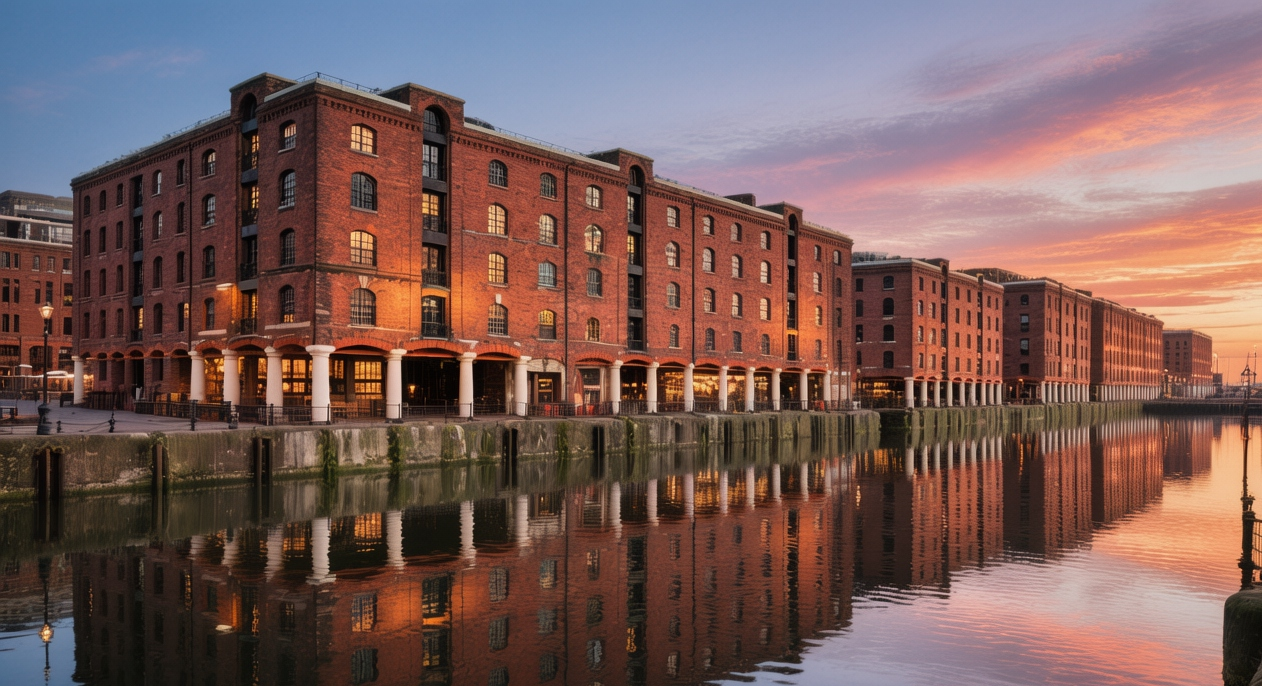
I walk along the quayside at ten past ten on a bright Friday morning in late May. Five storeys of warm red brick rise straight from the water, rows of tall arched windows reflected sharp in the still dock basin. Cast-iron columns support covered walkways; square pavilions mark each corner, solid and symmetrical. A few boats rest moored along the edge. Gulls drift slow overhead. No crowds fill the paths yet. The place feels grand, permanent, and quiet — built to last, built to work, built to stand witness to centuries of trade and change.
Why Albert Dock Matters
Designed by Jesse Hartley and completed in 1846, Albert Dock was revolutionary — the first enclosed dock system in the world built entirely from brick, stone, and iron with no wood anywhere, making it fireproof. Warehouses lined the quays to store tobacco, cotton, sugar, and spices unloaded directly from ships docked within. At its peak, it was one of Britain’s busiest commercial hubs, linking Liverpool to every continent. Traffic declined mid-20th century; the dock closed in 1972 and stood derelict for years. Restoration began in the 1980s, transforming it into galleries, museums, shops, and public space. Today it draws millions, yet popularity brings real strain. Queues form at popular venues; chain businesses have replaced many independent traders; and summer weekends feel crowded beyond comfort. The architecture survives intact, but the working maritime soul has largely gone.
The Best Time to Experience Albert Dock
Late April through May brings fresh green foliage and thinner crowds, temperatures between 7°C and 14°C (45°F to 57°F). Sunlight reflects bright off the water and brick; mornings stay peaceful. June and July offer the longest days — sky stays light until nearly 9.30 p.m. — and temperatures rise to 10°C and 18°C (50°F to 64°F). This is peak season; the dock fills by midday and paths become slow. August stays mild at 11°C to 19°C (52°F to 66°F), but rain falls frequently and the Mersey breeze makes it feel cooler than it reads. September holds steady at 10°C to 16°C (50°F to 61°F), crowds thin quickly, and golden light turns the brick deep amber. This is widely considered the best month to visit. October cools to 7°C and 12°C (45°F to 54°F), days shorten fast, and evenings feel crisp and quiet. November through February the dock quiets. Temperatures sit 3°C to 8°C (37°F to 46°F), many venues reduce hours, and you can walk the full circuit almost alone. March and April lengthen again, 5°C to 11°C (41°F to 52°F), and spring visitors begin returning. Arrive before 10.30 a.m. any time of year; after that, the atmosphere shifts completely.
Approximate Budget for a 7-Day Trip
These figures assume a base in Liverpool city centre, exploring Albert Dock and wider region.
- Accommodation: £70–£115 nightly. Budget room or city guesthouse. £490–£805 for 7 nights.
- Food & Drink: £18–£32 daily — breakfasts, casual lunches, evening meals. £322–£560 total.
- Transport: Walkable from city centre; bus £2 single fare. Train from other UK cities widely available. £30–£100 total.
- Attractions: Dock exterior free. Tate Liverpool free; The Beatles Story £18; Maritime Museum free. £25–£65 total.
- Miscellaneous: £10–£18 daily — gifts, drinks, travel. £70–£126 total.
Total estimated 7-day cost: £937 to £1,756
Restaurants directly facing the water charge premium prices. Walk one street back — same food, lower prices, shorter queues.
Essential Albert Dock Experiences
- Walk the full circuit early — Before crowds arrive, the scale and symmetry show clearly. Brick, iron, and water form one unified design. Skip this after 12 p.m. on weekends; narrow walkways become bottlenecks and you cannot see properly.
- Stand beneath the colonnades — Cast-iron columns line the upper walkways, repeating in perfect rhythm. Light filters through overhead roofs. It feels sheltered and grand, a reminder of the dock’s industrial engineering.
- Visit the Maritime Museum — Housed in the south warehouse, displays trace Liverpool’s seafaring story: ships, passengers, trade, and loss. It feels personal and deeply connected to the stones outside. Allocate at least two hours.
- See art at Tate Liverpool — Galleries occupy the north warehouse, large light-filled rooms making use of original warehouse proportions. The space itself feels as impressive as the work. Entry is free; special exhibitions may charge.
- Watch the water at sunset — Stand at the outer basin edge. The sun dips low, turning brickwork warm gold and the Mersey surface deep red. Arrive 30 minutes early; the best spots fill fast.
- Step inside one quiet courtyard — Passages lead from the main dock into sheltered inner spaces. Most visitors stay on the waterfront. These corners stay calm and show the building’s inner rhythm.
Hidden Gems Most Travelers Miss
- Harbour front outer path — Beyond the main basin, a paved walk runs along the river edge. The warehouses stand whole and unbroken behind you, the Mersey stretches wide ahead. Very few people walk this far.
- Upper colonnade quiet stretch — Most visitors stay on the ground level. The first-floor walkway offers elevated views across the water and down into courtyards. It stays noticeably emptier.
- Gatehouse passage view — The original stone entrance arch frames the dock perfectly. This spot is widely shared online now and has become overrated. Go before 10 a.m. if you want it empty.
- Western basin benches — Tucked away near the modern museum extension, simple seats face back toward the full warehouse facade. You can sit and watch light change across the brickwork without being seen from the main path.
Cultural & Practical Tips
- Visit mid-week. Saturdays and Sundays are crowded and expensive. Tuesday or Wednesday feel like a different place entirely.
- Wear comfortable flat shoes. Quaysides are paved with uneven stone; some sections remain cobbled. Heels are impractical and unsafe.
- Keep away from unrailed edges. The water is deep and cold; currents run strong. Supervise children closely — barriers are low in places.
- Look beyond the dock. The surrounding streets hold quieter historic buildings, independent cafes, and genuine local character. Walk five minutes inland and you will find it.
- Check opening times individually. Venues operate independently; some close Mondays or have seasonal hours. Confirm before arriving.
- Do not expect a working dock. Ships no longer berth here; the bustle of trade has gone. Go to see the architecture and what it represents, not active maritime life.
Essential Visitor Information
Location & Access: Royal Albert Dock, Liverpool L3 4AA — Liverpool city centre waterfront. Three transport options: train to Liverpool Central then 10-minute walk; bus to Albert Dock stop; car to dockside car park — fills fast, arrive early.
Tickets & Booking: Dock exterior & paths free. Individual venues price separately — some free, some paid. Book popular attractions in advance.
Operating Hours: Public access 24 hours daily. Venues generally 10 a.m.–5.30 p.m.; shorter hours winter.
Visit Duration: Minimum 1 hour walking outside. Full day including museums, galleries, and waterfront.
Family Suitability: Mostly level and accessible. Keep children back from water edges. Public toilets and baby change at main locations.
Timing: Best season May or September. Early morning before 11 a.m. offers quietest paths and best light.
Highlights: Full circuit at opening, colonnade perspective, sunset reflection, Maritime Museum, quiet inner courtyards.
Nearby & Day Trip: Liverpool city centre — 10 minutes; Anfield — 15 minutes; Chester — 45 minutes; Manchester — 1 hour; North Wales coast — 1 hour 15 minutes.
Conclusion: Travel with Respect, Not Just Camera
These red brick warehouses survived neglect and decay to stand here today. They were built for trade, not tourism — for ships, not photos. When you visit, look beyond the cafes and shops. Imagine the dock full of vessels, cranes, and workers. What will you remember most — the view, or the story it tells?
Comments
Post a Comment