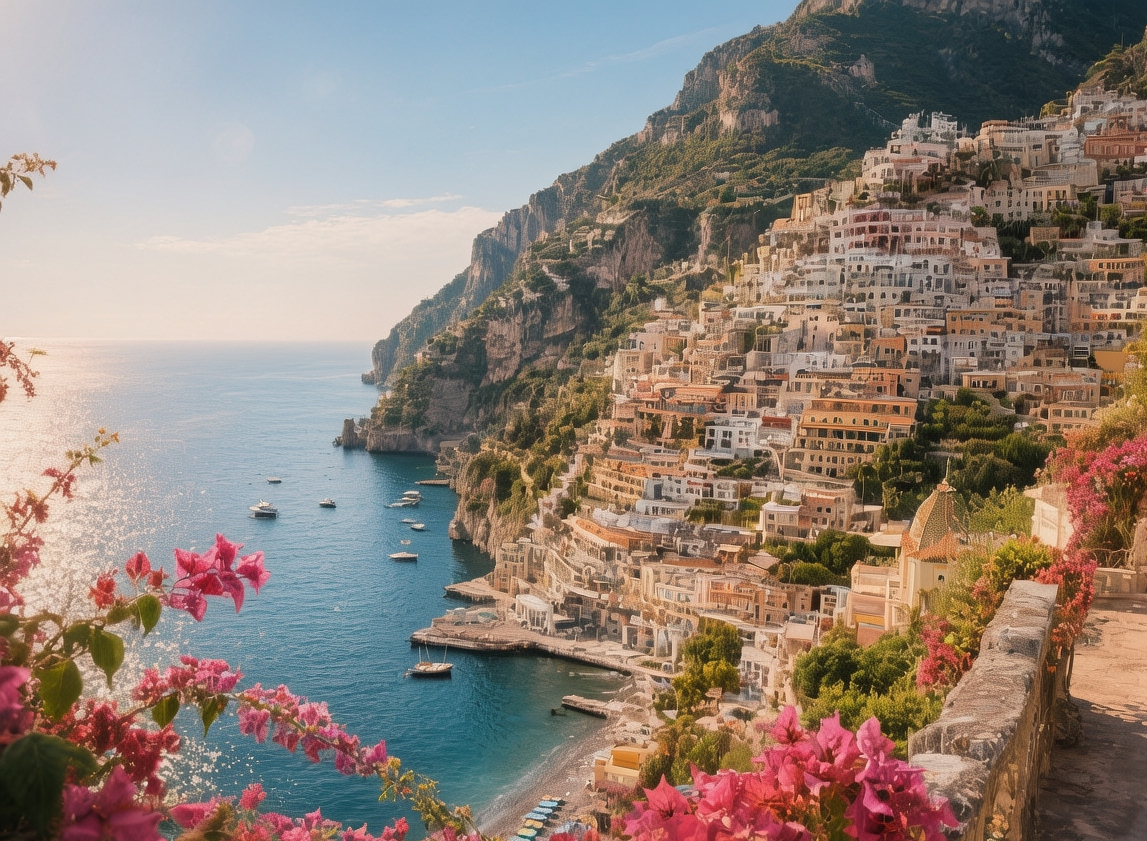
Amalfi Coast: Where Cliffside Life Meets Seaside Light
I board the SITA bus from Sorrento just after seven in the morning. A one-way ticket to Amalfi costs three euros fifty. The road twists sharply right from the start. Sea views open up between stone walls and lemon terraces. By nine, every bend will fill with cars and other buses. Queues will stretch for kilometres. For now, the driver moves steadily, past quiet farmhouses and gardens where fruit hangs heavy on the branch. The light hits the water sideways and turns it bright, clear blue. This is the coast before the day crowds arrive.
Why Amalfi Coast Matters
This stretch of southern Italy runs roughly 50 kilometres between Sorrento and Salerno. Cliffs drop straight into the sea. Towns climb vertically up slopes rather than spreading outward. Amalfi itself was once an independent maritime republic — a trading power that rivalled Venice and Genoa. Its merchants sailed across the Mediterranean centuries ago. They brought goods, knowledge, and architectural styles that still shape the coastline today. Every village shows layers of history: Arab domes, Norman arches, and local stonework adapted to steep ground. People built upward because there was no other way to build.
The coast faces real strain though. Traffic clogs the main road for hours daily. Prices have climbed beyond what many locals can afford. Young people move away because they cannot find housing. The most famous spots feel overrun. You will find souvenir stalls and overpriced cafés where family-run shops once stood. The beauty remains, but the living community feels thinner in places.
The Best Time to Experience Amalfi Coast
Late April through early June offers ideal conditions. Days run 15°C to 24°C (59°F–75°F). Wildflowers cover slopes. Lemon groves blossom and scent the air. Traffic stays manageable. September and early October work equally well. Temperatures hold at 17°C to 26°C (63°F–79°F). The sea stays warm enough for swimming and crowds thin noticeably after mid-August.
July and August push past 32°C (90°F) most afternoons. Humidity makes it feel heavier. The coastal road turns into a car park — 20 kilometres can take two hours. Accommodation costs rise 40 to 60 percent. Winter stays quiet — 8°C to 14°C (46°F–57°F) — but many hotels, restaurants, and ferries close completely. Buses run less often. Rain can make narrow roads slippery and paths muddy. Visit between 10:00 AM and 4:00 PM then when light lasts longest.
Approximate Budget for a 7-Day Trip
Prices are per person in euros. Staying in Sorrento or Praiano rather than Positano or Amalfi cuts costs significantly.
- Accommodation: 70–130 per night. A clean room in Praiano, Vietri, or Sorrento sits near the lower end. Something central in Positano or Amalfi runs far higher. Lodging with sea view in Positano costs nearly double what you find one village away. The sun and sea look identical everywhere. Stay slightly back and save hundreds.
- Food & Drink: 40–60 daily. Lunch at a family-run trattoria, dinner with local wine, coffee, and snacks included. Restaurants with terrace seating directly over the sea charge double or triple. Walk two streets upward and prices drop to realistic levels.
- Transport: 18–35 daily. SITA bus tickets cost roughly 3.50 euros per ride. Ferries between towns run 8–15 euros one-way. Scooter rental costs 35–50 euros per day plus fuel. Driving yourself is stressful and parking costs 15–30 euros daily. Ferries move faster than buses in summer.
- Attractions: 25–45 total for the week. Path of the Gods is free. Villa Cimbrone entry roughly 10 euros. Ravello gardens 8–12 euros. Combined passes offer savings where available.
- Miscellaneous: 20–35 daily. Lemon-based treats, limoncello, handcrafted ceramics, extra drinks.
Total estimated 7-day cost: 1,071–1,995 euros per person
Essential Amalfi Coast Experiences
- Walk the Path of the Gods — The famous high-level trail between Bomerano and Nocelle. It runs roughly 6 kilometres with open sea views nearly the entire way. Start early. Skip if you fear heights — sections sit directly above steep drops with low or no railings.
- Step into Amalfi Cathedral — The striped stone facade stands at the top of wide steps. The layout mixes Arab, Norman, and Italian styles. The cloister beside it feels quiet and cool. Arrive before nine to see it without crowds.
- Explore Ravello gardens — Villa Cimbrone sits high above the sea. Its terrace looks straight down the coast. Villa Rufolo offers smaller, older grounds that inspired Wagner. Both feel peaceful compared to the towns below.
- Ride the ferry between towns — The sea perspective shows how villages cling to cliffs. Ferries avoid all road traffic. A one-way ticket costs 8–12 euros. Go early or late — midday boats fill completely.
- Taste fresh lemon products — Giant Amalfi lemons grow on terraces high above the sea. They taste sweeter and less acidic than standard fruit. Granita, cake, and limoncello made locally differ from anything you find elsewhere.
- Wander Vietri sul Mare — The easternmost town on the coast. Hand-painted ceramic shops line the lanes. Warehouses sit open to visitors. Prices stay lower than in Positano or Amalfi and the designs feel bolder and brighter.
Hidden Gems Most Travelers Miss
- Praiano village — Sits between Positano and Amalfi. Narrow lanes, quiet squares, and sea views without the crowds. Cafés stay open late and feel genuinely local. Most visitors pass straight through without stopping.
- Valle delle Ferriere — A wooded valley behind Amalfi town. Ancient water mills sit beside clear streams. The path follows water upward. It stays cool even in summer and feels worlds away from the coast.
- Nocelle village — Perched high above Positano. You can walk down 1,500 steps to the beach or take a local bus. The atmosphere stays calm and prices feel honest. Positano beach itself is famous but overpriced and overcrowded. You will pay premium rates just to sit on a pebbly stretch that looks identical from Nocelle.
Cultural & Practical Tips
- Do not drive the main road in July or August. Traffic moves slower than walking pace. Parking vanishes. Use ferries and buses instead — they save you stress and money.
- Book everything ahead — accommodation, restaurant tables, ferry tickets. July and August slots sell out months in advance. Walk-ins are rarely accepted.
- Wear sturdy, flat shoes. Steps and steep lanes make up most of every village. Heels are impractical and dangerous here. Many hotels require climbing stairs to reach your room.
- Respect quiet after 11 PM. Houses stack vertically on slopes. Sound travels easily between buildings and carries across valleys.
- Validate bus tickets before boarding. Fines start at 50 euros and inspectors appear often. Machines sit at most stops but do not always work — have coins ready.
- Do not block doorways or narrow lanes. Local people live and work here. Delivery trucks and emergency vehicles cannot pass when groups stop in the middle of the road.
- Carry water and sun protection. Shade is scarce on paths and terraces. The sun reflects off stone and water, making it feel stronger than it reads.
Essential Visitor Information
Location & Access: Amalfi Coast stretches south from Sorrento to Salerno in southern Italy. The nearest major transport hub is Naples — 1 hour 30 minutes by car or bus. International airports: Naples Capodichino (1 hour 30 minutes), Rome Fiumicino (3 hours). SITA buses connect Sorrento, Positano, Amalfi, and Salerno. Ferries run between all coastal towns and also connect to Capri and Naples. Driving is possible but strongly discouraged in summer.
Tickets & Booking: SITA bus single ride ~3.50 euros; day passes ~8 euros. Ferries between towns 8–15 euros one-way. Villa Cimbrone ~10 euros; Villa Rufolo ~8 euros. Path of the Gods — free entry. Book accommodation and restaurant tables 3–6 months ahead for July and August.
Operating Hours: Coastal road and public spaces stay open always. Shops and attractions generally open 9:30 AM to 7:30 PM April through September. Hours shorten to 10:00 AM to 4:00 PM October through March. Many places close completely November through February or on weekdays outside peak season.
Visit Duration: Allow at least 3 full days to see key spots without rushing. 5–7 days lets you explore quieter villages, walk longer paths, and experience different light across the coast.
Family Suitability: Children are welcome everywhere. Steep steps and narrow lanes make stroller use extremely difficult. Most families use carriers. Public beaches are pebbly and small — wear water shoes. Restrooms exist in main towns but are scarce on paths and between villages.
Timing: Best seasons: late April–June and September–mid-October. Arrive before 9:00 AM or after 5:30 PM for quiet roads and soft light.
Highlights: Path of the Gods, Amalfi Cathedral, Ravello terraces, ferry sea views, Vietri ceramics, Praiano quiet lanes.
Nearby & Day Trip: Capri — 20–30 minutes by ferry from Positano or Amalfi. Pompeii — 1 hour 30 minutes by bus or train from Sorrento. Naples — 2 hours by ferry or bus. Paestum ancient Greek temples — 1 hour 30 minutes south by car or train.
Conclusion: Travel with Patience, Not Just Speed
People did not build this coast for tourists. They built it to live — to farm steep slopes, trade across the sea, and raise families in a beautiful but unforgiving place. You can rush from one famous viewpoint to another in two days. You will remember it far better if you slow down, take the ferry instead of the bus, eat where locals eat, and walk a lane that leads upward rather than straight to a photo spot. The real magic hides in the quiet moments. What quiet village will you choose to linger in?
Comments
Post a Comment