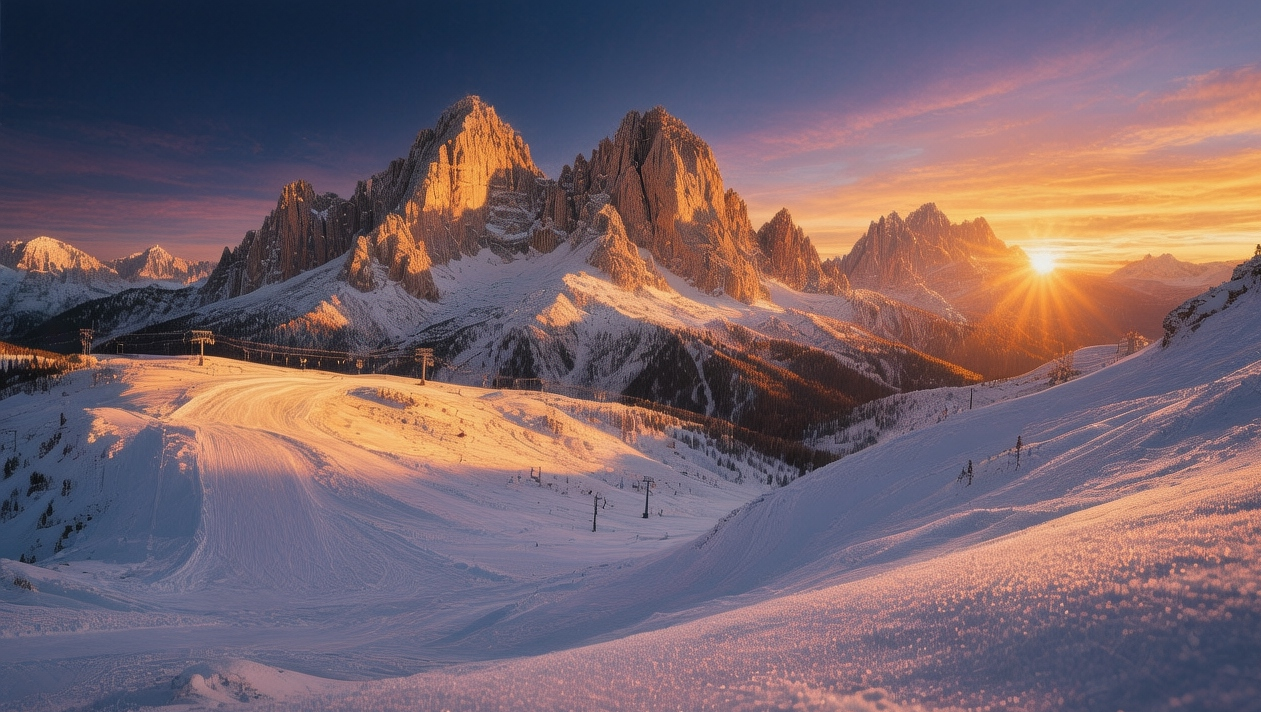
Arabba: Where Fodom Valley Meets Sella Peaks
I stand beside the main square at 8:15 on a late June morning. The air holds a sharp, clean chill even as sunlight spills across the upper rock faces. An espresso costs one euro eighty at the wood-panelled bar near the lift station. I watch cloud shadows drift slowly across the Sella massif. Arabba sits at 1,602 metres. It is small — a single street, a cluster of lodges, and two lift bases practically in the village centre. People come mostly for winter snow. They find a quiet place where mountains dominate every view and the pace stays slow year-round.
Why Arabba Matters
Arabba lies in Livinallongo del Col di Lana, one of the five Ladin-speaking valleys of the Dolomites. For centuries this was remote herding country where people spoke a language rooted in Roman times. The village sits at the crossroads of Passo Pordoi and Passo Campolongo, linking Val di Fassa with Alta Badia and the Marmolada side of the range. In winter it becomes a key stop on the Sella Ronda ski circuit. In summer it serves as a quiet base for hiking and high-level traverses. That convenience brings real trade-offs. The village itself is compact and lacks the broad choice of restaurants, shops, and evening spots found in larger nearby resorts. It can feel quiet to the point of dullness after dinner. For some that is the whole appeal; for others it will feel too limited.
The Best Time to Experience Arabba
Late June through July brings blooming alpine meadows and reliable open trails. Temperatures sit between 8°C and 20°C (46°F–68°F). August warms to 11°C and 23°C (52°F–73°F), but afternoon thunderstorms are common and can roll in fast. September offers clear skies and golden light, ranging from 6°C to 17°C (43°F–63°F). Crowds thin noticeably and accommodation prices drop. December through March holds steady winter cold: -6°C to 4°C (21°F–39°F). Snow cover is dependable here thanks to altitude. Late December through early January and mid-February are fully booked well in advance. Visit the second half of January or early March for good snow and shorter lift lines. Avoid mid-August; everything is busier and costs more.
Approximate Budget for a 7-Day Trip
Prices below are per person, in euros, based on mid-range standards.
- Accommodation: 7 nights in a comfortable room or apartment — €85–130 per night. Total: €595–910. Staying half a kilometre away cuts costs by roughly 15%; a free ski bus covers the short distance.
- Food & Drink: Breakfast, two meals daily including one mountain refuge stop — €38–55 daily. Total: €266–385. Dinner at lift-base hotels costs more than village trattorias; walk five minutes for better value.
- Lift & Local Transport: Multiday summer lift pass or winter ski pass — €65–95 per day; bus passes and occasional taxi — €15–25 total.
- Activities: Guided hike, via ferrata hire, museum entry — €40–70.
- Miscellaneous: Water, snacks, maps, small purchases — €22–32.
Total estimated 7-day cost: €1,000–1,510
The Dolomiti Superski pass bought directly at the window carries full price. Purchase online three weeks ahead for a clear discount. Front-row hotels right beside the Porta Vescovo lift charge a large premium; similar rooms one street away cost less and the walk takes two minutes.
Essential Arabba Experiences
- Porta Vescovo Slopes & Views — Ride the lift up to 2,478 metres. The view opens directly across to the Marmolada glacier and the Sella group. In winter these runs are steeper than average for the Dolomites. In summer the high traverse path offers open meadows and long sightlines. Skip if you dislike exposed or steep ground; some sections drop away sharply.
- Sella Ronda Circuit — Follow the loop around the massif. On skis it takes a full day; on foot or by bike allow two days. Arabba sits right on the route so you can start and end without extra travel. Each pass brings a different landscape and a different valley culture.
- Marmolada Punta Rocca — Ride the linked lifts up to 3,265 metres. This is the highest accessible point in the range. On clear days you see across the Dolomites and toward the Veneto plain. The glacier surface changes every year; what looks solid today may not be ten years from now.
- Great War Trail — Walk the marked path past preserved trenches, tunnels, and observation posts from 1915–1918. The front line ran right along these ridges. Information panels explain what happened here. It adds weight to the landscape beyond beauty alone. Wear sturdy boots; the ground is uneven.
- Porta Vescovo Lake Walk — A gentle hour-and-a-half hike from the village centre. The small lake sits tucked below the ridgeline. It reflects rock and sky on calm mornings. The path climbs steadily but never steeply. Go early; by midday groups spread out along the trail.
- Retiz Waterfalls Loop — A lower-altitude walk through forest alongside cascading water. You can approach close to the falls on built paths. The walk suits most fitness levels. It stays green and sheltered even when sun is strong higher up.
Hidden Gems Most Travelers Miss
- Lake Boè lies above Campolongo Pass, reachable by a short hike from the top station. It sees far fewer visitors than nearby bodies of water. The shoreline is quiet and grassy, with clear reflections of Marmolada and Civetta peaks.
- The old stone district in lower Arabba holds traditional Ladin buildings with wooden balconies and stone roofs. Most people walk straight past on the way to the lifts. It takes ten minutes to explore and feels untouched by mass tourism.
- Padon High Route runs above the village along a broad ridge. It connects Porta Vescovo with Pordoi Pass. The path stays level for long stretches and offers open views in every direction. It is ideal for easy walking without losing height.
- The "Marmolada Glacier Experience" tour is overrated. You view ice from a distance you can reach independently. The commentary adds little and the ticket costs nearly double the standard lift ride.
Cultural & Practical Tips
- Book accommodation and lift passes well ahead in February and mid-August. Availability vanishes completely. Planning two months early is not too soon.
- Respect quiet hours between 1:00 PM and 3:00 PM and after 10:00 PM. Many local families live here year-round. Noise outside those times draws firm complaints.
- Check weather forecasts before every high walk. Conditions above 2,000 metres can shift from clear to stormy in under an hour. Turn back early if visibility drops.
- Carry cash. Many mountain refuges and small lodges do not accept cards. Phone signal disappears entirely on upper trails, so payment by card is not always an option even where advertised.
- Do not cut new paths or shortcut switchbacks. Mountain soil is thin and takes years to regrow. Erosion damages routes everyone uses. Stay on marked trails.
- Do not underestimate altitude. At 1,600 metres and higher, even moderate walks feel more tiring. Drink water regularly and pace yourself the first two days.
- Through traffic on Passo Pordoi and Passo Campolongo can be heavy in summer. Arrive early morning to avoid queues on the pass roads.
Essential Visitor Information
Location & Access: Arabba, Livinallongo del Col di Lana, Province of Belluno, Veneto, Italy. Coordinates roughly 46.4833° N, 11.8500° E. Three ways to arrive: drive via A22 motorway, exit Egna-Ora then SS48 through Pordoi Pass; drive via A27 to Belluno then Agordo and Caprile; or fly to Venice Marco Polo then transfer by bus or rental car — roughly 2.5 hours travel time.
Tickets & Booking: Single lift return €16–24. Multiday summer pass €48–65 for three days. Dolomiti Superski winter pass €80 daily. Booking ahead is recommended in summer and essential during winter school breaks.
Operating Hours: Lifts run 8:30 AM to 5:00 PM, shorter hours in autumn and spring. Restaurants serve lunch 12:30 PM–2:30 PM, dinner 7:30 PM–9:30 PM. Many smaller lodges close midweek in low season.
Visit Duration: Minimum 3 days for village and nearby trails. Recommended 7 days to complete Sella Ronda walks, Marmolada, and Great War routes without rushing.
Family Suitability: Good for families who enjoy mountains. Lower trails are wide and gentle. Stroller access works in the village and on meadow paths; higher routes involve steps and uneven ground. Play areas and ski school exist nearby.
Timing: Best seasons are late June to early July and September. Best time of day is before 9:30 AM. Mid-afternoon in summer brings storms and busier trails.
Highlights: Porta Vescovo ridgeline, Sella Ronda loop, Marmolada Punta Rocca, Great War Trail, Lake Boè.
Nearby & Day Trip: Passo Pordoi is 10 minutes by car or bus. Val Gardena is 20 minutes across the pass. Alta Badia is 15 minutes via Campolongo Pass. Belluno with historic centre and museums makes a half-day trip 45 minutes by car.
Conclusion: Travel with Presence, Not Just Speed
Arabba does not dazzle with busy streets or endless entertainment. It gives you mountains up close and unfiltered. The quiet is part of the place. Walk slowly. Pause at the roadside benches. Notice how the light changes the Sella rock face through the afternoon. Many people rush through on the way to somewhere else. The best moments come when you stop and stay a while. What is the one mountain view you would choose to watch the sun set over?
Comments
Post a Comment