Arezzo: Where Golden Fresco Meets Ancient Hill
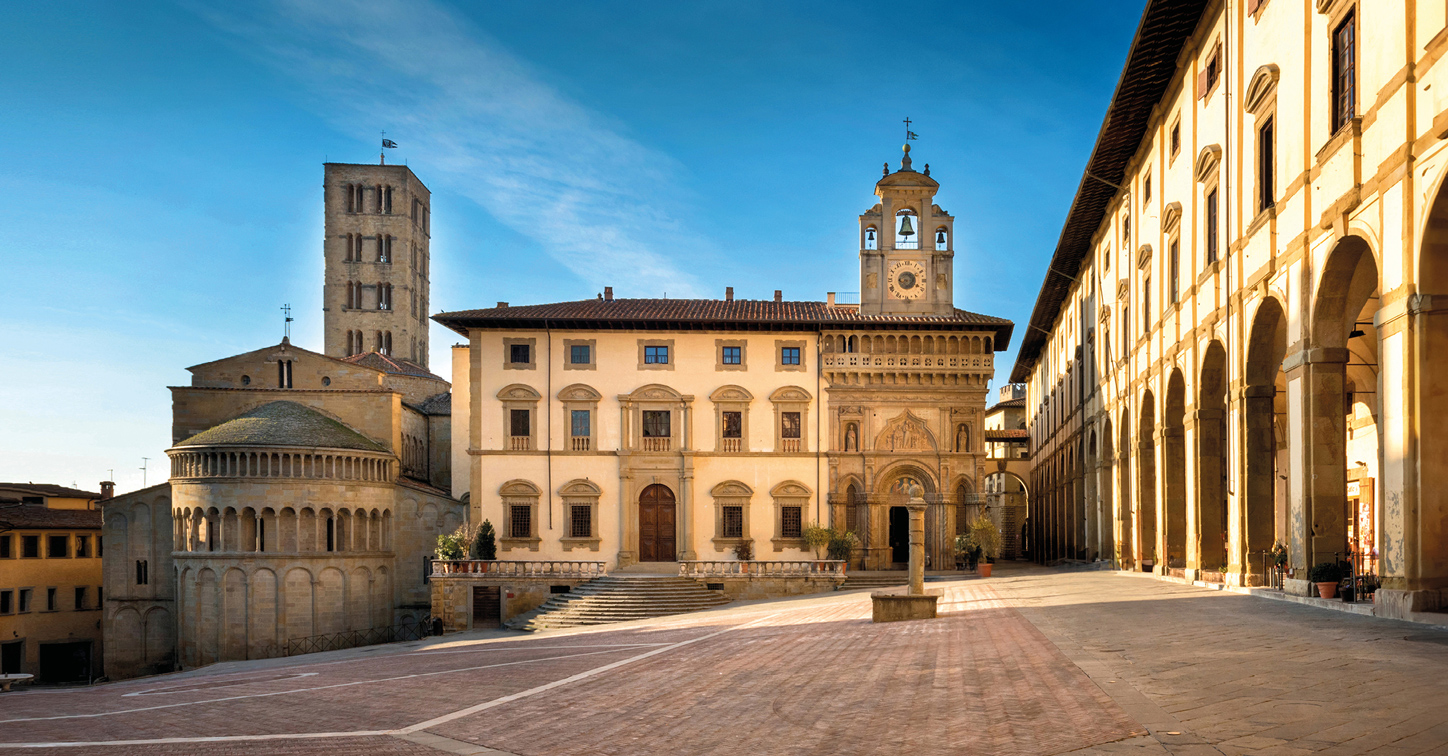
I stand on the sloping Piazza Grande at 8:00 on a June morning. The stone still holds the night’s cool. An espresso costs one euro twenty at a small bar tucked beneath a medieval arcade. I look upward — tiers of houses climb the hill, a tall stone tower rises above terracotta rooftops, and the cathedral sits at the highest point, pale facade catching early light. Arezzo stands in eastern Tuscany, a city where Etruscan roots, medieval pride, and Renaissance art have layered together across millennia. People come for the masterpieces. They find a place where ordinary life unfolds beside extraordinary beauty — genuine, unpretentious, and deeply enduring.
Why Arezzo Matters
Etruscans settled the high ground here before Rome rose. Later, as a free medieval commune, the city grew wealthy from trade and built the grand churches and palaces that still define its skyline. Poets, artists, and architects were born here — Petrarch, Guido d’Arezzo, and Piero della Francesca among them. In the 15th century the great fresco cycle was painted in the church of San Francesco, its luminous scenes now recognised as one of Italy’s artistic treasures. Today Arezzo feels less crowded than Florence or Siena. That quiet carries risks. Some historic lanes lose residents. The frescoes need constant care. Balancing daily life with cultural stewardship remains a gentle, ongoing challenge.
The Best Time to Experience Arezzo
Late April through June brings warm days, cool evenings, and thin crowds. Temperatures sit between 11°C and 24°C (52°F–75°F). Morning light falls perfectly on the golden frescoes and walking feels comfortable. July and August warm to 19°C and 32°C (66°F–90°F). Stone absorbs heat and the upper town feels quiet in the midday lull. September offers golden light and settled weather — 15°C to 26°C (59°F–79°F). The air stays clear and visitors thin out. Early October remains mild — 12°C to 21°C (54°F–70°F) — but rain becomes more frequent. Winter holds crisp, bright days: 4°C to 11°C (39°F–52°F). The city feels entirely its own. Arrive before 9:30 AM any time of year — that is when the frescoes glow most beautifully and the streets feel most peaceful.
Approximate Budget for a 7-Day Trip
Prices below are per person, in euros, based on staying in Arezzo.
- Accommodation: 7 nights in a guesthouse or apartment — €60–135 per night. Total: €420–945. Staying in Florence costs 30–45% more; train or bus in takes 45–60 minutes longer.
- Food & Drink: Breakfast, two meals daily — €25–48 daily. Total: €175–336. Restaurants right on Piazza Grande charge premium prices; walk one lane back for hearty pappardelle, wild boar, and local Chianti at fair rates.
- Transport & Tickets: Train from Florence — €8–14 return; San Francesco fresco reservation — €10–16; local bus — €1.50 per ride. Parking near the historic centre is limited — park below and walk up.
- Activities: Cathedral, museum, nearby hill towns, countryside — €25–55.
- Miscellaneous: Water, hat, comfortable walking shoes — €12–22.
Total estimated 7-day cost: €687–1,476
"Private exclusive fresco viewing" packages are overpriced. Every ticket includes the same quiet time before general crowds arrive. Book directly and arrive early — you will experience the same magic without paying extra.
Essential Arezzo Experiences
- Piero della Francesca Frescoes — Step into the quiet church. Golden light falls on luminous figures, faces calm and clear, colours still bright after six centuries. The cycle unfolds slowly above you — a masterpiece of grace and clarity. Skip if you arrive late; reservations sell out and time slots are strictly limited.
- Piazza Grande at Dawn — Stand on the sloping square before the day begins. Curved portico, tiered houses, and ancient loggia frame the space. It feels timeless, quiet, and entirely beautiful. This is the heart of Arezzo — unchanged for centuries.
- Cathedral Terrace View — Walk to the highest point. The pale Gothic building stands beside a wide green space. The view stretches across terracotta rooftops to rolling hills and distant peaks. It puts the whole city in perspective — compact, proud, and surrounded by green.
- Medieval Lane Stroll — Wander the narrow streets between the main squares. Small courtyards, carved doorways, and quiet corners appear around every turn. Very few visitors explore fully — the city reveals itself slowly.
- San Domenico Visit — Enter the plain stone church. A gentle, unadorned space holding powerful art. Less crowded than famous sites, it feels authentic and deeply peaceful.
- Local Meal — Eat in a family-run place. Ribollita, fresh pasta, and tender roasted meat. Simple, hearty food — the same dishes locals have enjoyed for generations.
Hidden Gems Most Travelers Miss
- The eastern rampart path runs high above the lower town. Wide views stretch across the valley and out toward the hills. Very few visitors walk this way — just locals heading about their day.
- The small cloister beside the museum has stone arches and quiet shade. It sits off the main route, peaceful and almost empty. No ticket needed — just step through the doorway.
- The lower market square comes alive early each morning. Locals buy bread, cheese, and fresh produce. It feels real and working — not designed for visitors at all.
- The "Arezzo VIP Private Fresco & Exclusive Terrace Tour" is overpriced. Every masterpiece and viewpoint is open to standard entry. Book early, walk slowly, and turn down one quiet lane — that is how you truly experience the city.
Cultural & Practical Tips
- Reserve San Francesco tickets 2–4 weeks ahead. Time slots are strictly limited and sell out completely, especially weekends.
- Arrive 10 minutes early for your slot. The church is small and quiet — enter calmly and keep voices low.
- Respect quiet lanes. People live and work here. Keep voices down, especially in the mornings and evenings.
- Wear comfortable shoes. The city climbs steadily upward. Cobblestones are worn smooth and slopes are gentle but constant.
- Look up. Most beautiful details — carved capitals, window frames, and roofline decorations — live above eye level.
- Visit on a weekday if you can. Weekends feel busier; weekdays let you absorb the atmosphere at your own pace.
- Stay for sunset. The light turns warm gold and the crowds thin out. Arezzo looks its best in the fading glow.
Essential Visitor Information
Location & Access: Arezzo, Tuscany, Italy. Coordinates roughly 43.46° N, 11.88° E. Three ways to arrive: train from Florence — 45 mins; train from Rome — 2 hours; drive from Florence — 1 hour 15 mins.
Tickets & Booking: City streets free. San Francesco — €10–16; cathedral — donation; museum — €6–10. Reserve San Francesco ahead; no booking needed for most other sites.
Operating Hours: City always accessible. Churches roughly 9:30 AM to 12:30 PM and 3:30 PM to 6:00 PM; some close one day weekly — typically Monday.
Visit Duration: Minimum 2 full days. Recommended 3 days to explore frescoes, squares, quiet lanes, and nearby countryside without rushing.
Family Suitability: Good overall. Wide central squares suit all ages. Gentle slopes make strollers manageable — easier than many Tuscan hill towns.
Timing: Best seasons are late April–June and September. Best time of day is before 9:30 AM or late afternoon.
Highlights: Piero della Francesca frescoes, Piazza Grande at dawn, cathedral view, eastern rampart path, quiet cloister, morning market.
Nearby & Day Trip: Cortona — 30 mins. Florence — 45 mins by train. Siena — 1 hour 15 mins. Assisi — 1 hour 45 mins.
Conclusion: Travel with Reverence, Not Just Checklist
Arezzo gives you masterpieces that were painted to be lived with, not just visited. You can see the frescoes and leave. Or you can walk the quiet lanes, eat simply, keep your voice low in the churches, and remember — this is not a gallery. It is a living city where art and daily life have coexisted for centuries. Honouring that gentle balance is the finest compliment you can pay. What is the one beautiful, living place you would visit promising to treat it like home?
Comments
Post a Comment