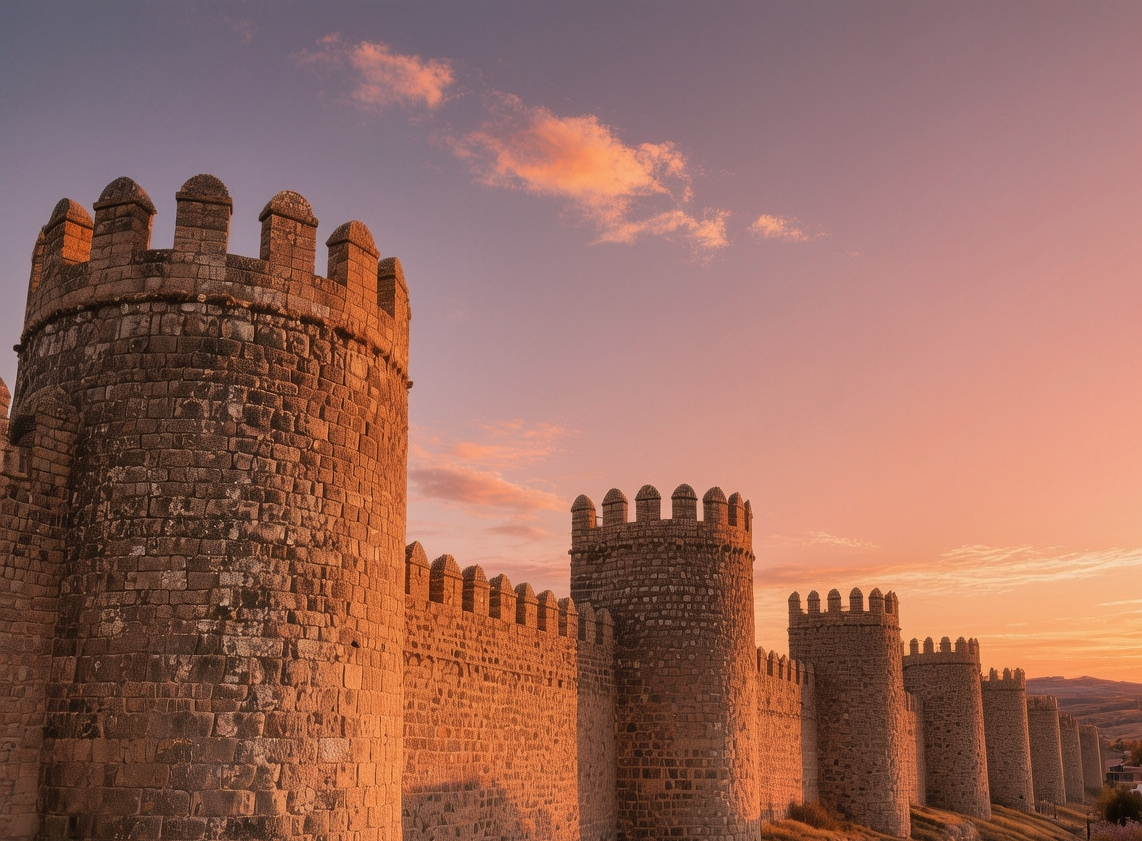
Walls of Ávila: Where Medieval Stone Meets Castilian History
At 9:15 a.m., I paid about €5 for access to the Walls of Ávila, then climbed a narrow stairway beside the cathedral. The granite felt cool under my hand. A sharp wind moved across the battlements, even though the streets below were already warming. From the top, the view is practical rather than polished: red roofs, church towers, dry fields, and long stretches of open land beyond the city. The wall itself runs for roughly 2.5 kilometres, with towers and crenellations appearing at regular intervals. Walking the full accessible route takes effort, especially in the sun. Still, the Walls of Ávila are the reason most visitors come, and seeing them from above gives useful context before exploring the old town. Allow at least two hours for the walls, the cathedral area, and a slow coffee stop. If you are visiting from Madrid, Ávila works as a day trip, but staying overnight gives you the best chance to see the stones after sunset.
Why the Walls of Ávila Matter
The Walls of Ávila are among Spain’s clearest surviving examples of a medieval fortified city. Built mainly between the late eleventh and early thirteenth centuries, they helped protect a Christian settlement during a period when Castile’s southern frontier was constantly changing. The walls surround the historic centre with about 2,516 metres of stonework, nine main gates, dozens of towers, and thousands of merlons.
Ávila’s history is not limited to military architecture. The city is closely linked with Saint Teresa of Ávila, whose convent, churches, and writings still shape the local identity. The Cathedral of Ávila is built directly into the defensive line, making it one of the clearest places to see how religion and defence worked together in medieval towns. The Basilica of San Vicente adds a strong Romanesque contrast just outside the walls.
The honest criticism is that the wall walk can feel repetitive after the first kilometre. Some sections offer similar views, and parts of the route involve steep steps with limited shade. The best experience comes from combining the elevated walk with views from outside, rather than treating the entire circuit as a single must-do challenge.
The Best Time to Experience the Walls of Ávila
The most comfortable periods are 15 April to 31 May and 15 September to 15 October. Daytime temperatures usually sit around 15 to 24°C, or 59 to 75°F, while mornings can drop to 5 to 12°C, or 41 to 54°F. These dates offer decent walking conditions without the strongest summer heat.
June through August brings longer daylight and warmer afternoons, usually 25 to 32°C, or 77 to 90°F. The wall has very little shade, so visit between 9:00 and 11:00 a.m. or after 6:00 p.m. July and August can still feel cool in the wind, especially on exposed sections.
From 1 November to 15 March, expect cold mornings, with daytime temperatures commonly around 7 to 15°C, or 45 to 59°F. Frost is possible, and rain can make stone steps slippery. Winter has fewer visitors, but short daylight and seasonal closures require more planning. Avoid the hottest part of the day in July and August, and carry water in every season.
Approximate Budget for a 7-Day Trip
A seven-day visit to Ávila suits travelers who prefer a slower base rather than a packed sightseeing schedule. The figures below assume one person, a private room in a modest hotel, and occasional day trips by train or regional bus.
- Accommodation: €420 to €770 for seven nights in a simple hotel or guesthouse. A room outside the historic centre may save €15 to €30 per night.
- Food: €245 to €385, based on a light breakfast, a menu del día lunch, tapas, and several sit-down dinners.
- Transport: €80 to €160, including local buses, station transfers, and one or two regional day trips.
- Attractions: €45 to €90 for the walls, cathedral, convents, museums, and occasional guided visits.
- Miscellaneous: €70 to €120 for coffee, snacks, small gifts, laundry, and extra taxi rides.
Estimated total: €860 to €1,525 per person for seven days.
Guided day trips from Madrid can be overpriced when transport, lunch, and several admission fees are bundled together. Traveling independently by train and choosing two or three paid sights usually costs less. Restaurant meals beside the main squares can also carry a premium; walk a few streets away for better portions and more sensible prices.
Essential Walls of Ávila Experiences
- Walk the accessible battlements: Start near the cathedral and follow the route across the highest sections. Wear shoes with a firm sole because the steps are uneven.
- See the wall from outside: Walk toward the Puerta del Alcázar and the eastern side for the strongest overall views. The structure makes more sense from ground level than from the top alone.
- Visit the Cathedral of Ávila: Its fortified eastern wall forms part of the city defences. Look for the heavy granite construction where church and fortress meet.
- Photograph the Puerta de San Vicente: This is one of the most impressive gates, especially in the softer light of late afternoon.
- Explore the Basilica of San Vicente: The Romanesque carvings and warm stone interior provide a useful contrast with the defensive walls.
- Visit the Convent of Saint Teresa: The site connects Ávila’s military past with the religious life of its most famous historical figure.
- See the walls after dark: Illumination changes the mood and reveals the full outline from outside. Skip this if you dislike quiet streets or cold evening walks.
Hidden Gems Most Travelers Miss
- Los Cuatro Postes: This small hilltop monument across the river offers one of the clearest views of the complete walled silhouette. It is especially useful for photographs at sunset.
- Puerta del Carmen: This quieter gate provides a less crowded angle and a good sense of how the walls meet the surrounding landscape.
- Monastery of the Incarnation: Saint Teresa lived here for many years. It receives fewer casual visitors than the main cathedral area.
- Palacio de los Verdugo: The historic palace helps explain how noble families occupied and reinforced the inner city.
- San Segundo Hermitage: Located near the river, this small religious site is easy to miss but offers a calmer walk beyond the central streets.
- Plaza del Mercado Chico: This central square is pleasant for watching everyday city life, though it is overrated as a dining spot. Prices rise quickly around the busiest terraces.
Cultural & Practical Tips
- Carry a light jacket even in summer. Wind on the wall can make a warm afternoon feel surprisingly cold.
- Use sturdy walking shoes rather than smooth-soled trainers. Several stairways are narrow, uneven, and exposed.
- Do not arrive just before closing and expect to complete the full route. The final admission is often earlier than the stated closing time.
- Tourist mistake: booking every meal around Plaza de Santa Teresa. Prices are higher, and the busiest tables are not always the best.
- Tourist mistake: assuming the wall walk is suitable for every stroller or wheelchair. Access varies by section, and many parts require steps.
- Try yemas de Santa Teresa from a reputable pastry shop, but buy a small box first. They are very sweet and easy to over-order.
- Spanish meal times run late. Lunch may begin around 1:30 p.m., while dinner commonly starts after 8:30 p.m.
Essential Visitor Information for the Walls of Ávila
Location & Access: The main visitor access is near the Puerta del Alcázar and Cathedral of Ávila, in the historic centre of Ávila, Spain. A useful map point is approximately 40.6565, -4.6977. Ávila is about 115 kilometres northwest of Madrid. By train, services from Madrid usually take around 1 hour 30 minutes to 2 hours. By regional bus, the journey commonly takes about 1 hour 30 minutes. By car, allow roughly 1 hour 20 minutes to 1 hour 45 minutes, depending on traffic. Long-distance trains and buses arrive outside the old centre, so expect a 15- to 25-minute walk or a short taxi ride.
Tickets & Booking: Standard wall access is usually about €5, with reduced prices for eligible visitors and free entry for some young children. Prices can change, so confirm at the ticket office before setting out. Booking is generally not needed for independent daytime access, but advance booking is sensible for guided, theatrical, or group visits. A combined city monument pass may be cheaper if you also plan to visit the cathedral, basilica, and convents.
Operating Hours: Typical summer hours run from about 9:00 a.m. to 8:00 p.m. Winter hours are commonly closer to 9:00 a.m. to 6:00 p.m. Hours may change by season, weekday, public holiday, or maintenance work. Last entry can be earlier than closing, so do not plan a full walk at the final moment.
Visit Duration: The minimum useful visit is 60 to 90 minutes for one wall section and the main viewpoints. Allow 2 to 3 hours for a relaxed wall walk combined with the cathedral area. Add another 2 hours if you want San Vicente and the convent district.
Family Suitability: Older children usually enjoy the towers and city views. Some steps are steep, and barriers may not prevent a child from reaching an exposed edge, so close supervision is necessary. Stroller access is limited on the battlements. There are toilets and cafés in the surrounding city, but facilities are not evenly spaced along the wall route.
Timing: Visit between mid-April and late May or between mid-September and mid-October for the easiest walking conditions. Early morning gives cooler temperatures and fewer visitors. Late afternoon offers softer light, but check the closing time before entering.
Highlights: The Puerta de San Vicente, Puerta del Alcázar, the cathedral built into the wall, the eastern battlements, and the views from Los Cuatro Postes are the main priorities.
Nearby & Day Trip: Within Ávila, visit the Basilica of San Vicente, Convent of Saint Teresa, Monastery of the Incarnation, and Los Cuatro Postes. Segovia is feasible as a separate day trip, usually requiring around 1 to 2 hours each way depending on the connection. Combining Ávila and Segovia in one day is possible from Madrid, but it leaves little time for either city.
Conclusion: Travel with Historical Curiosity, Not Just a Camera
The Walls of Ávila deserve more than a quick photograph from the coach window. Walk the battlements, then step outside the old centre and study how the granite line shapes the city. Visit the churches, try the local sweets, and leave room for quiet streets that do not appear on every itinerary. The wall walk has repetitive sections, steep steps, and limited shade, but those limits are part of the experience. Stay overnight if you can. Arrive early, carry water, and check the closing time before buying your ticket.
Comments
Post a Comment