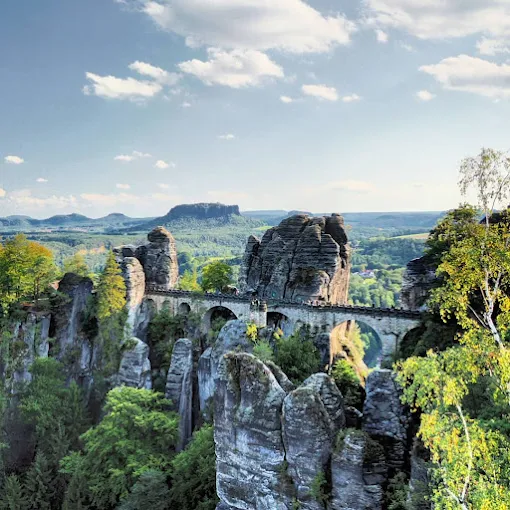
Bastei Bridge: Where Stone Spans Time and Gorge
I stepped onto the first stone arch at ten past nine on a Thursday morning. Wind moved freely through the valley below, carrying the scent of pine and damp rock. I paid four euros to cross the site. The sandstone felt worn smooth beneath my hands — generations of visitors had touched these same stones. I expected a single landmark to photograph. What I found feels like a doorway into an ancient landscape: jagged peaks, deep forest, and a bridge built not just to span space, but to connect people to wild beauty. Not every view stays unobstructed. Railings line the edges and crowd close in places. The stone surface slopes unevenly and can be slippery even when dry. That roughness feels right — this is not a polished floor laid for comfort.
Why Bastei Bridge Matters
The sandstone formations of Saxon Switzerland have drawn travellers and artists for centuries. The first wooden footbridge linked these rocks in the early 19th century, built so visitors could stand where once only eagles climbed. The present stone bridge opened in 1851, sturdy enough to carry generations ever since. It sits perched 194 metres above the river below, arching between sheer crags with no other support. Today it stands as the most visited site in the national park, a structure that itself became part of the scenery. One honest criticism: the bridge is narrow. When large groups arrive, space fills instantly and movement slows. There is nowhere to step aside and rest. The approach path climbs steadily from the nearest parking area; those with limited mobility will find the ascent demanding.
The Best Time to Experience Bastei Bridge
April through June brings 8°C to 18°C / 46°F to 64°F. Forests turn fresh green and mist often lingers in the valley at dawn. Arrive before 08:00; you may have the bridge nearly to yourself. July and August warm to 12°C to 23°C / 54°F to 73°F. Days stay long but crowds gather by mid-morning. September holds 9°C to 17°C / 48°F to 63°F. Beech woods turn gold and amber; this is the most beautiful season. October through March the bridge feels quiet and stark. Frost clings to stone and snow can cover the approaches. Services reduce but the site stays open. Mondays nearby facilities close; the bridge itself remains accessible.
Approximate Budget for a 7-Day Trip
Costs below are per person based on staying in a nearby village such as Rathen or Königstein.
- Accommodation: 441 euros — Clean room in a guesthouse or apartment. Places directly beside the main approach path charge 200 euros or more per night and feel overpriced; stay one valley over for half the cost and equal quiet.
- Food: 273 euros — Mountain soups, game stews, freshly baked bread, and fruit cakes.
- Transport: 91 euros — Regional train pass plus local ferry and bus connections. The nearest road is a steep walk away.
- Attractions: 56 euros — Bridge entry, fortress ticket, and riverside trail access.
- Miscellaneous: 63 euros — Drinks, snacks, and small purchases.
Total: 924 euros. Meals at the cliff-top restaurant carry a clear location premium. Pack a simple lunch; there are sheltered benches just below the ridge where you can sit and eat for free.
Essential Bastei Bridge Experiences
- Crossing at First Light — Stand at the centre arch as the sun rises above distant peaks. Shadows stretch long across the valley and the sandstone glows warm. The bridge feels still and silent. Skip if you dislike exposed heights; railings are low and the drop is sheer.
- View from Below — Walk the riverside path and look upward. The bridge appears slender and bold, pinned between massive rocks. You see its true scale from down here. Most visitors stay at the top and never witness this perspective.
- Neurathen Castle Ruins — Beside the bridge stand remains of a medieval fortress built into the crags. Foundations and wall sections cling to the stone. The same narrow paths served both castle and bridge — defence and admiration share the same ground.
- Sunset from the Approach Ridge — As day ends, light turns golden and crowds drift away. The bridge glows against deepening blue. Stay until the first lamps come on; the shift feels gentle and memorable.
- Forest Descent Trail — A winding path leads down through trees to the river. You pass beneath arches and through rock clefts, seeing the landscape change as you drop. Allow extra time; the climb back up is steady and warm.
- Morning Mist Watch — On cool days, white mist fills the valley below while the bridge stands clear above. Peaks rise like islands. It is temporary and unpredictable — be ready to leave early if conditions feel right.
Hidden Gems Most Travelers Miss
- West Side Lookout — A short side path leads to a flat rock ledge just beyond the bridge. It faces open sky and distant ridges. Almost no one stops here. The so-called "famous photo spot" on the main deck is often overrated; it stays crowded and railings block clean views.
- Lower Bench Glimpse — Halfway down the forest path, a weathered bench faces a narrow gorge. You hear water running unseen below. The bridge peeks through treetops above. It feels private and calm.
- Castle Outer Wall — Beyond the main ruin area, a low stone wall marks the outer defence line. It sits quiet and unmarked. Lean against it and imagine soldiers watching these same approaches centuries ago.
- Early Light Boulder — Off the main approach, a flat rock offers an unobstructed view of the bridge against the eastern sky. It is perfect for sunrise and completely empty when the first visitors arrive.
Cultural & Practical Tips
- Arrive before 09:00. By mid-morning the bridge fills and stays busy all day. Early arrival also gives better light.
- Wear sturdy non-slip shoes. Stone surfaces are worn smooth and become dangerously slippery when damp or frosty.
- Do not climb railings or stand on edge. The drop is steep and accidents happen. Respect the barriers; they exist to protect everyone.
- Carry water. There are no kiosks along the quieter trails. The climb up warms you quickly.
- Stay on marked paths. The sandstone is fragile and easily damaged. Shortcuts erode the landscape and can be dangerous.
- Check weather forecasts. Sudden mist can obscure views instantly. If visibility drops, wait it out or descend safely — the bridge will be here when it clears.
Essential Visitor Information
Location & Access: Bastei Bridge, Saxon Switzerland National Park, Germany. Nearest village: Rathen. GPS 50.9644, 14.0811. Train from Dresden 40 minutes to Rathen station. Ferry across the river then 20-minute steep walk up. Limited parking at the top; fill quickly and arrive early.
Tickets & Booking: Adult entry roughly 4 euros. Combined tickets with nearby Königstein Fortress available. No advance booking — purchase at the gate or ticket booth. Groups may need to wait to cross.
Operating Hours: Open daily year-round, dawn to dusk. No closing time posted; visit during daylight hours only. Access may be restricted in icy conditions.
Visit Duration: Minimum 1 hour. Half day lets you walk the bridge, explore the ruins, descend to the river, and sit undisturbed.
Family Suitability: Children welcome. Stroller access is challenging due to slopes and steps. Hold hands near open edges. Restrooms at the main entrance only.
Timing: September offers best balance of clear days, autumn colour, and thinner crowds. Arrive before 08:00.
Highlights: Sunrise crossing, riverside view, castle ruins, sunset ridge, forest descent, misty mornings.
Nearby & Day Trip: Königstein Fortress 30 minutes by local transport. Dresden 40 minutes by train; makes a rewarding half-day or full-day trip. Bohemian Switzerland national park across the border 1 hour.
Conclusion: Travel with Respect, Not Just Capture
Bastei Bridge will not feel wide or smooth everywhere. It will not stay empty when you arrive. It will not always show you perfect light. But that is its true beauty — it belongs to everyone, and to no one. Great landmarks do not exist just to be photographed. They exist to be walked, respected, and passed on. What will you leave untouched for the next visitor to find?
Comments
Post a Comment