Bayeux Tapestry Museum: Where Stitched Narrative Meets Living History
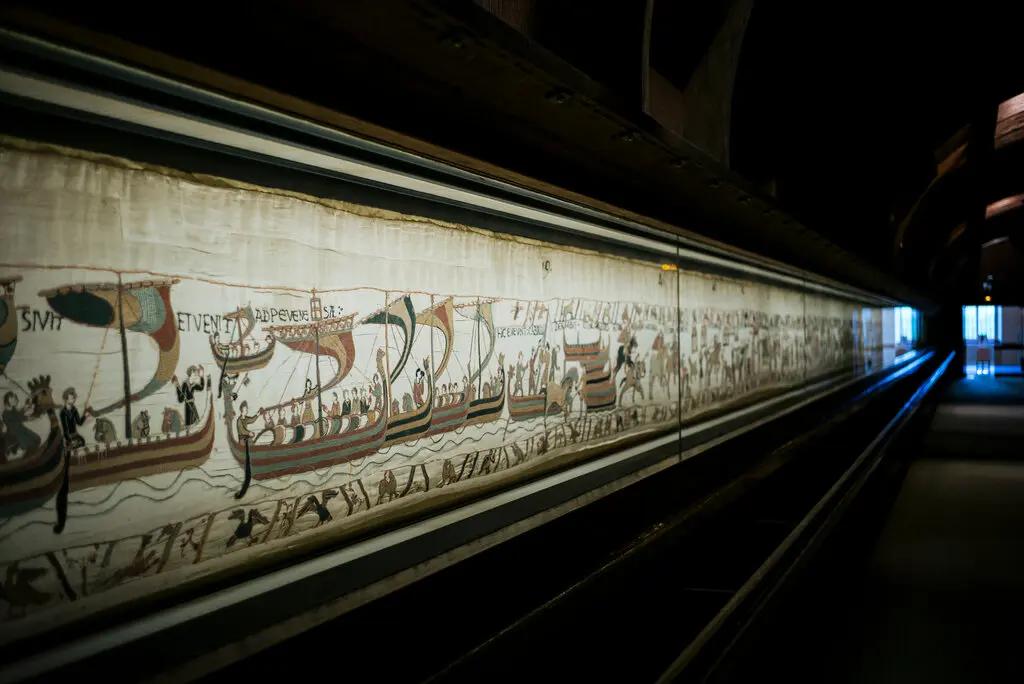
I stand before the museum entrance at 9:15 on a Friday morning. Pale stone walls catch soft light. A group of six walks past, checking opening times on their phones. I paid 12 euros for my ticket. The audio guide came at no extra cost. I step inside. The gallery sits dim and quiet. Light falls only on the cloth itself. Seventy metres of linen stretch ahead, embroidered scenes telling a story from nearly a thousand years ago. I move slowly along the glass. Each panel holds more detail than I first see. It feels less like looking at an exhibit and more like walking alongside a story that still shapes how we see the world.
Why Bayeux Tapestry Museum Matters
The tapestry is not a tapestry at all — it is embroidery, worked in wool thread on linen. It dates from the 1070s, created in the years right after the Norman Conquest of England. It tells the story of Harold’s oath, his death at Hastings, and William’s victory. Commissioned by Odo, Bishop of Bayeux and half-brother to William, it stands as one of the few surviving near-contemporary visual records of the events that reshaped Europe. Listed in UNESCO’s Memory of the World register, it draws visitors from across the globe. The museum that houses it has served this purpose since 1983. Now, though, the building shows its age. It closes September 2025 for major redevelopment, with reopening planned October 2027. Space feels tight in the gallery. Lines form at busy times. The lighting, while protective, makes some details hard to distinguish even with good eyesight.
The Best Time to Experience Bayeux Tapestry Museum
March through June brings mild weather — 8°C (46°F) to 18°C (64°F). Crowds stay manageable before summer. September and early October offer similar conditions at 10°C (50°F) to 19°C (66°F), but advance booking becomes essential. May through August sees highest visitor numbers, temperatures reaching 13°C (55°F) to 23°C (73°F). Winter months — November to February — run cooler at 3°C (37°F) to 9°C (48°F). Some sections close or operate shorter hours. Arrive right at opening. You will share the gallery with far fewer people. Weekdays beat weekends consistently. Note: full museum closure runs September 2025 through October 2027. Alternative display arrangements may be in place during that period; check current status before travelling.
Approximate Budget for a 7-Day Trip
- Accommodation: 7 nights in a town-centre guesthouse — 560 euros. Staying outside Bayeux cuts roughly 120 euros total but adds daily travel time.
- Food: Daily breakfast, casual lunches, evening meals — 420 euros. Restaurants directly facing the museum charge premium prices. Menus change little and cost nearly double what places two streets away ask.
- Transport: Train from Paris Saint-Lazare to Bayeux plus short walk or bus — 112 euros. Taxis from the station are overpriced. The walk takes 12 minutes and costs nothing.
- Attractions: Tapestry museum — 12 euros. Combined ticket with other Bayeux museums — 14 euros total. Memorial and D-Day beaches sites — 55 euros combined.
- Miscellaneous: Books, prints, drinks, rain gear — 95 euros.
Total estimated cost: 1,199 euros per person
Skip the gift shop prints right beside the tapestry exit. The bookshop on the ground floor sells identical cards and posters at lower prices.
Essential Bayeux Tapestry Museum Experiences
- Walk the full gallery slowly — Follow the story from start to finish. The audio guide matches each scene. Pause when you need to. Rushing means missing details. Allow at least one full relaxed hour.
- Study the border scenes — Animals, fables, and everyday life run above and below the main narrative. They show what ordinary people did back then. These details rarely appear in history books.
- Watch the introductory film — It sets context clearly. It runs before you enter the gallery. Skip if you already know the 1066 story well, but most visitors gain perspective that makes the cloth richer.
- Explore the first-floor exhibition — It explains how the tapestry was made, who commissioned it, and where it has been kept through centuries. It adds depth the scenes alone do not show. Do not rush through this section.
- See the cathedral afterwards — Bayeux Cathedral stands five minutes away. Odo was Bishop here. The tapestry may originally have hung in this building. Seeing the space connects the work to its original home.
- Walk the medieval streets between visits — Stone houses and quiet lanes preserve the feel of old Bayeux. The town survived World War II largely intact. It feels peaceful and genuine.
- Visit the Baron Gérard Museum — Combined ticket includes entry. Local history and art fill the rooms. Skip if you are short on time — the tapestry remains the main draw.
Hidden Gems Most Travelers Miss
- The side passage behind the cathedral leads to a quiet garden with old stone walls. Almost no visitors find it. Benches sit empty even when the museum fills. It offers calm space to think over what you have seen.
- Rue Franche runs parallel to the main street but stays quieter. Half-timbered houses line the lane. Small cafés serve good food at fair prices. It feels more like a living town than a showpiece.
- The museum’s own library reference area sits on the mezzanine level. It holds detailed books and larger images of scenes. You can study details too small to see clearly on the original cloth. It stays nearly empty.
- The viewpoint from the cathedral tower opens across the town and beyond. It costs extra and requires climbing narrow stairs. The view feels worth the effort. Do not expect grand design though — the tower itself is plain and functional.
Cultural & Practical Tips
- Book ahead. Demand outpaces supply, especially spring and autumn. Tickets sell out days in advance. Do not assume you can buy entry on arrival.
- Carry minimal bags. Large backpacks get refused at entry. Lockers are limited and fill fast. Travel light.
- Photography is strictly forbidden inside the gallery. No phones, no cameras. It protects the cloth and respects other visitors. Save your shots for outside.
- Allow 45 minutes minimum for the tapestry alone. Many people try to squeeze it into 20 minutes and leave frustrated. The full experience takes time.
- Respect quiet in the gallery. Voices carry far in the dim space. Keep conversation low. Others are concentrating on the audio guide.
- Do not lean on the display glass. It stays cool and tempting, but oils and marks damage the protective surface. Stand back slightly.
- Plan around closure periods. The museum redevelopment runs September 2025 through October 2027. Confirm display arrangements before making travel plans.
Essential Visitor Information
Location & Access: 13B Rue de Nesmond, 14400 Bayeux. GPS coordinates 49.276, -0.702. Three options: train from Paris Saint-Lazare directly to Bayeux (about 2 hours 40 minutes), then walk 12 minutes; drive via A13 motorway (3 hours from Paris); or train via Caen with connection (about 2.5 hours total).
Tickets & Booking: Adult 12 euros. Reduced 7.50 euros. Under 10s free. Combined museum pass 14 euros. Booking recommended; online availability may be limited during closure transition. Audio guide included.
Operating Hours: Mid-March to October: 9:00–18:30; May–August until 19:00. November to mid-March: 9:30–12:30 and 14:00–18:00. Closed January. Last entry 45 minutes before closing. Note: full closure September 2025–October 2027.
Visit Duration: Minimum 1 hour for tapestry only. Recommended 2–3 hours including film, exhibition, and relaxed pace.
Family Suitability: Stroller access ground floor; upper floors have stairs. Children’s audio guide available in English and French. Reduced prices apply. Public restrooms on site.
Timing: Best season: March–June or September–early October. Best time: first entry slot of the day. Quietest viewing experience.
Highlights: The tapestry gallery, border details, introductory film, first-floor exhibition, nearby cathedral.
Nearby & Day Trip: Three nearby stops: Bayeux Cathedral (5 minutes walk), Baron Gérard Museum (8 minutes walk), D-Day landing beaches (20–30 minutes drive). Mont Saint-Michel makes a longer but rewarding full-day trip at 1 hour 30 minutes drive.
Conclusion: Travel with Curiosity, Not Just Checklist
The Bayeux Tapestry Museum holds something rare — a story told by people who lived through the events they depict. It is not perfect. The gallery feels cramped. Details fade in low light. The building closes for years of renewal. Those things do not diminish what lies within. You do not need to know every date to feel the weight here. Look closely at the stitches. Notice the faces. Real hands made this, nearly a thousand years ago. What part of the story will you carry away?
Comments
Post a Comment