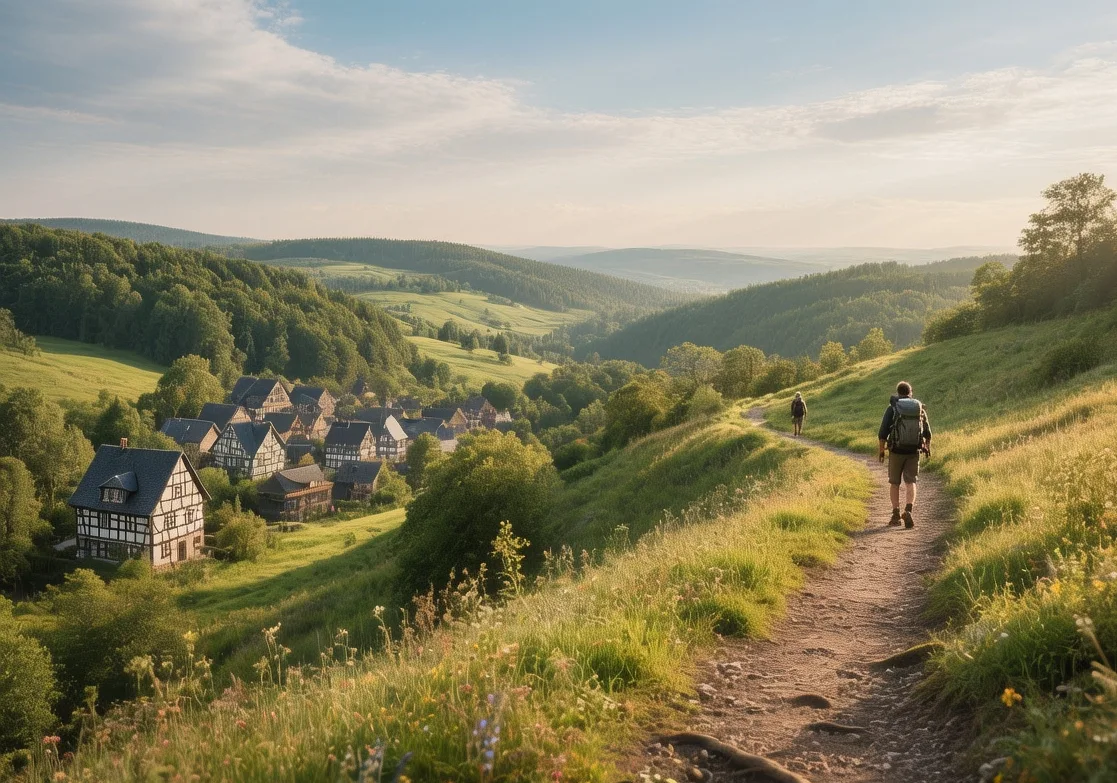
Bergisches Land: Where Working Forest Meets Living Heritage
I boarded the suspension railway in Wuppertal just before nine. The carriage glided smoothly over the Wupper River. I paid seven euros for a day pass. Green slopes rose on both sides. I had expected a quiet rural region. What I found felt busier and more layered. Factories and farms sit close together. Old industries shaped the landscape as much as nature did. Some paths are steep. Some towns feel worn. That mix of beauty and grit gives this place its real character.
Why Bergisches Land Matters
This region stretches east of Düsseldorf and Cologne across rolling hills and river valleys. It gave rise to the industrial revolution in Germany. Fast-flowing rivers powered mills and factories from the 18th century onward. Today it holds more than 4,000 kilometres of marked trails and over twenty reservoirs. Half-timbered villages sit beside cities that still make tools, steel, and blades. The contrast between quiet forest and working town defines the area. One honest note: some hiking paths stay muddy long after rain. You will need sturdy boots. Public transport connections can feel slow. Changes between buses and trains happen often. Waiting times of thirty minutes or more are common outside major hubs.
The Best Time to Experience Bergisches Land
May through mid-June brings 10°C to 20°C / 50°F to 68°F. Trees show fresh green and wild flowers line the paths. Crowds stay manageable. July and August see 15°C to 25°C / 59°F to 77°F. Reservoirs fill with visitors. Swimming is allowed only at marked spots; elsewhere water is used for drinking and entry is forbidden. September and October hold 8°C to 18°C / 46°F to 64°F. Forests turn gold and amber. This is widely considered the best season. November through March brings 0°C to 6°C / 32°F to 43°F. Many smaller museums and cafes close. Trails remain open but can be icy. Weekdays are quietest year-round. Sundays see most local families out walking.
Approximate Budget for a 7-Day Trip
Costs below are per person based on staying in Wuppertal or a smaller village.
- Accommodation: 420 euros — Clean room in a family-run guesthouse or city hostel. Hotels right beside the suspension railway or main stations charge 180 euros or more per night and feel overpriced; stay one tram stop away for identical comfort.
- Food: 252 euros — Bakery lunches, market produce, and one sit-down meal daily. Local specialities include dark bread, potato dishes, and savoury stews.
- Transport: 112 euros — Regional day passes plus occasional taxi. Bus and train lines cover most areas but run less frequently on Sundays.
- Attractions: 56 euros — Schloss Burg, suspension railway, local museum entry. Many trails and reservoir paths cost nothing.
- Miscellaneous: 60 euros — Drinks, small purchases, and parking fees.
Total: 900 euros. Tourist menus near major sites cost twice as much as identical food two streets away. Walk a few minutes to find genuine value.
Essential Bergisches Land Experiences
- Wuppertal Suspension Railway — Cars hang from an elevated rail above the Wupper River. It has run this way since 1901. The ride feels smooth and steady. Skip if you feel unsteady or fear heights; the view opens high above buildings and water.
- Schloss Burg — The largest reconstructed medieval castle in West Germany. Towers, gates, and courtyards overlook the river valley. Walk the outer wall for broad views. The museum inside shows armour and everyday objects from centuries past.
- Bever Reservoir Loop — A level path circles the water. It stretches roughly seven kilometres. Sunset reflects across the surface. It draws crowds on warm weekends; go early to find quiet.
- Altenberg Abbey — A Gothic church set in forest. Tall windows fill the space with soft light. The surrounding woods hold old stone paths. It feels remote even with a car park nearby.
- Lennep Old Town — Cobbled streets and half-timbered houses form a complete historic centre. Wilhelm Röntgen was born here. The museum tells his story simply and clearly. The so-called “Röntgen trail” nearby is often overrated; it repeats what you see inside.
- Müngsten Bridge Walk — Germany’s highest railway bridge spans 107 metres above the Wupper. A footpath runs alongside the tracks. Trains pass regularly. The view down is dramatic; hold railings and watch children closely.
Hidden Gems Most Travelers Miss
- Neye Reservoir — Quieter than Bever. The loop runs through mature beech forest. You may walk its full length without meeting anyone. The water stays still and dark.
- Eschbach Reservoir — Built as Germany’s first drinking water dam. It opened in 1891. Stonework and pavilions show early industrial design. Few visitors stop here.
- Panarbora Tree Top Path — Near Waldbröl, a raised trail winds through the canopy 20 metres above ground. The observation tower gives views across the region. The cafe at the entrance is often overpriced; bring your own picnic and sit in the woods instead.
- Wipperfürth Old Quarter — One of the oldest towns in the region. Market square and narrow lanes sit above the river. A small chapel overlooks the water. Most day-trippers pass it by.
Cultural & Practical Tips
- Stay on marked paths. Many forests supply drinking water. Off-trail walking damages soil and risks contamination. Fines apply in protected zones.
- Respect swimming restrictions. Not all reservoirs allow bathing. Water levels can drop suddenly and currents run strong even where calm looks.
- Buy a regional day pass. It covers trains, trams, and buses across large areas. Individual tickets cost far more.
- Carry cash. Smaller cafes, farm shops, and ticket booths do not always accept cards. This surprises many visitors.
- Check timetables ahead. Sunday buses run once an hour or less. Missing one can mean a long wait.
- Do not pick wild herbs or berries. Some areas are protected. What looks abundant may be part of a fragile ecosystem.
Essential Visitor Information
Location & Access: Bergisches Land lies between Cologne, Düsseldorf, and the Sauerland. Main hubs: Wuppertal, Solingen, Bergisch Gladbach. Wuppertal Hauptbahnhof connects by ICE train to major cities. Solingen station serves regional and long-distance routes. Local S-Bahn trains reach most villages. Driving from Cologne takes 40 minutes; from Düsseldorf 35 minutes.
Tickets & Booking: Regional transport day pass 14 euros. Schloss Burg adult entry 6 euros. Wuppertal suspension railway single ride 3 euros; day pass 7 euros. Booking is not required for trails or most sites. Groups of ten or more should reserve for castle tours.
Operating Hours: Trails and public paths open year-round. Museums and castles: Tuesday–Sunday 10:00 to 17:00. Many close Mondays. Smaller sites close January and February.
Visit Duration: Minimum 3 days. 7 days lets you hike, visit towns, and rest without rushing.
Family Suitability: Children welcome. Stroller access is limited on forest paths. Reservoir loops suit all abilities. Restrooms at main car parks. Water-side sections need close supervision.
Timing: May, June, September best. Arrive before 10:00 on weekends. Late afternoon light warms the hills and village facades.
Highlights: Wuppertal Suspension Railway, Schloss Burg, Bever Reservoir, Altenberg Abbey, Müngsten Bridge.
Nearby & Day Trip: Cologne Cathedral 45 minutes by train. Düsseldorf Old Town 35 minutes. Sauerland caves one hour drive. Rhine River at Bonn 50 minutes; makes a relaxed half-day trip.
Conclusion: Travel with Eyes Open, Not Just Cameras Up
Bergisches Land will not feel polished or packaged everywhere. You will see working factories beside quiet valleys. You will find muddy paths and slow bus connections. Those same things keep the region genuine. It is not a stage set. People live and work here. Walk slowly. Notice how the land feeds the cities and how the cities shaped the land. What part of this living landscape will you remember longest?
Comments
Post a Comment