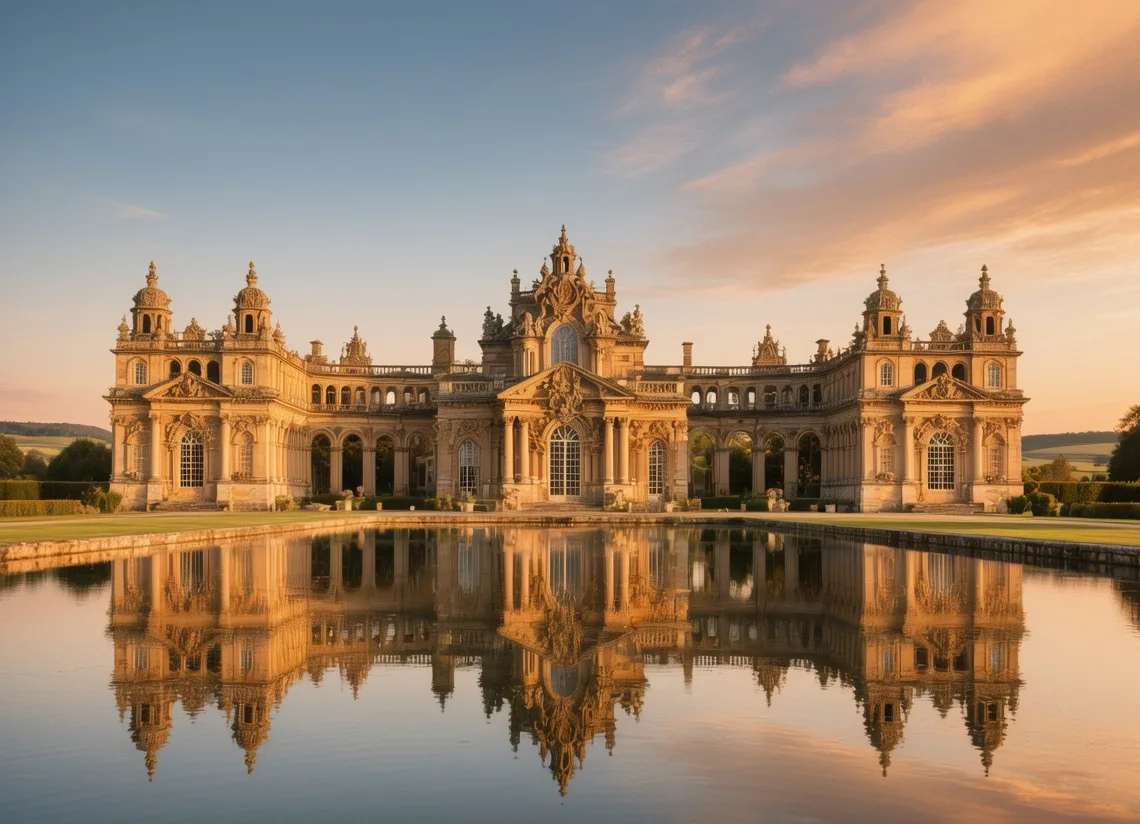
Blenheim Palace: Where Baroque Grandeur Meets Living Estate Life
I stand in the Great Court at 10:15 on a crisp Wednesday in early October. The stone glows warm beneath a pale blue sky. Full admission costs thirty-two pounds at the gate. Towers and columns stretch wide on every side—carved detail, sweeping symmetry, scale that feels designed to impress. This was never just a home. It was a gift from a nation to a victorious general, built to stand as a monument as much as a residence. You feel that deliberate grandeur the moment you step through the gate.
Why Blenheim Palace Matters
Designed by John Vanbrugh and built between 1705 and 1733, Blenheim remains the largest non-royal country house in England. It was granted to John Churchill, Duke of Marlborough, in recognition of his victory at the Battle of Blenheim. The estate spans over 2,000 acres of parkland laid out by Capability Brown, including the great lake and formal terraces. Winston Churchill was born here in 1874, and his family still lives in private quarters within the palace. That said, grandeur comes at a price. Interior rooms can feel crowded and roped off in sections. Audio guides repeat information you may already read on wall panels. Some wings operate as event spaces and close without notice. The estate feels polished and maintained, but parts feel more like a film set than a lived-in historic home.
The Best Time to Experience Blenheim Palace
Late April through June brings blooming gardens and mild days—10°C (50°F) to 18°C (64°F). The formal flower displays look their best. July and August reach 14°C (57°F) to 22°C (72°F), but car parks fill early and rooms feel packed. September and early October offer the sweetest balance—11°C (52°F) to 18°C (64°F), golden light across the lake, and thinner crowds. November sees autumn colours peak; shorter days mean earlier closing. December through February offers reduced admission and quiet parkland, but the palace interior closes or runs limited hours. Arrive exactly at opening time to explore the state rooms before coach tours arrive.
Approximate Budget for a 7-Day Trip
These figures cover one person based in or near Woodstock:
- Accommodation: £420 – £630 for a clean room in Woodstock or nearby villages. Stay 15 minutes’ drive away to save roughly one third.
- Food & Drink: £195 – £285. Estate cafés charge premium rates; better value exists in Woodstock and nearby Oxfordshire market towns.
- Local Transport: £35 – £65. Train to Oxford then bus or taxi to the palace; limited on-site parking costs extra.
- Attractions & Entry Fees: £32 – £42. Gate price £32; advance online £26; special exhibitions and tours cost extra.
- Miscellaneous: £45 – £85. Boat hire, gifts, and refreshments.
Total estimated budget: £727 – £1,107
The palace dining hall charges high prices for hot meals. Skip the sixteen-pound lunch there. Walk ten minutes into Woodstock village, eat at a local pub, and pay half as much for better food.
Essential Blenheim Palace Experiences
- Walk the Long Library. One of the longest rooms in any English house, with a painted ceiling and floor-to-ceiling bookshelves. Light streams through tall windows at the far end. Skip this during events; the room closes for private functions without warning.
- Stand in the Great Hall. The ceiling rises high above you, covered in painted scenes of battle and triumph. The scale stops you in your tracks. The floor reflects the light and feels grander than any public building you have visited.
- Explore the Capability Brown parkland. The lake curves wide, trees frame distant views, and the palace appears from every angle. The landscape was designed to look natural while being entirely planned. It works best seen from the water terrace at golden hour.
- Visit the Churchill exhibition. Displays trace his life, wartime leadership, and connection to the estate. The rooms hold personal letters and objects that feel intimate against the palace’s scale. Allow extra time; the text is dense and detailed.
- Climb the water terrace steps. Three levels of stone terraces descend toward the lake. Fountains run and stone urns frame the view. The climb is steady and open; take water on warm days—there is no shade.
- Follow the lake shore path. The full circuit takes roughly an hour. You see the palace reflected in still water and pass under the Grand Bridge. The path is flat and accessible; sections get muddy after rain.
Hidden Gems Most Travelers Miss
- The Italian Garden sits beside the lake, away from the main palace. Statues, box hedges, and quiet seating feel separate from the crowds. Most visitors never walk far enough to find it.
- The Grand Bridge beneath the palace offers quiet arches and lakeside views from below. Walk through the central arch at water level; the scale from underneath surprises you.
- The church in Woodstock village holds memorials to the dukes of Marlborough. It sits ten minutes from the gate, costs nothing to enter, and feels entirely peaceful compared to the palace.
- The main entrance drive viewpoint draws crowds and feels overrated on busy weekends. Park at the western car park instead and walk the tree-lined path; the palace appears ahead through mature trees with almost no one around.
Cultural & Practical Tips
- Book tickets online in advance. Gate prices cost roughly twenty percent more than pre-booked rates.
- Wear sturdy flat shoes. Stone floors inside are uneven and parkland paths become muddy after rain.
- Carry a water bottle. Few drinking fountains exist and single-use bottles cost several pounds each.
- Check closure times carefully. The palace interior shuts two hours before the grounds; you may miss the main building if you arrive late.
- Do not touch walls, furniture, or displays. Original stone and tapestries degrade quickly from constant contact.
- Respect private areas. The family still lives here; roped-off sections are not temporary queues—they are homes.
Essential Visitor Information
Location & Access: Blenheim Palace, Woodstock, Oxfordshire OX20 1PP. 20 minutes northwest of Oxford; 45 minutes south of Birmingham; 1 hour 30 minutes northwest of London. Train to Oxford then bus or taxi; on-site parking £10 per car; bus from Oxford city centre runs daily.
Tickets & Booking: Adults £26 advance / £32 on the day; children under 5 free. Grounds-only tickets available at reduced rates. Booking recommended July through September.
Operating Hours: Grounds 09:00 to 18:00 daily; palace interior 10:30 to 17:00 March through October; shorter days November through February; closed Christmas Day.
Visit Duration: Allow a minimum of four hours. A full day lets you explore state rooms, exhibitions, terraces, and the lake circuit without rushing.
Family Suitability: Very family-friendly. Adventure playground and maze included. Pushchairs work on ground floors and most paths; upper floors have stairs only.
Timing: Arrive at opening to beat queues. Late afternoon from 15:00 sees day-trippers leave and golden light fall across stone and water.
Highlights: Great Hall, Long Library, water terrace views, Capability Brown lake, and Churchill exhibition.
Nearby & Day Trip: Oxford city centre and university colleges are 20 minutes southeast. Cotswold villages start 25 minutes west. Stratford-upon-Avon lies 40 minutes northwest.
Conclusion: Travel with Perspective, Not Just Wonder
Blenheim Palace was built to impress. It was designed to feel larger than life, to outshine every other house in the land. Some parts feel grander than they feel real. But the stone has stood here for three centuries. People have lived, worked, and died within these walls. Look past the display to the light and shadow that play across the facade. What will you remember—the scale, or the quiet feeling of standing somewhere that has watched history unfold?
Comments
Post a Comment