Bolzano: Where South Tyrol Capital Meets Dolomite Gateway
I stand beneath the arched porticoes of Via dei Portici at 8:15 on a July morning. Sunlight filters through vaulted stone ceilings onto fresh produce and local cheeses laid out on market stalls. An espresso costs one euro sixty at a wood-panelled café tucked between two historic doorways. I hear Italian, German, and Ladin spoken within the space of a single block. Bolzano sits at 262 metres where the Isarco and Adige valleys meet. It is the capital of South Tyrol — busy, bilingual, and the natural starting point for every mountain valley beyond. People come for the mountains and the Ötzi museum. They find a city where two worlds overlap, and neither feels entirely foreign.
Why Bolzano Matters
This crossroads has been inhabited since pre-Roman times. Medieval traders built the narrow, porticoed streets that still define the centre — a meeting place between northern and southern Europe. Today it is the largest city in the region, where Italian and German-speaking cultures coexist visibly and daily. The world-famous Iceman discovery brought global attention, and the Dolomites rise directly above the rooftops. That central position carries real trade-offs. Traffic clogs the ring road from 8:00 AM onward. Popular museums book out weeks ahead in summer. The charm remains, but you will share it with day-trippers and commuters alike. Arriving early is the only reliable way to experience the quiet side of the city.
The Best Time to Experience Bolzano
Late April through June brings long days, blooming orchards, and fewer crowds than mid-summer. Temperatures sit between 11°C and 23°C (52°F–73°F). July and August warm to 15°C and 28°C (59°F–82°F). Days can feel hot in the city, though mountains stay cool and accessible. September offers clear skies and golden light, ranging from 10°C to 22°C (50°F–72°F). Crowds thin noticeably and accommodation prices drop. December brings festive markets and crisp weather: -1°C to 6°C (30°F–43°F). The city feels lively but museum queues shorten on weekdays. Visit Tuesday through Thursday any time of year for the quietest experience.
Approximate Budget for a 7-Day Trip
Prices below are per person, in euros, based on staying centrally and exploring the wider region.
- Accommodation: 7 nights in a 3-star hotel or apartment — €75–130 per night. Total: €525–910. Staying in nearby Laives or Eppan cuts costs by roughly 25%; frequent trains and buses reach the centre in 10–15 minutes.
- Food & Drink: Breakfast, two meals daily — €32–52 daily. Total: €224–364. Restaurants on the main pedestrian streets charge premium prices; walk one lane back for authentic local food at fairer prices.
- Transport & Museum Passes: City bus pass €15–22; regional travel card €25–35; combined museum ticket €18–26. Driving downtown is possible but parking costs €2–3 per hour and fills fast.
- Activities: Guided walking tour, vineyard visit, day-trip lift pass — €40–85.
- Miscellaneous: Water, snacks, maps, small purchases — €18–28.
Total estimated 7-day cost: €880–1,490
Rooms with direct cathedral or market square views carry a very large premium. Similar rooms one street away cost 35–45% less and the historic centre is never more than five minutes’ walk across. The "Bolzano & Dolomites Panoramic Tour" is overpriced; trains and buses reach the same mountain destinations independently for a fraction of the cost.
Essential Bolzano Experiences
- South Tyrol Museum of Archaeology — Ötzi Exhibit — See the 5,300-year-old Iceman and his preserved belongings. It is the most visited museum in the region and genuinely fascinating. Go first thing in the morning; by midday queues stretch out the door. Skip if you dislike enclosed spaces; the display area feels intentionally small.
- Via dei Portici & Daily Market — Wander the main arched street. Fresh fruit, speck, bread, and flowers fill stalls beneath the centuries-old arcades. It has operated in some form for eight hundred years. Go early; by 11:00 AM it feels crowded and rushed.
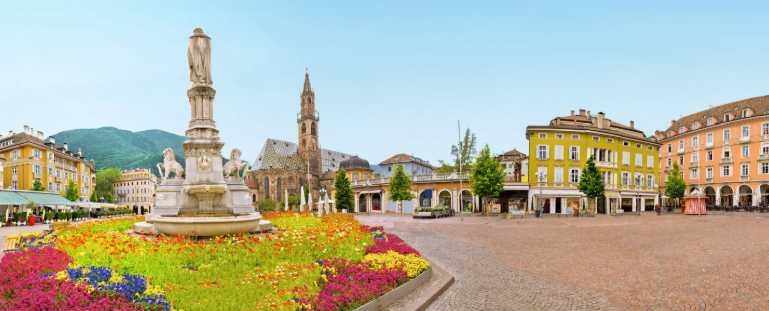
- Bolzano Cathedral & Gries Quarter — Step inside the 12th-century Gothic cathedral with its distinctive coloured stone facade. Walk across the river to the quieter Gries side, where cobbled lanes and a historic abbey church feel like a separate village entirely.
- Renon/Ritten Mountain — Ride the historic narrow-gauge railway or cable car up from the city edge. The plateau opens onto wide meadows with panoramic views across Bolzano and toward the Dolomites. It feels far removed from the streets below. Bring a jacket; it stays cooler up there.
- Castle & Vineyard Walks — Follow signed paths uphill to Sigmundskron Castle or nearby Manors. Vineyards cling to the sunlit slopes above town. The gradient is steady but manageable. You see Bolzano laid out below like a living map.
- Evening Wine & Food Stroll — Sit at a wooden table in a traditional wine bar. Local white wines, speck, and homemade bread appear everywhere. You hear both languages spoken around you. It is the best way to absorb the city’s dual culture.
Hidden Gems Most Travelers Miss
- The river promenade along the Talfer stream runs beneath tree cover, away from the main roads. It connects the city centre with Gries and stays quiet and green. Very few tourists walk this route. It feels like a secret corridor through the city.
- Domplatz — the cathedral square — opens up behind the church. It stays almost entirely empty while crowds pack the market street fifty metres away. Sit on the stone steps and watch light change on the facade. It is the calmest spot in the old town.
- Oberbozen village on the Renon plateau sits slightly above the main tourist stop. Traditional inns and quiet lanes offer views back across Bolzano. The slower pace feels entirely different from the city below.
- The "Bolzano by Night" guided tasting tour is overrated. You visit the same wine bars you can find independently, and the commentary adds little. Save the money and wander from bar to bar at your own pace.
Cultural & Practical Tips
- Book the Archaeology Museum 2–3 weeks ahead in July and August. Walk-up entry is rarely available. Early morning slots are the last to sell out.
- Respect bilingualism. Street signs and notices appear in two languages. Using a simple greeting in either Italian or German draws warm responses.
- Use public transport. Trains and buses connect Bolzano with every major Dolomite valley — Val Gardena, Val di Fassa, Alta Badia, San Candido — reliably and affordably. Parking at those destinations is harder and more expensive than from here.
- Do not drive in the ZTL restricted traffic zone. Cameras monitor every entry. Fines are high and issued promptly. Park outside the centre or use your accommodation’s garage.
- Check weather forecasts before heading into the mountains. Conditions above 1,500 metres can differ sharply from the city floor. Carry a light jacket even on warm days.
- Carry small change. Market stalls and bakeries prefer cash. Card acceptance is common but not universal everywhere.
- Book accommodation well ahead in December for the Christmas market period. Availability vanishes completely.
Essential Visitor Information
Location & Access: Bolzano / Bozen, South Tyrol, Italy. Coordinates roughly 46.4900° N, 11.3400° E. Three ways to arrive: train from Verona or Innsbruck directly to Bolzano Central Station — 1.5–2 hours; drive via A22 motorway — 45 minutes from Trento, 1 hour from Brenner Pass; or bus from nearby valleys and villages — fares €3–8.
Tickets & Booking: Archaeology Museum €12–15; combined museum pass €18–26. Renon cable car or train return €8–12. Booking ahead is essential for the Archaeology Museum in summer.
Operating Hours: Shops open 9:30 AM to 7:00 PM, closed midday Sunday. Museums open 10:00 AM to 6:00 PM, closed Monday. Restaurants serve lunch 12:00 PM–2:30 PM, dinner 7:00 PM–10:00 PM.
Visit Duration: Minimum 2 days for the city centre and Ötzi museum. Recommended 4–7 days to include Renon, nearby castles, and day trips into the Dolomites without rushing.
Family Suitability: Excellent for families. Porticoed streets are flat and stroller-friendly. The Archaeology Museum includes interactive sections suitable for children. The Renon railway and plateau are especially popular with younger visitors.
Timing: Best seasons are late April to June and September. Best time of day is before 9:00 AM. Mid-afternoon brings crowds and heat.
Highlights: Archaeology Museum, Via dei Portici market, cathedral, Renon plateau, vineyard walks, evening wine bars.
Nearby & Day Trip: Val Gardena is 45 minutes by bus. Merano is 35 minutes by train. Val di Fassa is 1 hour by bus. Cortina d'Ampezzo is 1.5 hours by bus or car.
Conclusion: Travel with Two Languages, Not Just One
Bolzano gives you more than a convenient base. It gives you a living bridge between cultures. You can rush from museum to train and leave with photos. Or you can sit at a wine bar, listen to the languages mix, and taste the food that belongs to both. The city does not demand you choose one side. It invites you to enjoy both. What is the one place where two cultures meet that you would most like to visit?
Comments
Post a Comment