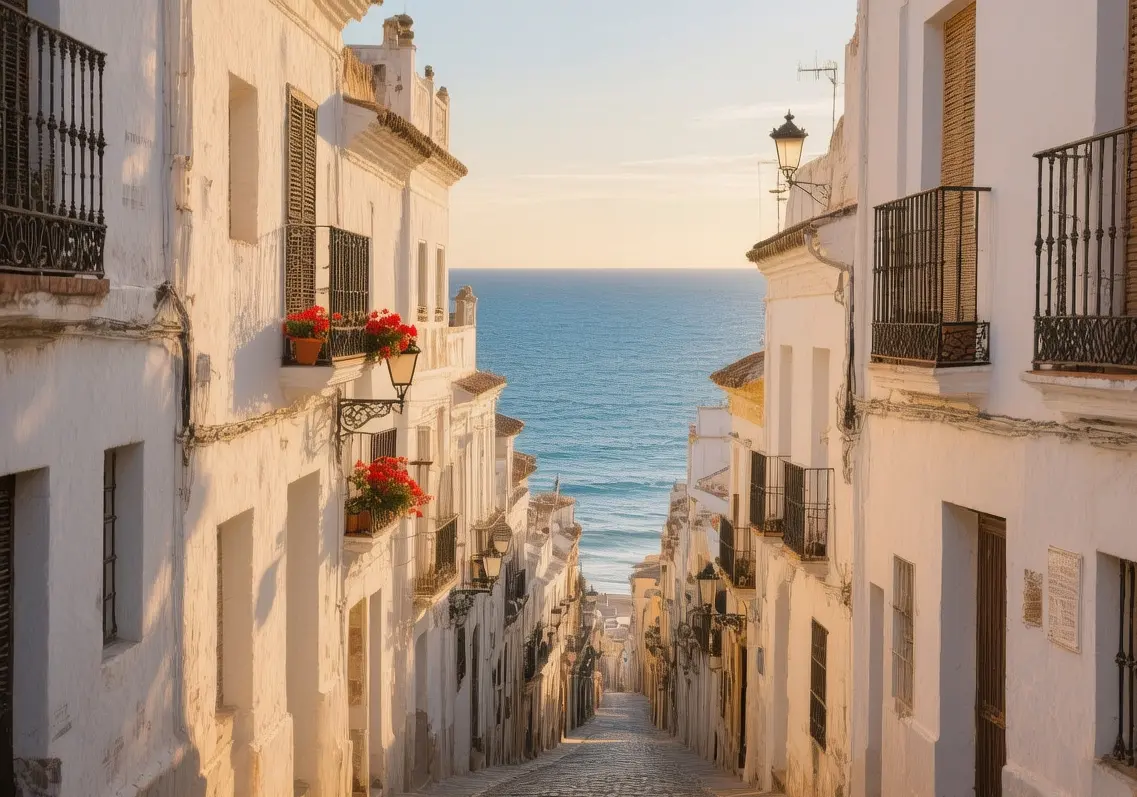
Cádiz: Where Ancient Seafront Meets Andalusian Soul
The sun clears the Atlantic at eight in the morning. I stand on the waterfront promenade, salt air sharp and bright. Fishermen unload crates from small boats. A woman carries fresh bread toward her home. The water glimmers deep blue, lapping at stone walls built centuries ago. Cádiz does not rush. It sits quiet and weathered, the oldest continuously inhabited city in Spain. Most visitors walk the main avenue and leave by mid-afternoon. They miss the maze of narrow lanes that hold the city’s true heart.
Why Cádiz Matters
Phoenicians founded Gadir around 1100 BC — making this one of Europe’s oldest cities. Romans, Visigoths, Moors, and Christians all held it. In the 16th and 17th centuries, ships returned from the Americas laden with gold and silver. Cádiz grew rich, its streets lined with merchants’ houses, grand churches, and watchtowers built to spot incoming vessels. The 1812 Spanish Constitution was drafted here, a turning point in the nation’s history. Yet the wealth came with danger. Invaders attacked repeatedly; plague struck; and trade shifted, leaving the city quieter but intact. Today the historic centre feels fragile. Many old buildings stand empty or neglected. Rising sea levels threaten the low-lying shoreline. The charm is real, but it hangs in delicate balance.
The Best Time to Experience Cádiz
Late April through early June offers the finest days. Temperatures sit 17°C to 24°C (63°F–75°F). The city blooms, festivals fill the calendar, and walking feels easy. September and early October match these numbers — warm evenings, clear skies, and fewer crowds. July and August reach 25°C to 32°C (77°F–90°F). Heat presses down by midday; locals retreat indoors until evening. November stays mild at 13°C to 19°C (55°F–66°F). Winter months run 9°C to 16°C (48°F–61°F). Rain falls occasionally, but the lanes belong to residents. Arrive before ten in the morning. The light is soft and the streets are still quiet.
Approximate Budget for a 7-Day Trip
Plan your spending with these daily averages:
- Accommodation: 60–130. Apartments in Santa María sit closer to 60; boutique rooms near the cathedral push well above 120. Right on the main waterfront is overpriced. Stay two lanes back and save 35 a night with quieter sleep and the same authentic atmosphere.
- Food: 28–48. Fried fish and a glass of sherry cost 7–10. A proper meal with local wine runs 20–35. Tourist-facing terraces charge double.
- Transport: 10–22. Train from Seville 1.5 hours ~15; from Jerez 30 minutes ~5. Bus from Málaga 3 hours ~22. Most of Cádiz is walkable.
- Attractions & Small Costs: 8–18. Cathedral tower climb approximately 5; Tavira Tower camera obscura show approximately 8.
- Miscellaneous: 7–18. Oranges, olive oil, or hand-painted ceramics.
Total for 7 days: 620–1,150 per person
Drinks and meals on the central promenade carry a heavy premium. Step into the side lanes — eat better, pay less, and sit where locals sit.
Essential Cádiz Experiences
- Climb the cathedral tower. Wide stone steps wind upward. The view unfolds slowly — terracotta roofs, church domes, and sea stretching to the horizon. Go at opening; queues form fast. Skip this if you dislike heights — the spiral is tight and continuous.
- Visit Tavira Tower. A 19th-century watchtower fitted with a camera obscura. Live images of the city are projected onto a white table. Gentle, clever, and unforgettable. The show runs every hour — arrive early to get a seat.
- Wander La Viña neighbourhood. Narrow lanes, whitewashed walls, and small family taverns. This is where fishermen once lived. Sit outside, drink sherry, and watch life go by. No rush is needed here.
- Walk the ancient city walls. Paseo del Vendaval follows the old fortifications. You see where land meets water exactly as it has for centuries. The stone is worn and weathered — touch it. It has seen everything.
- Eat fried fish at a freiduría. Fresh catch coated lightly and fried in olive oil. Crisp, hot, and simple. Order a plate, eat standing at the counter, and keep walking. This is the real taste of Cádiz.
- Watch sunset from the Castillo de San Sebastián. A small fortress on a tidal islet. The sun drops straight into the Atlantic. The light turns gold across the water. Go half an hour early; the gate closes at dusk.
Hidden Gems Most Travelers Miss
- Santa María quarter. The oldest part of the city. Lanes twist and turn without a grid. No signs, no crowds — just quiet plazas and old doorways. Walk and get happily lost.
- Plaza de las Flores. A small shaded square away from the main route. Flower stalls, old benches, and locals chatting. It feels like a village within the city.
- La Caleta beach at low tide. The cove where Phoenicians first landed. Small, sheltered, and framed by two forts. Go early — by midday it fills completely.
- The main cathedral square is famous but overrated. Walk five minutes to the church of Santa Cruz. It is smaller, older, and far more peaceful.
Cultural & Practical Tips
- Wear comfortable flat shoes. Cobblestones are uneven and slippery. Heels are dangerous and exhausting.
- Respect siesta. Many shops close 14:00–17:00. This is not laziness — it is how the city works. Plan accordingly or you will find doors shut.
- Do not block doorways or narrow lanes. Streets are designed for pedestrians, not crowds. Step aside and let locals pass.
- Book the Tavira Tower show in advance. Spaces fill fast. Walk-ins rarely get seats in summer.
- Carry small change. Many small taverns do not take cards. Cash is still king in Cádiz.
- Stay on marked paths at the castles. Fortification edges are unguarded and drops are sheer. Keep children close.
- Come back after dark. The city lights up differently. Plazas fill with families. The atmosphere changes completely — do not leave before you see it.
Essential Visitor Information
Location & Access: Southwest Spain, Andalusia, on a narrow peninsula jutting into the Atlantic. Seville 120 km — 1.5 hours by train. Jerez 40 km — 30 minutes. Málaga 200 km — 2.5 hours. Ferry to Canary Islands available; long but scenic.
Tickets & Booking: Cathedral entry approximately 7; tower climb separate ~5. Tavira Tower ~8. Most plazas and lanes free. Booking recommended July–August for guided tours and tower shows.
Operating Hours: Cathedral generally 10:00–18:30; shorter hours Sunday and winter. Tavira Tower 10:00–18:00; closed Mondays. Restaurants 13:00–16:00 and 20:30–23:30; some close Mondays.
Visit Duration: Minimum two full days. Plan three days to properly explore each quarter, walk the walls, and sit long enough to feel the rhythm.
Family Suitability: Excellent. Mostly flat and compact. Children love the waterfront and castles. Some lanes are too narrow for large strollers — bring a lightweight one.
Timing: Best seasons April–June and September–October. Best times: before 10:00 and after 19:00.
Highlights: Cathedral tower view, Tavira Tower camera obscura, La Viña lanes, city walls, La Caleta cove, San Sebastián sunset, fried fish at freiduría.
Nearby & Day Trip: Jerez de la Frontera 30 minutes; Tarifa 1 hour; Vejer de la Frontera 1 hour; Seville 1.5 hours; Tangier ferry via Algeciras 1.5 hours drive plus crossing. All make satisfying half-day or full-day trips.
Conclusion: Travel with Patience, Not Just Speed
Cádiz has stood here longer than most nations. You will find crowded lanes, midday closures, and days when the mist hides the horizon. That is real. Slow down. Let the maze guide you. Ask yourself what you remember most — the list of sights you checked off, or the quiet moment you spent sitting in a sunlit plaza watching the world go by.
Comments
Post a Comment