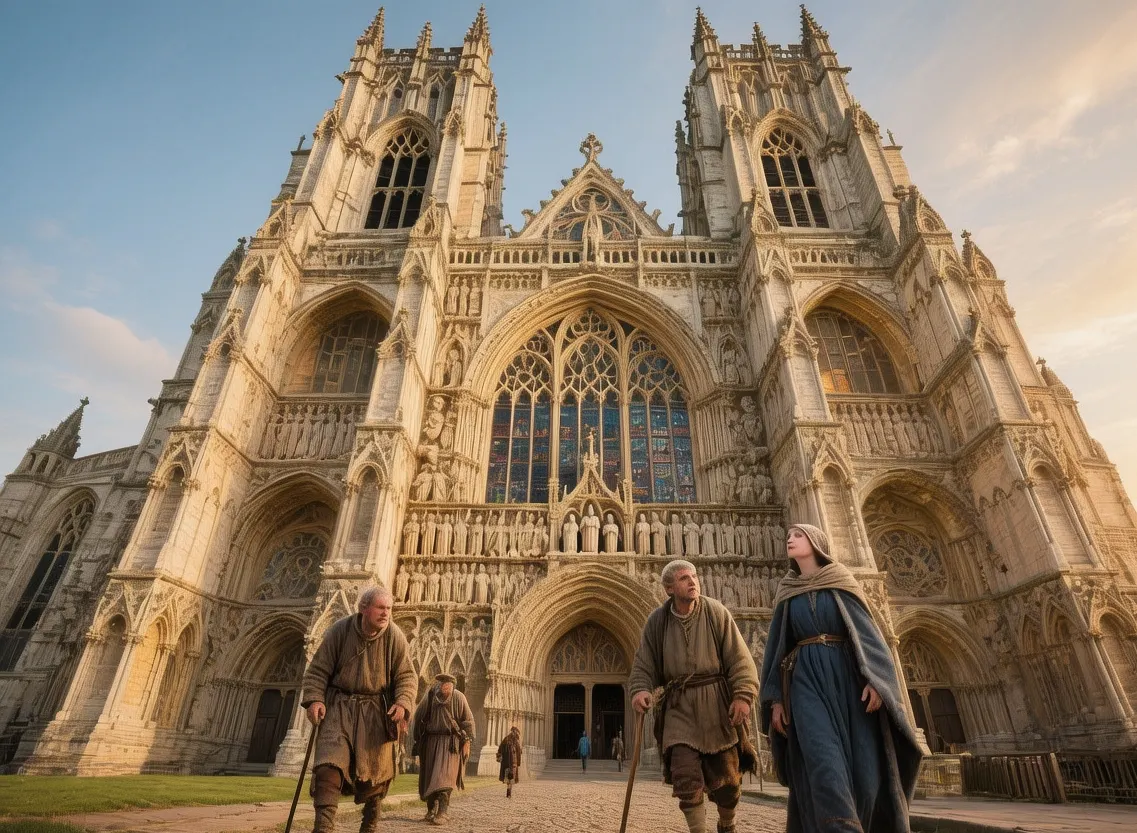
Canterbury Cathedral: Where Ancient Shrine Meets Living City Life
I step through the Christ Church Gate at 10:05 on a Friday in early October. The stone feels cool and worn smooth by centuries of hands. Admission costs eighteen pounds for an adult. The bell tower tolls slow and deep, the sound rolling across the close. This building does not sit apart from the town. It rises above it, frames it, and has shaped every street around it for nearly one thousand years. You feel that weight of history the moment you pass beneath the archway.
Why Canterbury Cathedral Matters
Founded in 597, rebuilt from 1070 after fire, then enlarged through the medieval centuries, this is the mother church of English Christianity. Thomas Becket was murdered here in 1170, and his shrine drew pilgrims from across Europe—Chaucer’s stories grew from that flow of people. The architecture spans Norman and Gothic styles, with the tallest church tower in England and rare stained glass still intact from the 12th century. That said, popularity brings pressure. Queues form at the entrance in summer, and the nave echoes with constant footsteps and voices. Information panels repeat the same details in multiple places, and if you avoid the guided tour you may leave feeling you have seen only the stones, not the story. It is a place of worship first, not a museum, and that balance shows in how spaces are used and sometimes closed to visitors.
The Best Time to Experience Canterbury Cathedral
Late April through early June brings soft light through the stained glass and thinner crowds. Temperatures sit 9°C (48°F) to 17°C (63°F). July and August reach 13°C (55°F) to 21°C (70°F), but school groups and day-trippers fill the nave from late morning. September and early October offer the sweetest balance—11°C (52°F) to 19°C (66°F), golden light across the city, and most families have gone home. November through February drops to 3°C (37°F) to 9°C (48°F); opening hours shorten, some chapels close, but you may walk the aisles almost alone. Visit before 10:00 a.m. or after 15:30 to see the glass in quiet light.
Approximate Budget for a 7-Day Trip
These figures cover one person based in or near Canterbury:
- Accommodation: £315 – £490 for a clean room in a central guesthouse or hotel. Stay 15 minutes’ walk from the city centre to save roughly one quarter.
- Food & Drink: £175 – £255. City centre cafés charge premium rates; better prices exist in the high streets farther out.
- Local Transport: £28 – £56. The compact centre means walking works perfectly; buses connect suburbs and railway station.
- Attractions & Entry Fees: £45 – £75. Cathedral plus St Augustine’s Abbey and West Gate Museum.
- Miscellaneous: £40 – £75 for gifts, snacks, and incidental expenses.
Total estimated budget: £603 – £951
The cathedral gift shop charges high prices for illustrated guidebooks. Skip the £18 hardback there. Buy the identical edition from the independent bookshop on St Margaret’s Street for £10 instead.
Essential Canterbury Cathedral Experiences
- Stand in the nave and look east. The columns rise in steady rhythm toward the altar. Light filters high above. The scale humbles you immediately. Skip this if you dislike crowds; summer queues fill the floor space.
- Walk the Trinity Chapel to the shrine site. Becket’s shrine stood here for centuries until destroyed in 1538. The empty space still draws quiet attention. You see where pilgrims knelt and left offerings.
- Climb the tower viewpoint. The 234-step spiral gives wide views across red roofs and surrounding countryside. Steps are narrow and uneven. Skip this if you have claustrophobia, stiff knees, or a fear of heights.
- Find the oldest stained glass in the choir. Some panels date to the 1170s. Their colours—deep blue, rich red—have not faded in 800 years. Notice how light changes the tone as the sun moves.
- Step into the crypt. Low vaulted ceilings and thick Norman columns feel older and quieter than the floors above. Services still happen here; respect those gathering if a space is roped off.
- Circuit the cloister garth. Walk the covered walkway where monks once lived and worked. The stone tracery frames grass and sky. It feels calmer here than anywhere else on the site.
Hidden Gems Most Travelers Miss
- The medieval city wall path runs from the West Gate to the cathedral precinct. You approach through a quiet residential lane and see the tower rise above trees without crossing the busy main road.
- St Martin’s Church, a short walk east, is the oldest continuously used church in the English-speaking world. It feels small, plain, and deeply peaceful. Most visitors never make the ten-minute journey.
- The Greyfriars chapel and garden lie beside the river. A quiet stone building with grass sloping down to water. It sits hidden behind streets and sees only a fraction of the crowds.
- The West Gate Towers viewpoint draws long queues and feels overrated on a wet day when visibility drops. Climb the cathedral tower instead; the ticket costs roughly the same and the view is wider.
Cultural & Practical Tips
- Respect quiet zones. Sound echoes powerfully in stone spaces; keep voices low and phones silent.
- Do not touch stone surfaces, carvings, or glass. Oil from hands damages centuries-old work.
- Check opening times online before you travel. Services, rehearsals, and special events close sections without notice.
- Allow extra time to enter. Security screening slows entry; large bags must be left in lockers at additional cost.
- Wear comfortable shoes. Stone floors are hard and uneven; you will stand and walk for hours.
- Book tower tours well in advance. Spaces fill days ahead in summer; none are sold on the day.
Essential Visitor Information
Location & Access: Cathedral House, 11 The Precincts, Canterbury CT1 2EH. 90 minutes by high-speed train from London St Pancras; 20 minutes by bus from Dover; reachable via M20 or A2 by car; park at public multi-storeys near the city centre.
Tickets & Booking: Adults £18; children under 12 free; concessions available. Booking recommended in July and August but not mandatory. Tower tours cost extra and sell out quickly.
Operating Hours: 10:00 to 17:00 Monday–Saturday, 12:30 to 17:00 Sunday March through October; closes at 16:00 November through February. Closed 25, 26, 31 December and 1 January.
Visit Duration: Allow a minimum of two hours. Three to four hours lets you explore crypt, tower, cloister, and nearby St Martin’s without rushing.
Family Suitability: Children welcome. Pushchairs work on main floors; baby carriers suit tower and crypt. Restrooms and a café sit near the entrance.
Timing: Arrive before 10:00 for quiet exploration. Late afternoon from 15:30 sees day-trippers leave and light warm across the stone.
Highlights: Nave and choir, Becket shrine site, crypt, cloister, tower views, and 12th-century stained glass.
Nearby & Day Trip: Dover White Cliffs lie 25 minutes southeast. Leeds Castle is 30 minutes east. Rochester and its cathedral are 35 minutes northwest by train.
Conclusion: Travel with Reverence, Not Just Tourism
Canterbury Cathedral has stood here through fire, murder, war, and change. It has been rebuilt, damaged, and restored. It is not perfect. It is not frozen in time. It lives and breathes as a place of worship even as thousands walk through its doors every day. Walk slowly. Pause where it feels quiet. Look beyond the famous name to the layers of people who built and kept this place. What will you carry away—the grand image, or the quiet feeling of standing somewhere truly ancient?
Comments
Post a Comment