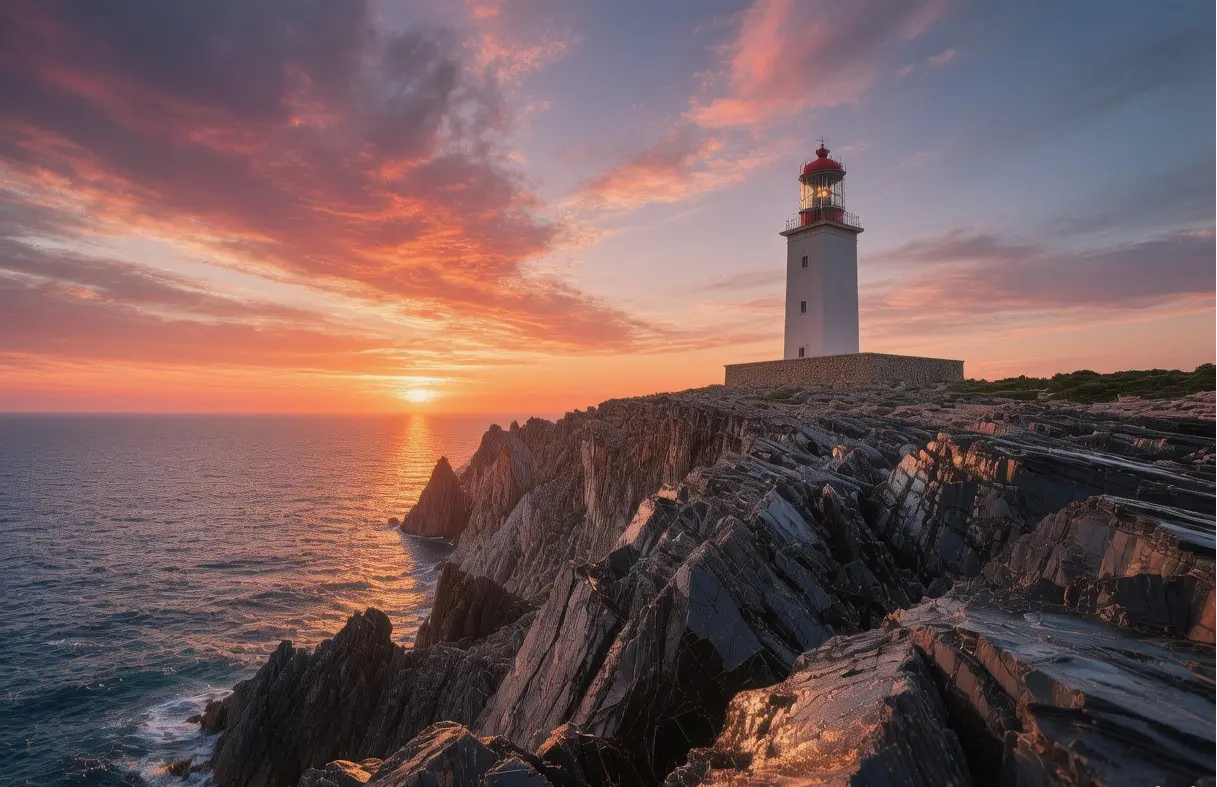
Punta de Cap de Creus: Where Pyrenean Rock Meets Mediterranean Sea
I stand at the easternmost point of mainland Spain at ten in the morning. Wind pulls steadily at my jacket. The lighthouse entry costs four euros. I run a hand over weathered granite. Sharp edges have been smoothed by centuries of gales. Below, waves crash against jagged coves. The water glows deep, intense blue — so clear you see rocks thirty feet down. Silence stretches vast in every direction. Not everything feels gentle. The wind can knock you off balance. Paths are rough and unmarked in places. There is nowhere to hide from sun or storm. Yet this edge of land feels alive. It has stood here long before maps and will remain long after.
Why Punta de Cap de Creus Matters
Cap de Creus forms the eastern tip of the Pyrenees, where the mountain range dips beneath the Mediterranean. The peninsula is carved from ancient granite — hard, resistant rock that has resisted erosion while softer land washed away. For centuries this was remote, smuggling territory. Fishermen and shepherds lived here in stone huts. In the 20th century, Salvador Dalí fell in love with the light. He lived in nearby Port Lligat and painted these coves, cliffs, and horizons — their stark geometry shaped his surrealist vision. Today the area holds natural park status. It faces real pressure. Coastal development presses closer. Summer crowds strain narrow roads. Climate change brings drier summers and stronger storms. Still, Cap de Creus remains wild. It is one of Europe’s most unspoiled Mediterranean coastlines.
The Best Time to Experience Cap de Creus
April through June offers wildflowers, calm seas, and manageable wind. Days sit between 14°C and 22°C (57°F–72°F). The landscape turns vivid green and gold. September and October run similarly — 16°C–24°C (61°F–75°F). Water stays warm enough for swimming. Summer from July to August feels intense — 22°C–30°C (72°F–86°F). The sun burns unfiltered. Wind gusts regularly. Roads fill with cars. Winter from November to March stays quiet — 8°C–15°C (46°F–59°F). Storms can close the lighthouse road. The shoreline feels raw and dramatic. Weekdays beat weekends year-round. Saturday and Sunday traffic jams the single access road. Arrive before 9:30 to have the point almost to yourself.
Approximate Budget for a 7-Day Trip
- Accommodation: Guesthouse in Cadaqués — 70–110 euros per night. Apartment in El Port de la Selva — 60–90 euros per night. Rural cottage — 75–120 euros per night. Camping — 25–40 euros per person.
- Food: Lunch at village restaurant — 14–20 euros. Fresh seafood dinner — 22–35 euros. Market or bakery meal — 5–9 euros.
- Transport: Car rental — 35–55 euros per day (essential). Fuel — 10–15 euros daily. Parking near lighthouse — 3–5 euros. Taxi from Figueres — 35–50 euros one way.
- Attractions: Lighthouse entry — 4 euros. Guided coastal walk — 12–18 euros. Kayak hire — 20–30 euros per half-day.
- Miscellaneous: Water, snacks, sun protection — 8–14 euros daily.
Total estimated for one person, 7 days: 520–850 euros
Drinks and food at the lighthouse cafe carry a heavy markup. A bottle of water can cost four euros. Bring your own supplies from the village below. It saves money and avoids relying on limited facilities.
Essential Punta de Cap de Creus Experiences
- Stand at the easternmost point. A simple stone marker marks the tip. Land ends here. Nothing but open water stretches between you and Italy. The horizon feels endless. Skip this if gale warnings are posted — exposed rock becomes dangerous.
- Walk the path to Cala Tavallera. A sheltered cove with turquoise water and pebbled shore. The trail winds past gnarled olive trees and granite outcrops. It feels like walking into a painting. The descent is steep — allow extra time to climb back up.
- Visit the lighthouse at sunrise. The road opens early enough. Golden light hits the sea and turns the granite pink. You will likely have the place to yourself. It is worth waking early.
- Kayak along the hidden coves. From the water you see caves and beaches unreachable by land. The clarity astonishes you — every rock, fish, and weed stands distinct. Go early — wind picks up by midday.
- Find Dalí’s inspiration points. Several spots match paintings exactly — sharp triangles, distant islets, glowing water. The light explains everything. You understand why he painted these shapes over and over.
- Eat grilled fish at a waterfront chiringuito. Caught that morning, served simply with salad and bread. It tastes of salt and sun. The flavour never tastes the same anywhere else.
Hidden Gems Most Travelers Miss
- Cala S’Alguer. A tiny cove tucked between rock faces. Old fishing huts line the shore. Water shimmers bright emerald. Almost no one walks this far from the main road.
- The shepherd’s trail to the north. An ancient stone path winds along the ridge. Views stretch across the peninsula and out to sea. Wild thyme and rosemary scent the air.
- The so-called "famous viewpoint" right beside the parking lot. It feels crowded and framed by railings. Walk ten minutes further along the cliff path. The real views are quieter and far more beautiful.
Cultural & Practical Tips
- Do not visit without a car. Public transport is extremely limited. The lighthouse sits eight kilometres from the nearest village — uphill all the way. Walking takes two hours each way.
- Check the wind forecast before setting out. Tramontana winds blow from the north and can reach gale force. They make exposed paths dangerous and close the lighthouse road. If red flags fly, turn back.
- Carry at least two litres of water per person. There is no fresh water along the trails. Heat plus wind plus walking dehydrates you faster than you notice.
- Wear sturdy closed shoes. Granite is sharp and slippery when damp. Flip-flops are dangerous and will not survive the rocks.
- Do not leave any trace. This is a protected natural park. Carry everything out. There are no bins along remote paths.
- Respect private property. Stone huts, olive groves, and terraces belong to local families. Stay on marked paths. Do not pick fruit or disturb animals.
Essential Visitor Information
Location & Access: Punta de Cap de Creus, Natural Park, Girona, Catalonia, Spain. 45 km north of Girona — 50 minutes by car. 30 km east of Figueres — 40 minutes. 180 km north of Barcelona — 2 hours 15 minutes. Nearest village: El Port de la Selva, then 8 km uphill to the lighthouse.
Tickets & Booking: Lighthouse — 4 euros adults. No reservation needed. Guided walks and kayak trips — book 1–2 days ahead in summer.
Operating Hours: Lighthouse — 10:00 to 18:00, shorter hours winter. Park trails — open 24 hours daily. Road may close during storms.
Visit Duration: Minimum half a day. 1 full day lets you see the point, walk one cove trail, and sit quietly without rushing.
Family Suitability: Good for older children. Strollers work on paved areas but not on trails. Keep close to little ones — cliff edges have no railings.
Timing: Best season — May–June and September–October. Best time of day — before 9:30 or at sunset.
Highlights: Easternmost point, Cala Tavallera trail, sunrise from the lighthouse, crystal-clear kayak coves, Dalí-inspired landscapes.
Nearby & Day Trip: Cadaqués — 20 minutes by car. Figueres Dalí Museum — 40 minutes. Girona — 50 minutes. Besalú — 1 hour.
Conclusion: Travel with Respect, Not Just Photos
Cap de Creus is wild, exposed, and unpolished. It does not exist for your comfort. Wind, sun, and rock do not care about schedules. Before you leave, stand still and let the wind speak. What will you protect so places like this remain wild?
Comments
Post a Comment