
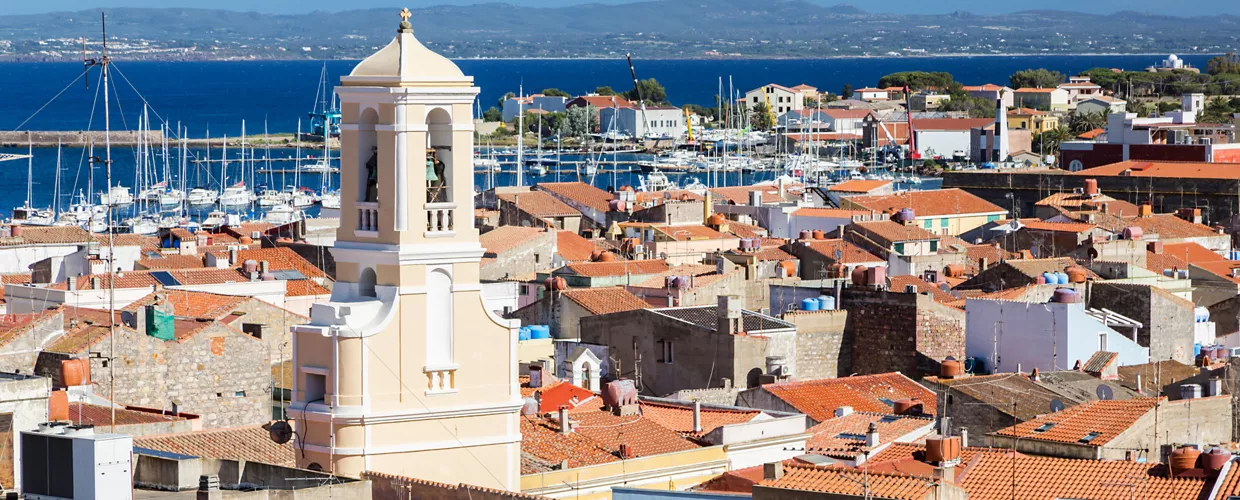
Carloforte Tuna Town Genoese Heritage Meets Mediterranean Bounty
Sunset paints the harbor in molten gold as fishing boats return with their day’s catch—nets glistening with silver-blue tonno rosso (bluefin tuna) that will grace tables across Europe by dawn. You stand on Via Roma, where pastel-hued Genoese buildings with wrought-iron balconies lean companionably over cobblestones worn smooth by 270 years of footsteps. The air carries the briny tang of the sea mingled with saffron-infused pasta simmering in family kitchens—a scent unique to this island enclave where Ligurian dialect echoes through alleyways just 7 kilometers off Sardinia’s southwest coast. Founded in 1738 by coral fishermen from Tabarka, Tunisia, Carloforte solved a critical survival problem: creating a sustainable community after their North African colony collapsed under Ottoman pressure. Today, its identity remains tethered to the sea—particularly the ancient tonnara (tuna trap) system that has supplied Roman feasts since 100 BCE and now fuels a culinary renaissance certified by the European Union’s Protected Geographical Indication status. In 2026, as global fisheries face collapse, Carloforte matters precisely because it proves tradition and sustainability can coexist—a place where every tuna dish tells a story of resilience, and every harbor reflection holds centuries of maritime wisdom.
Why Carloforte Embodies Sustainable Heritage
Carloforte solves a fundamental paradox of Mediterranean coastal life: how to maintain cultural identity while adapting to ecological realities. Its unique origin story begins in 1540 when Genoese merchants established a coral-fishing colony on Tunisia’s Tabarka Island; when Ottoman forces expelled them in 1738, King Charles Emmanuel III of Sardinia granted refuge on uninhabited San Pietro Island—hence the town’s name. The settlers brought not just Ligurian dialect (still spoken by 85% of residents [[28]]), but sophisticated maritime techniques including the tonnara fissa—a fixed tuna trap system using nets arranged in a labyrinthine “chamber of death” that guides fish by instinct rather than force. This method, unchanged since Phoenician times, allows selective harvesting: only mature tuna (minimum 115 cm length) are taken during the May–June migration, with juveniles released unharmed. Technically, the tonnara operates through precise oceanography—the main trap sits 3.2 kilometers offshore where currents funnel tuna through a series of chambers covering 12 hectares; the final camera della morte (death chamber) is raised only during the full moon when fish are most active. Culturally, this practice sustains the annual Girotonno festival (established 2004), where chefs transform every part of the tuna into 50+ dishes—from heart carpaccio to bottarga (cured roe). Critically, Carloforte’s tuna received EU PGI certification in 2018, guaranteeing traceability from sea to plate and funding marine research through a €0.50/kg sustainability levy.
The Best Time to Experience Carloforte Tuna Town
For optimal cultural immersion and culinary experiences, visit between May 20–June 15 or September 10–October 5, 2026—when daytime temperatures average 21–26°C (70–79°F) and sea breezes moderate afternoon heat [[29]]. Time your visit to coincide with the Girotonno festival (typically last week of May), when the harbor hosts cooking demonstrations and tuna auctions begin daily at 7:00 AM. Avoid July 15–August 25 when temperatures exceed 30°C (86°F), humidity reaches 78%, and tourist numbers peak—diminishing authentic interactions with local fishermen. Winter visits (November–February) offer solitude but present challenges: many restaurants close seasonally, the tonnara is inactive, and ferry services reduce frequency. For real-time updates on festival dates and ferry schedules, verify with the Comune di Carloforte’s portal at comune.carloforte.ci.it 48 hours before departure, as weather occasionally affects boat operations.
Approximate Budget for a 7-Day Trip (2026)
This budget reflects mid-range cultural-gastronomic travel based in Carloforte with island exploration, using 2026 projected pricing with 3.8% inflation adjustment from 2024 baseline figures per ISTAT regional data. All costs in euros (€).
- Accommodation: €95–€140 per night for seaside B&B or 3-star hotel in Carloforte center (e.g., Hotel Villa Flavia or B&B Sa Scighera); includes harbor views and breakfast featuring local cheeses
- Food: €58 per day average—breakfast €10 (fresh ricotta and pane carasau), lunch €22 (tuna tartare at harbor kiosk), dinner €26 (primo of spaghetti al tonno, secondo of grilled tuna heart at family-run trattoria)
- Transportation: €240 total—Cagliari Elmas Airport to Porto Vesme via ARST bus line 1072 (€7.50, 1h 45m); ferry to Carloforte (€12 round-trip, 30m); daily scooter rental €25 including fuel for island exploration
- Attractions: Guided tonnara tour €32; Museo Civico del Mare €8; boat excursion to Cala Fico €35; Girotonno cooking class €40
- Miscellaneous: €85—bottarga souvenir €35/100g, Sardinian wine tasting €25, donation to marine conservation program €25
Total estimated cost: €1,230–€1,480 for seven days
6 Essential Carloforte Tuna Town Experiences
- Witness the Morning Tuna Auction: Arrive at the harbor by 6:45 AM during May–June to observe the ritualistic asta del tonno. Fishermen chant bids in Tabarchino dialect as 200-kg bluefin tuna are weighed on century-old scales; the highest bidder secures fish for that evening’s restaurant service.
- Attend a Traditional Bottarga Workshop: Join the 10:00 AM session at Saline di Carloforte where artisans demonstrate curing tuna roe in sea salt for 45 days, then coating it in beeswax. Taste freshly shaved bottarga over fregola pasta—a technique unchanged since Phoenician times.
- Explore the Tonnara di Su Pranu: Take the 9:00 AM boat tour to this historic tuna trap 3.2 kilometers offshore. Stand on the floating platform as fishermen explain the labyrinthine net system that guides tuna by instinct; look for dolphins that follow the traps seeking scraps.
- Dine at a Fisherman’s Table: Book the “Cena del Pescatore” experience at Trattoria da Giò (Tuesdays/Thursdays 20:00)—a five-course meal prepared by retired tonnarotti using family recipes. The highlight: cuore di tonno alla carlofortina (tuna heart braised in myrtle berries).
- Hike to Punta delle Colonne: Trek the 5-kilometer coastal path from Carloforte between 7:00–10:00 AM to reach this dramatic headland where Roman columns (likely shipwreck remnants) stand sentinel over turquoise waters. Bring binoculars to spot peregrine falcons nesting in limestone crevices.
- Photograph Harbor Reflections at Golden Hour: Position yourself on Molo Cavo pier at 19:30 to capture Genoese buildings mirrored in calm harbor waters. Use a polarizing filter to reduce glare and emphasize the contrast between pastel facades and deep blue sea.
3 Hidden Gems Most Travelers Miss
- Cala Fico Secret Cove: Reachable only by boat or 45-minute hike from Cala Fico trailhead, this untouched cove features a natural arch framing turquoise waters. Visit at low tide (check Porto Vesme port authority tables at porto-vesme.it/maree) when hidden sea caves become accessible—most tourists never venture beyond the main beaches.
- Museo della Lingua Tabarchina Archive: In the town hall basement, unpublished recordings from 1950s elders document the Ligurian dialect’s evolution. Email archivio@comune.carloforte.ci.it 72 hours ahead specifying interest in “Documenti Linguistici 1950–1970”; bring ID for the 30-minute listening session.
- Saline di Carloforte Salt Pans: Located 2 kilometers north of town, these restored 18th-century salt evaporation ponds produce artisanal sea salt used in local bottarga production. Visit at dawn (6:00–8:00 AM) when workers harvest crystals; purchase directly from the cooperative (€8/500g).
Cultural & Practical Tips
- Learn basic Tabarchino phrases—“Bon dia” (good day) shows respect for the unique linguistic heritage; most elders appreciate the effort even if they respond in Italian.
- Respect fishing schedules—never photograph the tonnara during active operations (May–June mornings); ask permission before documenting harbor activities.
- Carry cash in small denominations—many family-run eateries and boutiques don’t accept cards, and ATMs are limited to two machines in town center.
- Wear sturdy sandals with grip soles—the harbor’s volcanic stone surfaces become slippery when wet, and coastal trails have loose scree.
- Support sustainability by choosing restaurants displaying the “Tonno di Carloforte PGI” certification plaque; this guarantees traceable, responsibly harvested tuna.
- Photography drones require authorization from the Comune (+39 0781 858001); handheld cameras are permitted but avoid disrupting fishing operations.
- Visit the Mercato Ittico (fish market) Tuesday–Saturday 8:00–10:00 AM to observe the day’s catch; bargaining is considered rude—prices are fixed by weight.
Conclusion: Travel with Respect, Not Just Appetite
To experience Carloforte is to witness a living covenant between humans and the sea—a relationship refined over centuries where every tuna dish carries the weight of tradition and responsibility. In 2026, as industrial fishing decimates global stocks, this island stands as both sanctuary and lesson: its tonnara system proves that abundance and restraint can coexist, that heritage isn’t preserved in museums but practiced daily in harbor rituals and kitchen techniques. Your presence here carries consequence—the €32 tonnara tour fee funds marine research, yet your dining choices directly impact whether these traditions survive. True engagement means slowing beyond consumption: listening to fishermen’s stories in Tabarchino dialect, understanding why bottarga is shaved not sliced, recognizing that sustainability isn’t a marketing term but a way of life measured in generations. Leave no trace beyond gratitude; take no fragment beyond memories. For Carloforte endures not as a culinary destination, but as a testament to what happens when culture and conservation align—a dialogue written in sea salt and saffron that asks only this: that we remember why some traditions must be protected, not just sampled.