Carrara Marble: Where Mountain Stone Meets World Masterpiece
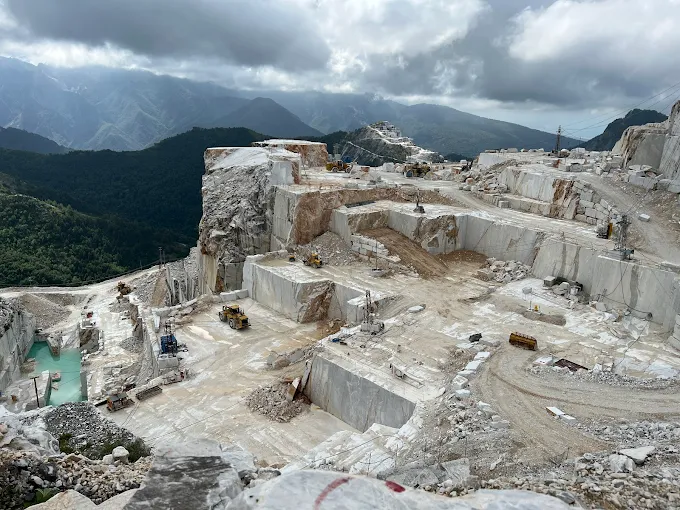
I stand at the quarry edge at 9:00 on a May morning. The air smells of dust and stone. An espresso costs one euro twenty at a small bar in the valley below. I look upward — the mountain has been carved into giant white steps, sheer faces rising thousands of feet, cut blocks stacked along terraces, and trucks crawling slowly up steep winding roads. Carrara sits in the Apuan Alps in northern Tuscany. People come for the famous name. They find a landscape reshaped by human hands for over 2,000 years — ancient, immense, and still at work every single day.
Why Carrara Matters
Romans first quarried here around the 1st century BCE. The stone was shipped across the empire — temples, baths, and monuments in Rome were built from it. Michelangelo travelled here personally to select blocks, choosing the purest white statuario for his sculptures. Over centuries the industry grew; hundreds of quarries opened, families built lives around extraction, and villages spread through the valleys. Today Carrara remains one of the largest active marble districts in the world. That scale brings real pressure. Some quarries expand too fast. Dust settles on homes and woodland. Views change year by year. The industry balances heritage with livelihood — and that balance is delicate.
The Best Time to Experience Carrara
Late April through June brings fresh green on lower slopes, clear light on white faces, and thinner crowds. Temperatures sit between 11°C and 23°C (52°F–73°F). Working quarries operate steadily and roads feel manageable. July and August warm to 18°C and 30°C (64°F–86°F). Exposed stone absorbs heat and higher viewpoints feel hot. September offers golden light and settled weather — 15°C to 25°C (59°F–77°F). The air stays clear and visitors thin out. October remains mild — 12°C to 20°C (54°F–68°F) — but rain becomes more frequent. Winter holds crisp, quiet days: 4°C to 11°C (39°F–52°F). Some high-altitude tours pause due to ice. Arrive before 9:30 AM any time of year — that is when light hits the quarry faces best and operations feel most active.
Approximate Budget for a 7-Day Trip
Prices below are per person, in euros, based on staying in Carrara town or nearby.
- Accommodation: 7 nights in a guesthouse or apartment — €65–145 per night. Total: €455–1,015. Staying in Pisa or Lucca costs 30–40% less; driving or taking a bus in takes 45–60 minutes longer.
- Food & Drink: Breakfast, two meals daily — €25–50 daily. Total: €175–350. Restaurants right beside major quarry viewpoints charge premium prices; walk one lane back in town for home-made pasta, slow-cooked meat, and local wine at fair rates.
- Transport & Tickets: Guided 4×4 quarry tour — €35–60; local bus — €1.50 per ride; marble workshop visit — €8–15. Private cars are restricted in active zones — guided access is required.
- Activities: Historic centre, sculptor studios, nearby coastal towns — €25–55.
- Miscellaneous: Water, hat, sturdy closed shoes — €12–22.
Total estimated 7-day cost: €692–1,507
"Exclusive private quarry access" tours are often overpriced. Every significant viewpoint and working zone is covered on standard scheduled tours. You will see the same stone faces and learn the same stories without paying extra.
Essential Carrara Experiences
- High Quarry Viewpoint — Stand above the terraced pits. White stone stretches down the mountain in giant steps, cut blocks line terraces, and trucks move slowly below. It feels immense, ancient, and entirely human-made. Skip if you dislike heights; edges are steep and unguarded in places.
- Active Quarry Guided Tour — Enter a working zone. You see wire-saws cutting deep into solid rock, blocks being moved, and dust rising as new faces are opened. It is not a museum — extraction happens here daily. You leave understanding how much labour goes into every single slab.
- Historic Quarry Visit — Walk an older site where methods changed little over centuries. Hand-hewn marks, narrow access roads, and smaller scales show how generations worked before machinery. Michelangelo chose stone from these very slopes — quiet, rough, and deeply authentic.
- Marble Workshop Watch — Step into a studio where blocks become art or architecture. Saws roar, polishers glow, and sculptors shape the same stone in the same way masters did. It connects mountain to finished piece — the full journey visible in one room.
- Carrara Town Centre Stroll — Wander the medieval streets. Stone facades, carved doorways, and small workshops sit beside cafés and shops. The town is built from its own product — solid, enduring, and unpretentious.
- Local Meal Afterward — Eat in a family-run place. Hearty pasta, slow-cooked beef, and robust local wine. Simple food for hard-working people — honest, filling, and exactly right after a day in the mountains.
Hidden Gems Most Travelers Miss
- The secondary valley road runs parallel to the main route but far quieter. Pull-offs offer unobscured views across older quarries and forested slopes. Very few visitors drive this way — just locals heading between villages.
- The small stone church high above the town has a marble altar and quiet courtyard. It sits below the quarry line, peaceful and almost entirely overlooked. No ticket needed — just walk up the lane.
- The artisan workshop district near the river has family operations passed down generations. Smaller, quieter, and less polished than tourist studios — they welcome visitors who arrive respectfully and stay quiet.
- The "Carrara VIP Exclusive Mountain & Secret Quarry Tour" is overpriced. Every significant site is open on standard tours or public roads. Arrive early, drive the back road, and stay late — that is how you truly experience it.
Cultural & Practical Tips
- Respect restricted zones. Active quarries are dangerous workplaces — unauthorised entry is illegal and genuinely risky. Stay with your guide or on marked public roads.
- Wear sturdy closed shoes. Ground is uneven, dusty, and often littered with stone chips. Flip-flops are unsafe and unsuitable.
- Carry water and sun protection. Higher viewpoints offer no shade and reflect intense glare. Dehydration comes faster than you expect.
- Do not take stone samples. Removing pieces damages the landscape and is prohibited. Leave the mountain as you found it.
- Keep voices low in villages below. Operations run early and people live here. Dust and noise are part of daily life — be respectful.
- Book tours 1–2 weeks ahead in summer. Morning slots sell out fastest — they offer best light and most active operations.
- Look beyond the famous white. Different quarries produce grey, gold, and veined stone — equally beautiful and far less photographed.
Essential Visitor Information
Location & Access: Carrara, Tuscany, Italy. Coordinates roughly 44.07° N, 10.11° E. Three ways to arrive: train from Pisa — 1 hour; drive from Pisa — 1 hour; drive from Florence — 2 hours.
Tickets & Booking: Town and public roads free. Guided 4×4 tour — €35–60; workshop visit — €8–15. Book tours ahead; no booking needed for town centre.
Operating Hours: Quarries active roughly 7:00 AM to 5:00 PM weekdays; some limited Saturday access. Tours run morning and afternoon; some close one day weekly — typically Monday.
Visit Duration: Minimum 1 full day. Recommended 2 days to explore high quarries, historic sites, workshops, and town centre without rushing.
Family Suitability: Good for older children. Uneven ground and restricted access make strollers impractical — carriers are better. Younger children may find industrial tours loud and dusty.
Timing: Best seasons are late April–June and September. Best time of day is before 9:30 AM.
Highlights: High terrace viewpoint, active quarry tour, historic Michelangelo-era site, working studio, quiet back road, town centre stone architecture.
Nearby & Day Trip: Forte dei Marmi — 20 mins. Pisa — 1 hour. Lucca — 1 hour 15 mins. Florence — 2 hours.
Conclusion: Travel with Respect, Not Just Wonder
Carrara gives you beauty that cost mountains, labour, and centuries of change. You can photograph the white faces and leave. Or you can remember this is someone’s workplace, someone’s home, and a landscape forever altered. Honouring that cost — the work, the dust, the slow change — is the finest compliment you can pay. What is the one beautiful, working place you would visit promising to treat it with care?
Comments
Post a Comment