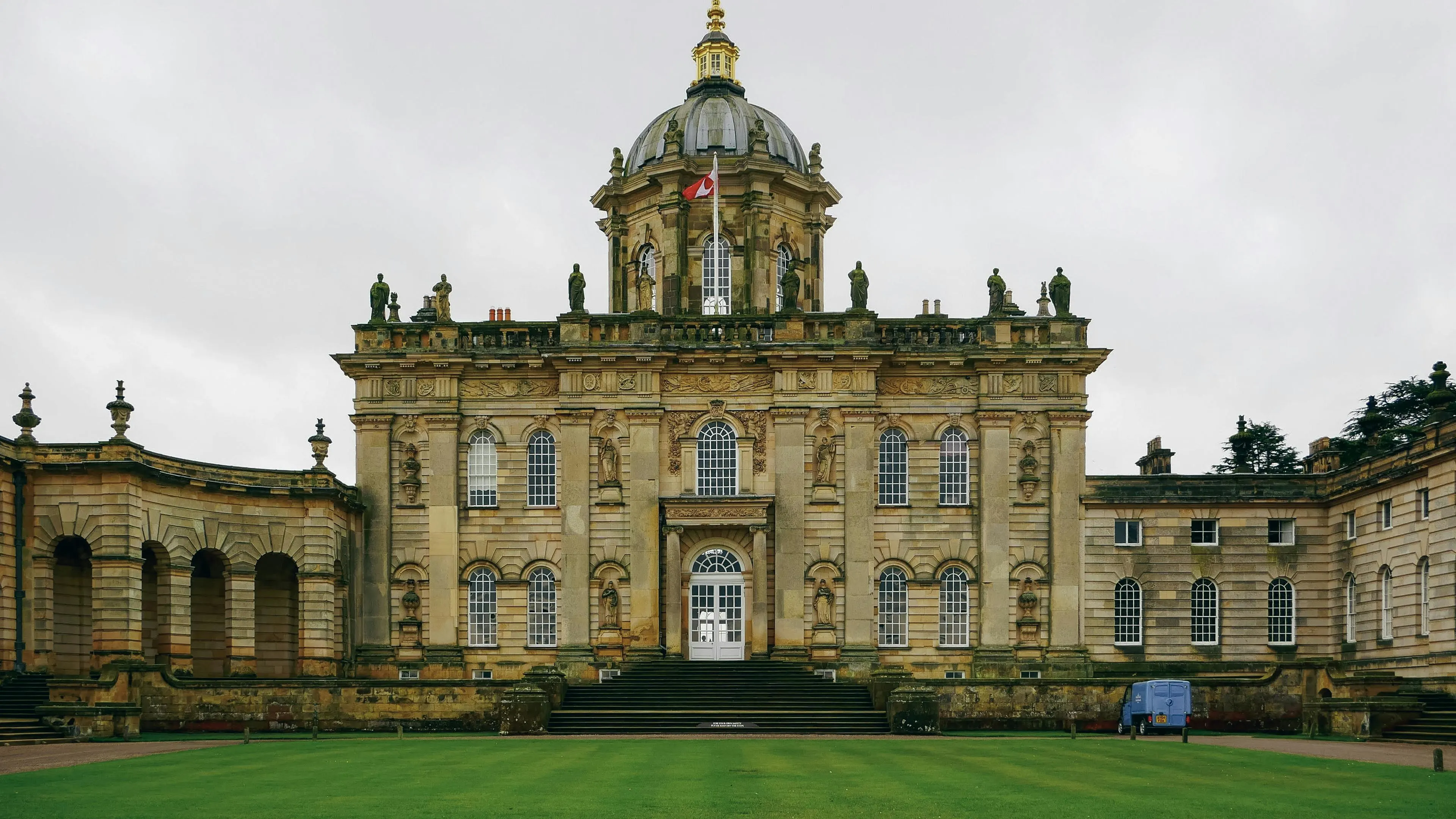
Castle Howard: Where Baroque Grandeur Meets Howardian Hills
I stand on the great terrace at ten past ten on a bright morning in late May. Sunlight warms the honey-coloured stone facade, turning every column, carving, and curve soft gold. The central dome rises high and symmetrical, flanked by wings that stretch wide and balanced. Fountains play gently in the broad lawn below, and avenues of trees march straight toward distant woodland. A few people walk slowly across the grass, voices quiet. No royal crown ever sat here, yet the house feels more princely than many palaces. It was built to impress, and after 300 years, it still does.
Why Castle Howard Matters
Construction began in 1699 for Charles Howard, 3rd Earl of Carlisle, designed by John Vanbrugh and Nicholas Hawksmoor — the first truly Baroque house in England, bold and experimental at a time when conservative styles still prevailed. It was never a fortress despite the name; "castle" signified status rather than defence. The estate passed through generations, survived partial fire in 1940 that destroyed the west wing, and remains home to the Howard family today. Television and film adaptations have made it instantly recognisable worldwide. That fame brings real pressure. Coach tours arrive daily in summer, and popular rooms feel crowded. Some areas never fully reopened after the fire, and restoration proceeds slowly at great cost. The house is magnificent, but it is also a lived-in home — private spaces sit beside public ones, and the estate balances grand display with quiet stewardship.
The Best Time to Experience Castle Howard
Late April through May brings fresh foliage and blooming rhododendrons across the grounds, temperatures between 7°C and 15°C (45°F to 59°F). Morning light hits the south-facing facade perfectly, and gardens feel bright before summer crowds. June and July offer the longest days — sky stays light until nearly 9.30 p.m. — and temperatures rise to 11°C and 19°C (52°F to 66°F). This is peak season; the house fills by midday and queues form at popular rooms. August stays mild at 12°C to 20°C (54°F to 68°F), but rain falls frequently and large grounds stay damp underfoot. September holds steady at 10°C to 16°C (50°F to 61°F), crowds thin noticeably, and golden light matches the stone beautifully. This is widely considered the best month to visit. October cools to 6°C and 12°C (43°F to 54°F), days shorten fast, and autumn foliage turns the parkland deep red and gold. November through February the estate quiets. Temperatures sit 3°C to 8°C (37°F to 46°F), opening days reduce, and the house stands stark and elegant against winter sky. March and April lengthen again, 5°C to 11°C (41°F to 52°F), and daffodils line the main drive, though interiors remain closed certain days. Check opening schedules in advance; winter hours are limited.
Approximate Budget for a 7-Day Trip
These figures assume a base in York or nearby market town, exploring Castle Howard and surrounding countryside.
- Accommodation: £65–£100 nightly. Shared hostel room or clean guesthouse room. £455–£700 for 7 nights.
- Food & Drink: £18–£30 daily for breakfasts and packed lunches. Evening meal out £24–£45. £294–£525 total.
- Transport: Car rental £45–£70 daily; drive 15 miles northeast of York. Bus runs but service is limited. £60–£490 total.
- Attractions: Combined house & gardens ticket £22 adult. Nearby York Minster £12, National Trust properties £8–£14. £55–£110 total.
- Miscellaneous: £8–£16 daily for waterproof layers, hot drinks, and supplies. £56–£112 total.
Total estimated 7-day cost: £920 to £1,937
The estate restaurants charge premium prices. Bring a picnic — there are beautiful designated spots — and dine in York or nearby villages for better value and more choice.
Essential Castle Howard Experiences
- Approach via the main drive — Trees frame the view perfectly as the house emerges ahead, dome first then full facade. It was designed as a gradual reveal. Skip this if arriving by bus; you miss the carefully staged approach. Walk the drive on arrival to see it properly.
- Stand in the Great Hall — Soaring ceiling, deep colours, and grand scale define the Baroque ambition. Look upward; the painted scenes tell stories of gods and heroes. Go early; the space feels calm and still before crowds fill it.
- Walk the garden terraces — Broad stone steps descend from the house to fountains, statues, and formal planting. Each level offers a fresh perspective. The lower terrace frames the building perfectly. Allow 45 minutes to explore fully.
- Visit the Mausoleum — A short walk across parkland, this massive circular structure stands alone on a rise. It was built as the family resting place and remains impressively sombre. The path slopes gently; wear comfortable shoes.
- Explore the Temple and lakeside — Further grounds hold classical buildings, a large lake, and quiet woodland walks. Very few visitors walk this far. The views back toward the house across water are magnificent.
- See the restored west wing rooms — Decades of work have returned sections of the fire-damaged wing to use. Displays explain the blaze, the loss, and the slow careful recovery. It adds depth to the grandeur.
Hidden Gems Most Travelers Miss
- Ray Wood — A sheltered valley garden filled with azaleas, bluebells, and streams. Tucked away beyond the main lawn, it feels separate and peaceful. The ground is uneven; sturdy shoes help.
- High terrace quiet end — Most visitors stop near the central fountain. Walk west along the balustrade; the view stretches unobscured across fields and woodland. It stays quiet even on busy days.
- New River Bridge path — Beyond the lake, a stone arch carries the old carriage drive. The house appears framed through the archway. This spot is widely shared online now and has become overrated. Go before 10 a.m. if you want it empty.
- Stables gallery approach — Enter through the original courtyard rather than the main entrance. You see the domestic side first — service buildings, archways, and stone courtyards — before the grand facade reveals itself.
Cultural & Practical Tips
- Book tickets online in advance. Summer days sell out, and on-site entry costs more and takes longer.
- Wear waterproof footwear. The estate covers 1,000 acres; grass paths stay damp and muddy even after light rain.
- Respect private areas. The family still lives here. Signs mark closed sections — do not enter or photograph windows.
- Allow far more time than you expect. Most people underestimate the grounds. House plus key gardens needs half a day; full estate merits a full day.
- Do not touch the interiors. Original fabrics, wood, and plaster are fragile. Lean on nothing and keep children close.
- Visit in late afternoon. Day-trippers leave by 3 p.m. The final two hours feel noticeably quieter and light warms beautifully.
Essential Visitor Information
Location & Access: Castle Howard, York YO60 7DA — 15 miles northeast of York. Three transport options: car via A64 then local lanes — 30 minutes from York; bus from York — limited service, check schedule; guided tour from York — includes entry and transport.
Tickets & Booking: Adult £22. Book online for best rates. House and gardens included; certain events charge separately.
Operating Hours: Generally 10 a.m. to 5 p.m. April through October; reduced days and hours November through March; closed Christmas Eve and Day.
Visit Duration: Minimum 3 hours. Full day including house, terraces, lakeside, Mausoleum, and woodland.
Family Suitability: Grounds largely accessible; house has stairs and some uneven floors. Keep children away from unrailed fountain edges. Public toilets and cafe near main entrance.
Timing: Best season May or September. Early morning at opening or late afternoon 2 hours before closing offers quietest rooms and warmest light.
Highlights: Main drive arrival view, Great Hall ceiling, south terrace at sunset, Mausoleum across fields, Ray Wood in spring.
Nearby & Day Trip: York City Centre — 30 minutes; North York Moors Railway — 20 minutes; Helmsley Castle — 25 minutes; Fountains Abbey — 45 minutes; Whitby Abbey — 1 hour.
Conclusion: Travel with Perspective, Not Just Wonder
Castle Howard was built to impress — designed to be seen, admired, and remembered. But it is also a place of endurance: fire, loss, recovery, and quiet continuity. A single family has tended these stones for centuries. When you visit, look beyond the grandeur. Imagine the people who built, served, and lived here. What will you carry away that outlasts the visit itself?
Comments
Post a Comment