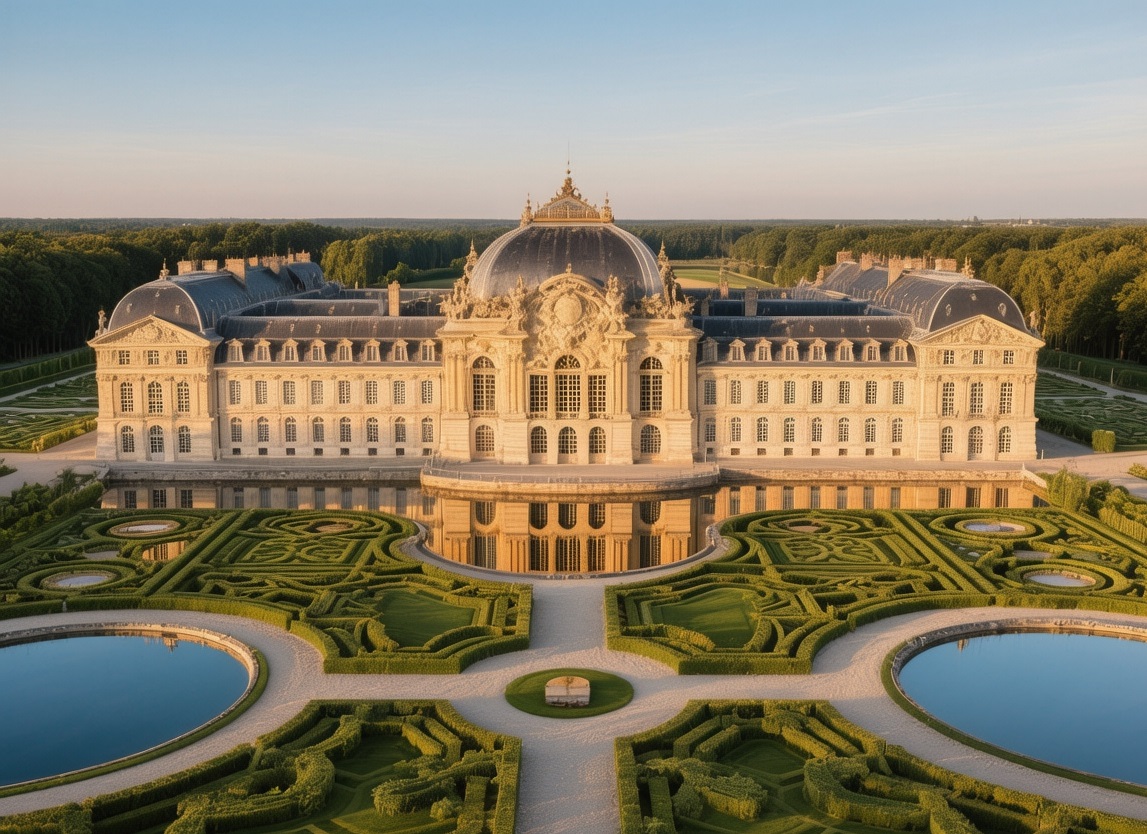
Château de Vaux-le-Vicomte: Where Baroque Vision Meets Symmetrical Design
I step through the main gate just after nine in the morning. A standard ticket costs twenty euros. The gravel crunches underfoot. The château rises straight ahead — pale stone, steep roofs, and a central dome that draws your eye upward. Water flows quiet in the reflecting canal that runs down the centre of the gardens. No one else walks the terrace yet. The light hits the facade at an angle, highlighting every carving and cornice. A gardener trims a box hedge with slow, precise strokes. He does not look up. The scale feels grand but not overwhelming. Every line leads somewhere. You sense immediately that nothing here was left to chance.
Why Château de Vaux-le-Vicomte Matters
This was the vision of Nicolas Fouquet, Superintendent of Finances under Louis XIV. Completed in 1661, it brought together architect Louis Le Vau, painter Charles Le Brun, and landscape designer André Le Nôtre — the same team later chosen to build Versailles. Vaux-le-Vicomte set the template for every great French residence that followed. It introduced the symmetrical château integrated with terraced gardens and water features that defines the French formal style. Yet its very magnificence contributed to Fouquet's downfall. The king attended a lavish opening banquet and, jealous and suspicious, had him arrested just weeks later. The estate passed to other families and opened to the public in 1968. Today it stands privately owned and independently managed. That independence brings real strain. Upkeep costs are immense. Ticket prices rise regularly. Some interior rooms remain under restoration or close without notice. The grandeur is real, but so is the constant effort to preserve it.
The Best Time to Experience Château de Vaux-le-Vicomte
Late April through June and mid-September through early October offer ideal conditions. Daytime temperatures sit 16°C to 22°C (61°F to 72°F). Gardens stay green and flowers bloom without the intense heat of mid-summer. July and August see readings 23°C to 28°C (73°F to 82°F). Gravel paths reflect sunlight and there is little shade in the open gardens. Winter from November through March stays quiet at 6°C to 10°C (43°F to 50°F). The gardens remain visible but plant life recedes; candlelit evenings continue and carry their own quiet magic. Arrive on the first daily slot. You will walk the main rooms and terrace without crowds. After 11 AM, queues form at popular chambers and the flow becomes steady.
Approximate Budget for a 7-Day Trip
These figures are per person, based on staying in Paris or nearby Melun and visiting Vaux-le-Vicomte as a day trip.
- Accommodation: €90–€140 per night in central Paris; €60–€90 in Melun or nearby towns. Commuting takes longer but saves noticeably over a week.
- Food: Lunch at the château estate restaurant €18–€32; picnic from Melun market and eat on the gardens edge €8–€14. Coffee €3–€4.50.
- Transport: Train from Paris Gare de Lyon to Melun €4.30 one way; shuttle bus from Melun station to château €3.50 round trip. Direct taxi from Paris €70–€90 one way — far too expensive.
- Attractions: Standard entry €20; candlelit evening visit €25; combined ticket with audio guide €23.50. Guided tour supplement €8.
- Miscellaneous: €12–€22 daily for supplies, drinks, and small purchases.
Total estimated 7-day cost: €680–€1,020 per person. The private guided tour at €45 per person is overpriced. The included audio guide covers the same history and architecture thoroughly. You can pause and explore at your own pace.
Essential Château de Vaux-le-Vicomte Experiences
- Walk the central axis from entrance to canal. The château sits exactly midway. Every element aligns. The view shifts as you move forward. Stand at the far end and look back — the proportions remain perfectly balanced.
- Explore the main state rooms. The Grand Salon, Chambre des Muses, and Salle des Gardes show Le Brun's decoration at its finest. Notice how light enters from both sides. Skip if you dislike enclosed spaces — rooms fill fast and flow is one-way only.
- Stroll the patterned gardens. Parterres de broderie — intricate hedge designs — stretch out on both sides. Each section follows a distinct geometric plan. Walk the perimeter paths to see the patterns clearly.
- Follow the water terrace. Canals, basins, and fountains run symmetrically away from the building. Le Nôtre designed every channel to appear straight even where the ground curves gently.
- Visit the candlelit evening. Thousands of small lights replace electric bulbs. The atmosphere shifts completely. It runs Saturday evenings May through September and selected dates year-round.
- Climb to the upper terrace viewpoint. Behind the château, a raised bank looks down over the entire composition. This is where the design makes full sense — every line and balance visible at once.
Hidden Gems Most Travelers Miss
- The side path through the kitchen gardens. Behind the formal beds, rows of fruit trees and vegetables supply the estate. It feels quiet and productive, far removed from the show terraces.
- East terrace bench. Away from the main photo spot. It faces the morning sun and looks along the facade. Almost no one stops here.
- The candlelit evening is famous; it is overrated if you prefer clarity over atmosphere. The gardens vanish in shadow and you see less detail than in daylight. Go both times if you can.
- Old service wing passage. A quieter corridor connecting the main building to former staff quarters. It shows how the estate operated day-to-day, not just on banquet nights.
Cultural & Practical Tips
- Wear sturdy flat-soled shoes. Gravel covers most paths. Heels sink and make walking tiring. The ground slopes gently in places.
- Do not step on grass or parterres. The gardens are living restoration work. Damaged plants take years to replace.
- Book tickets online ahead. Summer morning slots sell out one to two weeks early. Walk-ups may face long waits or no entry.
- Allow enough travel time. The shuttle bus from Melun connects with trains but can be missed if you cut it close. Arrive at the station 20 minutes early.
- Respect photography restrictions. Some rooms ban tripods and flash. Signs are posted clearly — please follow them.
- Bring water and sun protection. Shade is scarce in the outer gardens. Heat builds fast by midday.
Essential Visitor Information
Location & Access: Château de Vaux-le-Vicomte, 77950 Maincy, France. GPS roughly 48.57° N, 2.71° E. 55 km southeast of Paris; 6 km from Melun. Reach it by train from Paris Gare de Lyon to Melun (25 min) then shuttle bus 10 min; by car with paid parking at the estate — €8 per day; or by private bus from Paris on selected days.
Tickets & Booking: Standard adult €20; candlelit evening €25; combined with audio guide €23.50. Children 6–15 €13; under 6 free. Booking recommended May–October.
Operating Hours: Daily 10 AM–6 PM April–October; 10:30 AM–5 PM November–March. Closed 1 January, 1 May, and 25 December. Candlelit evenings 8:30 PM–midnight selected Saturdays.
Visit Duration: Minimum 2.5 hours. 3.5 to 4 hours lets you explore château, gardens, and outbuildings without rushing. Add 2 hours if attending an evening event.
Family Suitability: Very family-friendly. Strollers work on main paths but struggle on gravel. High railings protect water features. Young children love the open space and fountains.
Timing: Best months May, June, September. Best time of day: first entry slot, before 10:30 AM.
Highlights: Central axis view, Grand Salon and state rooms, formal parterres, water terraces, upper viewpoint, candlelit evenings.
Nearby & Day Trip: Melun town centre 6 km — island cathedral and market. Fontainebleau Palace 25 km — royal residence and forest. Paris 55 km — full capital day trip. All make comfortable half-day or full-day outings.
Conclusion: Travel with Perspective, Not Just Wonder
Vaux-le-Vicomte offers more than beauty. It offers a lesson in power, ambition, and what remains. Every line was drawn to impress — and it still does. But notice the quiet details too. The gardener at work. The light shifting across stone. The symmetry that stays perfect only through constant care. You do not need to know every name and date to feel what this place represents. Look, walk, and imagine. What banquet or ambition will you remember it by?
Comments
Post a Comment