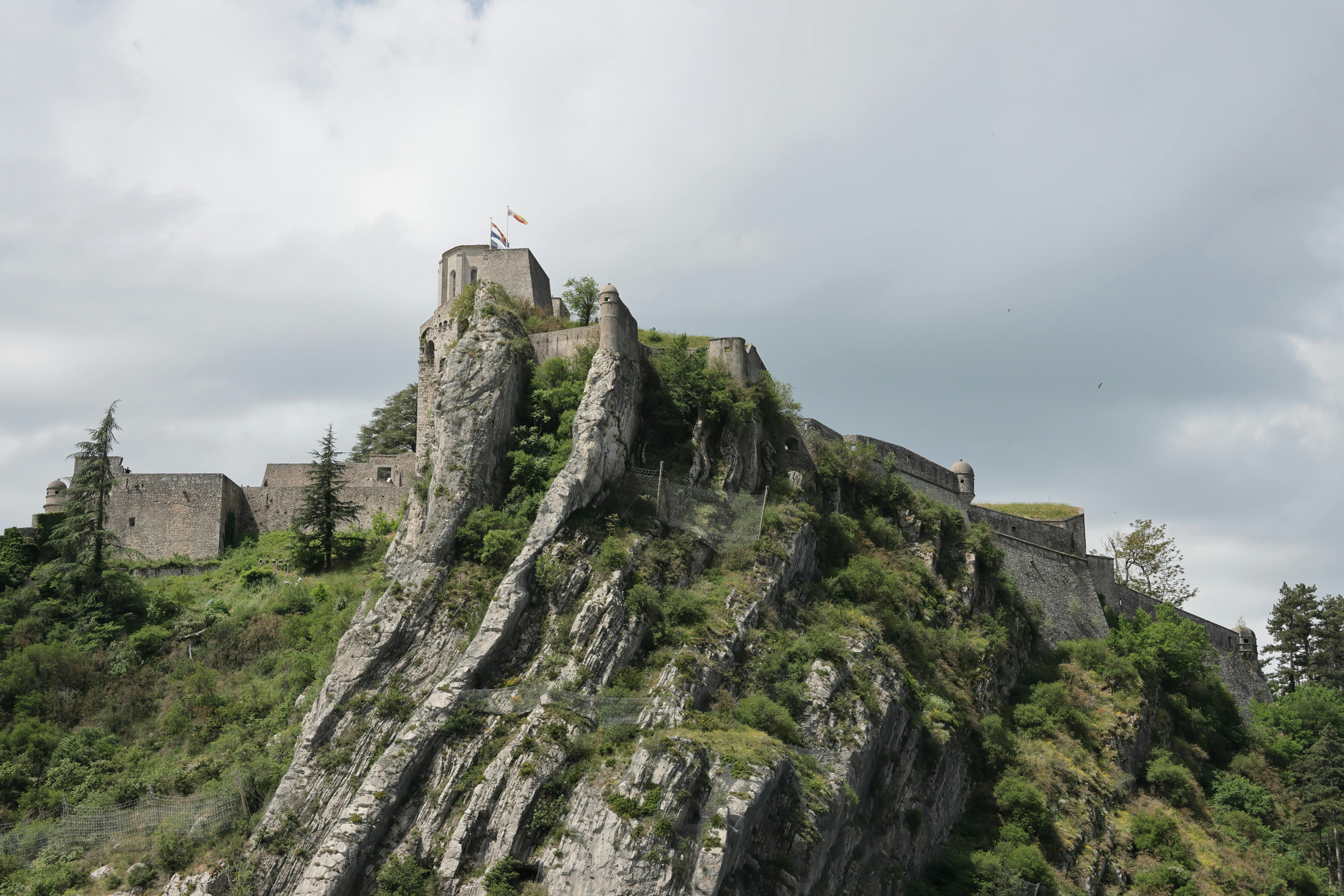
Citadelle de Sisteron: Where Stone Ramparts Meet Alpine Valley
I reach the main gate just before ten in the morning. A ticket costs seven euros fifty. The air carries a sharp, clean edge even in late spring. I stop and look down. The Durance river cuts through the valley far below, silver and fast. The limestone rock drops away steeply on three sides. A gust of wind pulls at my jacket as I step onto the first terrace. An older man walks past with a walking stick. He nods toward the highest tower. The climb gets steeper up there, he says. He is right. I pause halfway up the main flight of steps and breathe hard. The view opens wider with every step. I can see the town rooftops huddled along the river and the road winding north toward the mountains.
Why Citadelle de Sisteron Matters
This fortress sits on a narrow rocky spur between Provence and the Alps. Its core walls go back to the twelfth century, rebuilt and strengthened through the sixteenth and seventeenth centuries. Vauban drew plans to reinforce it further in 1692. Henry IV called it the most powerful fortress in his kingdom. It guarded the traditional gateway between southern and eastern France for centuries, controlling movement along the river valley. Today it stands as one of the best-preserved examples of defensive architecture in the region. That said, preservation comes with trade-offs. Many sections remain unshaded and fully exposed to sun and wind. There is little shelter in sudden storms. The ascent is steep and unrelenting. Anyone with limited mobility will find large parts of the site difficult or impossible to reach. The views remain extraordinary, but you earn them.
The Best Time to Experience Citadelle de Sisteron
Late May through mid-June and early September through early October offer the best conditions. Daytime temperatures sit 18°C to 23°C (64°F to 73°F). Nights drop to 10°C to 13°C (50°F to 55°F). July and August bring highs 26°C to 30°C (79°F to 86°F). Sun beats directly on stone surfaces and heat lingers late. Midday can feel uncomfortably hot with nowhere to hide. Winter from mid-November through March stays quiet with daytime readings 8°C to 12°C (46°F to 54°F). The site closes for the season after November 11, and rain or snow makes steps slippery. Arrive before 10 AM in summer. You will have clear light and cooler air. Afternoons bring heat and larger groups. Evenings in July and August offer guided sunset visits; these are worth booking ahead.
Approximate Budget for a 7-Day Trip
These figures are per person, based on sharing a room and using Sisteron as a base.
- Accommodation: €65–€95 per night in town; stay 15 kilometers away in smaller villages and pay €50–€70. The difference adds up fast over a week.
- Food: Lunch €11–€17; dinner €22–€38. Coffee €2.50–€4. Buy cheese, bread, and fruit from the covered market and eat on the citadelle’s lower terrace for a fraction of restaurant prices.
- Transport: Train from Gap or Manosque around €6 one way; local bus €1.50. Parking at the citadelle base is free but fills quickly. Walking from the town centre takes twenty minutes steadily uphill.
- Attractions: Citadelle entry €7.50. Guided tour supplement €5.50. Nearby museums and old town churches cost nothing or €3–€5.
- Miscellaneous: €12–€22 daily for drinks, ice cream, and small supplies.
Total estimated 7-day cost: €520–€810 per person. The special sunset guided tour at €15 is overpriced for most. The same view costs nothing if you time your own visit for late afternoon. Walk up on your own schedule and save the money.
Essential Citadelle de Sisteron Experiences
- Walk the full rampart circuit. The outer wall path follows the ridge line. You see the valley stretch north and south and the town below. Allow forty-five minutes at a steady pace.
- Climb the keep to the highest point. Stone steps wind upward inside the oldest tower. The wind often blows strongly here. Skip if you dislike enclosed spaces or steep uneven steps — the last section has no handrail on both sides.
- Explore the museum spaces. Displays cover eight centuries of military and local history. Models show how the defences changed across centuries.
- Stand at the southern terrace viewpoint. The Durance curves clearly below you. On clear days you see far toward the distant peaks. Light works best here in late afternoon.
- Walk down through the old town afterward. Cobbled lanes lead back toward the river. Small fountains and shaded squares appear unexpectedly.
- Watch light shift across the valley. Find a bench away from the main path. Notice how the rock faces change colour as the sun moves. The limestone glows warm long before sunset.
Hidden Gems Most Travelers Miss
- The lower terrace below the ticket office. It has stone benches and shade from old trees. Almost no one stops here on the way up. It is perfect for a quiet break.
- Rue des Tanneurs in the old town below. A narrow lane running parallel to the river. It holds old workshops and quiet doorways. It feels far removed from the citadelle crowds.
- Le Rocher de la Baume across the river. The layered rock face draws photographers. The citadelle viewpoint is famous; it is overrated if you prefer quiet exploration over postcard shots.
- Chapelle Saint-Philippe just outside the main citadelle walls. Small, plain, and often overlooked. It sits beside an old shaded lane and stays quiet.
Cultural & Practical Tips
- Wear sturdy closed shoes. Steps are uneven and worn smooth in places. Flip-flops or smooth-soled shoes are unsafe here.
- Carry at least one litre of water per person. There are few fountains once you pass the ticket gate. Heat catches people off guard.
- Do not lean on the outer walls. Some sections are old and uneven. Stay behind marked barriers.
- Check the closing time carefully. The ticket office shuts one hour before the site itself. You will be turned away if you arrive late.
- Respect quiet zones. The site carries sound easily. Keep voices low on the ramparts.
- Visit on a weekday if you can. Weekends bring day-trippers and larger groups. The difference in crowd size is noticeable.
Essential Visitor Information
Location & Access: Montée de la Citadelle, 04200 Sisteron, France. GPS roughly 44.19° N, 5.94° E. Reach it by train from Gap (40 min) or Manosque (35 min) then walk 20 minutes uphill; by car with free parking at the base — spaces fill by 11 AM in summer; or by local bus from Sisteron centre to the upper gate.
Tickets & Booking: €7.50 adult. Reduced rate €6.50. Children 6–14 €3.50. Booking not required for standard entry. Sunset guided tours June–August need advance reservation.
Operating Hours: March and mid-October to November 11: 9 AM–6 PM. April, May, early October: 9 AM–6:30 PM. June, September: 9 AM–7 PM. July, August: 9 AM–7:30 PM. November weekdays: 12 PM–5 PM; weekends 10 AM–5 PM. Closed mid-November through March 20.
Visit Duration: Minimum 1.5 hours. 2 to 2.5 hours lets you climb, rest, and explore without rushing.
Family Suitability: Children welcome. Stroller access is very limited — steep steps and uneven terrain everywhere. Baby carriers work better.
Timing: Best months May, June, September. Best time of day: before 10 AM or after 4 PM.
Highlights: The keep and summit view, rampart walk, valley overlook, historical museum, sunset terrace.
Nearby & Day Trip: Sisteron old town and river bridge 2 minutes’ walk. Durance valley driving route. Lure mountain range 25 km away. Manosque and Provence lavender country 40 minutes south. All make comfortable half-day or full-day outings.
Conclusion: Travel with Effort, Not Just Comfort
The Citadelle de Sisteron rewards those who accept the climb. You will leave with tired legs and clear memories. Skip trying to see everything at once. Rest when you need to. Notice how the light changes the valley’s look hour by hour. The real reward is not a single snapshot — it is the feeling of standing high above the river and seeing where Provence meets the mountains. When will you make the climb?
Comments
Post a Comment