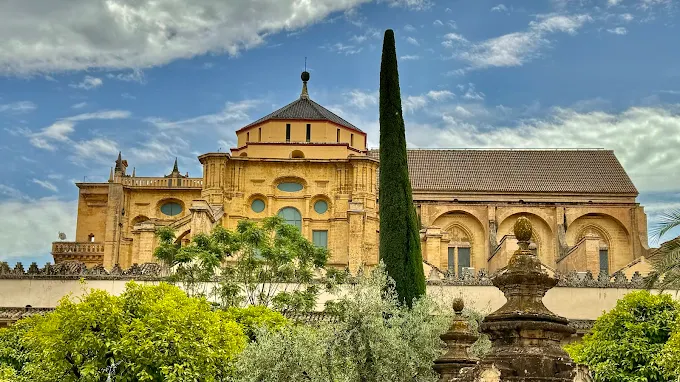
Mosque-Cathedral of Córdoba: Where Islamic Geometry Meets Christian Heritage
At 8:30 on a Wednesday morning, I pay €13 at the entrance to the Mosque-Cathedral of Córdoba and step into the Patio de los Naranjos. The orange trees are still cool from the night, and the stone underfoot holds a faint dampness. Beyond the courtyard, the first rows of red-and-white arches appear in the dim interior. There is no single viewpoint that explains this building. You need to walk through it. Roman columns, horseshoe arches, Islamic inscriptions, Christian chapels, and a Renaissance cathedral share the same footprint. The effect is powerful, though not always easy to process. Visitors stop often, and guides gather beneath the most famous arches. I find the quieter northern aisles more rewarding than the central route. The Mosque-Cathedral of Córdoba deserves at least ninety minutes, but two hours gives you time to notice the changes in stone, light, and scale. Wear shoes with good grip. The polished floor can be slippery.
Why Mosque-Cathedral of Córdoba Matters
The Mosque-Cathedral of Córdoba records several major chapters in the city’s history. A Visigothic church once stood on this site, followed by the first mosque commissioned under Abd al-Rahman I in the late eighth century. Later rulers expanded the prayer hall, adding more columns, arches, and a richly decorated mihrab. In 1236, after the Christian conquest of Córdoba, the building became a cathedral. Chapels and altars were added over the following centuries, and a large Christian transept and choir were built inside the former mosque during the sixteenth century.
That mixture is the reason the monument remains so important. The building is not a neatly separated sequence of periods. Its history overlaps at every turn. Look closely and you will see reused Roman materials, differences in column height, carved Christian altarpieces, Arabic calligraphy, and the distinctive double arches that make the prayer hall feel almost endless. The mihrab and maqsura remain the visual high points, while the cathedral’s central nave changes the scale and mood around them.
There is also a criticism visitors should understand. The Christian cathedral placed within the mosque is historically significant, but many people find the central intervention visually disruptive. The interior can feel crowded during peak hours, and the route sometimes becomes a procession of quick photographs rather than a thoughtful visit. That is why arriving early matters.
The Best Time to Experience Mosque-Cathedral of Córdoba
The most comfortable periods are March 15 to May 15 and October 1 to November 15. Daytime temperatures generally range from 18–28°C (64–82°F), while mornings are cooler. These periods suit long walks through the old town and usually offer better conditions than midsummer.
Late May through September can be very hot. From June 15 to August 31, temperatures often reach 32–40°C (90–104°F), with the strongest heat between 1:00 and 6:00 p.m. The interior is cooler than the streets, but queues outside can become unpleasant. Visit at opening time or after 5:00 p.m. when evening temperatures begin to fall.
December 1 to February 28 is a quieter option, with daytime temperatures around 12–18°C (54–64°F). Rain is possible, though usually short-lived. The best daily window is the first hour after opening, when the arches are less crowded and the light is gentle. Sunday morning access can be affected by religious services, so check the day’s schedule before planning a tight itinerary.
Approximate Budget for a 7-Day Trip
- Accommodation: €420–€840 for seven nights in a budget hotel, guesthouse, or private room. A central mid-range hotel may cost €900–€1,400.
- Food: €245–€420 for simple breakfasts, casual lunches, tapas, coffee, and several sit-down dinners.
- Transport: €35–€80 for city buses, regional trains, airport connections, and occasional taxis.
- Attractions: €100–€180 for the Mosque-Cathedral, Alcázar, tower access, museums, and one guided visit.
- Miscellaneous: €90–€160 for snacks, drinks, small purchases, lockers, and unexpected costs.
Estimated total: €890–€1,680 per person for seven days.
The Mosque-Cathedral ticket is reasonable, but private tours can be overpriced when they last only slightly longer than a self-guided visit. A cheaper alternative is a standard admission ticket paired with a good printed guide or an audio guide. Restaurants directly beside the monument also charge a premium. Walk toward San Lorenzo or the northern edge of the old town for better-value menus and larger portions.
Essential Mosque-Cathedral of Córdoba Experiences
- Enter through the Patio de los Naranjos: Pause among the orange trees before going inside. The courtyard explains the building’s connection with water, shade, and ritual preparation.
- Walk the forest of columns: Move beyond the first famous arches and explore the less crowded aisles, where the repeated geometry becomes easier to appreciate.
- Study the mihrab: The prayer niche and its surrounding mosaic work are among the site’s finest details. Take time to look upward and outward.
- See the Christian cathedral: The central nave, choir stalls, dome, and chapels show how the building changed after 1236.
- Climb the bell tower: The former minaret is now the Torre del Alminar. The climb is controlled and may involve narrow passages, but the views across Córdoba are useful.
- Look for reused Roman columns: Differences in stone, height, and capital design reveal how earlier materials were incorporated into the mosque.
- Visit the Treasury and side chapels: These rooms add detail to the cathedral’s later history. Skip the tower if narrow stairways or limited mobility would make the climb uncomfortable.
Hidden Gems Most Travelers Miss
- Capilla de Villaviciosa: This chapel marks an early Christian alteration and shows a striking meeting of Islamic and Christian architectural forms.
- Royal Chapel: The small chapel is easy to pass while following the main route, but its location helps explain the cathedral’s royal associations.
- Patio de los Naranjos after the main visit: Return to the courtyard when the interior feels crowded. The arcades and trees are especially pleasant in the late afternoon.
- Calleja de las Flores: It is one of Córdoba’s most photographed lanes, but the nearby side streets often offer a better walk with fewer people.
- Casa de Sefarad: This small museum near the Jewish Quarter provides useful context about Sephardic life in Córdoba.
- Puerta del Puente: Walk here after visiting the monument for a clear view toward the Roman Bridge and the Guadalquivir.
- Calleja de las Flores at midday: The famous lane is often overrated at peak hours. It can feel cramped and difficult to photograph, so visit early or choose the quieter lanes nearby.
Cultural & Practical Tips
- Dress respectfully because the building remains an active cathedral. Shoulders and knees should be covered, and hats may need to be removed inside.
- Keep your voice low. Religious services may take place during visitor hours, and loud conversation quickly disturbs the atmosphere.
- Tourist mistake: assuming every arch is identical. Look at the capitals, brick patterns, and column materials to spot the changes.
- Tourist mistake: visiting at noon in July without water. The interior is cooler, but the walk to the entrance and the old-town streets can be harsh.
- Large bags, tripods, and some photography equipment may be restricted at security. Travel light.
- Wear shoes with firm soles. Parts of the floor are smooth, and the tower stairs are uneven.
- Plan lunch after the visit rather than before it. Many nearby kitchens begin serving later than international visitors expect.
Essential Visitor Information
Location & Access: The monument is at Calle Cardenal Herrero, 1, 14003 Córdoba, Spain. GPS: 37.8789, -4.7794. From Córdoba railway station, walk about twenty-five minutes; the distance is roughly 2 kilometres. A city bus to the central old town is practical, taxis can drop visitors near the entrance, and walking from Plaza de las Tendillas takes about fifteen minutes. The narrow historic streets are not suitable for large tour buses.
Tickets & Booking: Standard admission is approximately €13. Tower access, guided visits, and special tours cost extra, often between €3 and €18. Booking is not always required for standard entry, but it is recommended on weekends, public holidays, and during April and May. Early morning free-entry periods may be available on selected days, although access can be limited by worship services and crowd controls.
Operating Hours: Visitor hours vary by season and religious calendar. A common pattern is morning access from around 10:00 a.m. to 7:00 p.m., with shorter Sunday hours and possible midday closures. The monument may open later, close early, or restrict sections during services and special events. Check the current day’s timetable before travelling across town.
Visit Duration: The minimum useful visit is ninety minutes. Allow two hours for the prayer hall, mihrab, cathedral, courtyard, and selected chapels. Add thirty to forty-five minutes for the bell tower, if operating.
Family Suitability: Older children usually enjoy the repeated arches, hidden chapels, and tower views. Stroller access is possible in many areas, but narrow passages, uneven surfaces, and crowded routes can be awkward. Baby-changing facilities may be limited, and there are few places to sit inside. A compact stroller is the practical choice.
Timing: Visit from mid-March to mid-May or early October to mid-November. Enter at opening time for the calmest experience. Late afternoon works well outside the hottest months, but always allow time for the old town walk back to your hotel.
Highlights: The mihrab, double arches, Christian cathedral, Patio de los Naranjos, and Torre del Alminar are the main stops. The Villaviciosa Chapel is a worthwhile extra for visitors interested in architectural change.
Nearby & Day Trip: The Roman Bridge, Alcázar de los Reyes Cristianos, Jewish Quarter, and Puerta del Puente are all within walking distance. Medina Azahara is an easy half-day trip by car, taxi, or organized transport. Seville and Granada are possible by train for a longer day trip, though staying overnight makes more sense if time allows.
Conclusion: Travel with Historical Curiosity, Not Just Visual Appeal
The Mosque-Cathedral of Córdoba is more than a famous interior filled with arches. It is a record of changing power, worship, design, and daily use, all compressed into one building. Some visitors may find the cathedral’s central structure distracting, while others see it as the clearest evidence of the site’s layered past. Arrive early, move beyond the first photograph, and leave enough time for the courtyard and surrounding lanes. Comfortable shoes will help, especially if you add the tower. Plan your visit around the heat and religious services, then take a slow walk toward the Roman Bridge.
Comments
Post a Comment