Cotswolds AONB: Where Limestone Hills Meet Stone Village Life
I walk the lane through Castle Combe at 11:00 on a sunny Tuesday in late September. The air smells of dry grass and cut wood. Parking costs three pounds at the village edge. Every wall, roof, and cottage glows the same warm honey-gold—stone quarried from the very ground beneath. The road curves gently between walls no one has painted or altered. This is not a museum scene. People live here. Laundry hangs between cottages. Doors open to callers. The centuries sit easy alongside everyday life.
Why Cotswolds AONB Matters
The Cotswolds covers nearly 800 square miles across six counties, designated an Area of Outstanding Natural Beauty in 1966. A wide band of oolitic limestone runs through the hills—hard, pale, and workable—giving every village its distinctive golden tone. Wool made this region wealthy in the Middle Ages; prosperous merchants built churches, manor houses, and cottages that survive largely unchanged. Rolling grassland, beech woodland, and wildflower meadows support rare birds and plants. That said, popularity brings real pressure. In summer, narrow lanes clog with cars and coaches. Villages like Bibury and Bourton-on-the-Water feel crowded by mid-morning. Public car parks fill fast. Some footpaths show erosion from heavy use. The very qualities people come to see are at risk from too many visitors arriving at once.
The Best Time to Experience Cotswolds AONB
Late April through May brings wildflowers and blossom—8°C (46°F) to 16°C (61°F)—and the countryside feels fresh and green. June stays pleasant at 11°C (52°F) to 19°C (66°F) before schools break up. July and August reach 13°C (55°F) to 22°C (72°F), but roads jam and popular villages stay busy until evening. September and early October offer the sweetest balance—10°C (50°F) to 18°C (64°F), golden light matching the stone, and crowds thin noticeably. November through February sees shorter days and quieter lanes—3°C (37°F) to 9°C (48°F)—but many rural cafés and pubs close or reduce hours. Arrive before 9:30 a.m. to walk empty lanes and see villages wake up.
Approximate Budget for a 7-Day Trip
These figures cover one person basing in the region:
- Accommodation: £420 – £700 for a double room in a village inn or B&B. Stay in a larger town like Cirencester or Stroud to save roughly one quarter.
- Food & Drink: £210 – £300. Village pubs serve honest food; tea rooms charge premium rates in famous spots.
- Local Transport: £35 – £70. Buses run between main villages but are infrequent; having a car gives freedom to explore quieter lanes.
- Attractions & Entry Fees: £45 – £85. Most walking is free; historic houses and gardens charge £6–£14 each.
- Miscellaneous: £40 – £80. Local cheese, honey, wool, and small purchases.
Total estimated budget: £750 – £1,235
The riverside cafés in Bourton-on-the-Water charge high prices for basic drinks. Skip the five-pound coffee there. Walk five minutes to the village shop, buy the same item for half the price, and sit beside the stream yourself.
Essential Cotswolds AONB Experiences
- Walk the Cotswold Way from Broadway Tower to Chipping Campden. High open ground with wide views across the Vale of Evesham. Stone walls frame fields and woodland. Skip this in strong wind; the ridge is fully exposed and gusts can feel dangerous.
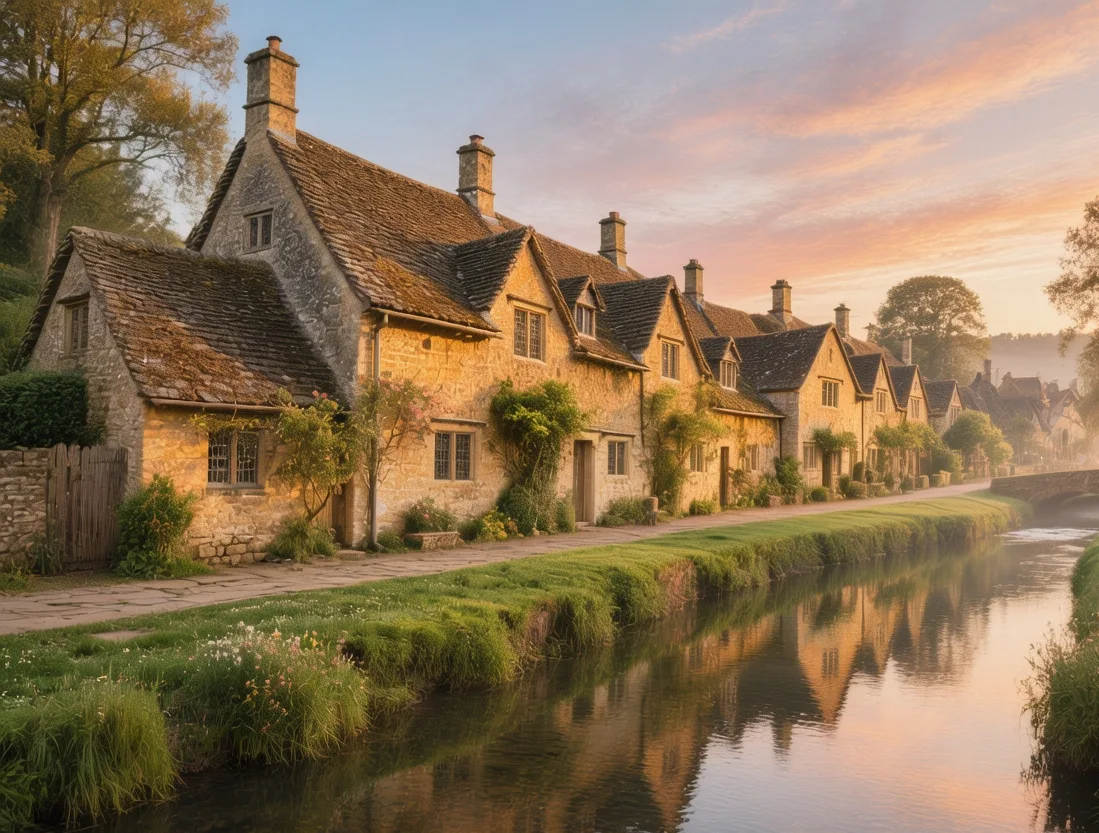
- Stand beside the river in Bibury. Arlington Row cottages line the stream exactly as they have for centuries. Watercress beds still grow upstream. The scene looks unchanged, but the road behind carries constant traffic—arrive early to see it quiet.
- Explore Cirencester Park and town. Wide avenues of trees lead to the parish church. The Roman museum and market town feel show the region’s layered history. The park is free and rarely crowded.
- Climb Broadway Tower. The second highest point in the Cotswolds, with views across several counties. The building itself dates to 1799 and sits on an ancient beacon site. Entry fee applies; the viewpoint from the hill below is free.
- Discover Stow-on-the-Wold market square. The highest market town in the region, with wide sloping space and ancient inns. It feels grander than most villages. Visit on a weekday; weekends fill with day-trippers.
- Follow the river through Castle Combe. The stream runs beneath stone bridges beside cottages that line the lane. No overhead wires break the view. The village feels complete and untouched.
Hidden Gems Most Travelers Miss
- Naunton village sits between Stow and Bourton. Stone cottages climb a gentle valley beside a stream. One pub, one church, almost no coaches. It feels like the Cotswolds used to be.
- The Windrush Valley path runs between Bourton and Bibury. It follows the river through meadows and woodland, connecting villages without walking the busy main road. Few people know the route exists.
- Chipping Norton’s high street mixes Cotswold stone with working shops and cafés. It feels like a living market town, not a display. The independent bookshop and cheese shop are worth visiting.
- Bourton-on-the-Water’s model village draws long queues and feels overpriced. Walk upstream beyond the bridges instead; the same river runs past quieter banks and open green space with no fee at all.
Cultural & Practical Tips
- Drive slowly. Narrow lanes have high hedges and blind bends; walkers, cyclists, and tractors appear without warning.
- Park only in designated spaces. Verge parking damages wildflowers and blocks access for farm vehicles; you may be fined.
- Carry cash. Many village pubs and tea rooms do not accept cards, especially on quiet days.
- Check opening times before travelling. Rural places close on weekdays or winter days; an hour’s drive to find a locked door feels disappointing.
- Keep dogs on leads. Livestock grazes freely on open hills and meadows; loose dogs disturb sheep and ground-nesting birds.
- Respect privacy. People live in these cottages; knock before photographing doorways or gardens.
Essential Visitor Information
Location & Access: Stretches from Bath northeast to Chipping Campden, across Gloucestershire, Oxfordshire, and parts of four other counties. Nearest major towns: Cirencester, Stroud, Moreton-in-Marsh, Broadway, Chipping Norton. Train to Moreton-in-Marsh or Kingham; local buses connect villages but run infrequently; car recommended for full exploration.
Tickets & Booking: Countryside walking and public rights of way are free. Individual historic houses and gardens charge £6–£14; booking advised in summer.
Operating Hours: Open access land—paths and lanes accessible year-round. Visitor centres generally 10:00 to 17:00; shorter hours October through April; some sites close Mondays and Tuesdays out of season.
Visit Duration: Allow a minimum of three days. A full week lets you explore northern, central, and southern sections without rushing.
Family Suitability: Excellent. Flat riverside paths suit all ages; pushchairs work in most villages. Hillside walks suit older children. Restrooms and refreshments available in larger villages.
Timing: Before 10:00 offers quietest lanes and softest light. Late afternoon from 16:00 sees day-trippers leave and the stone glow warm.
Highlights: Cotswold Way ridge views, Bibury Arlington Row, Broadway Tower, Stow-on-the-Wold market square, Castle Combe, and Windrush Valley paths.
Nearby & Day Trip: Oxford city and colleges are 45 minutes east. Stratford-upon-Avon lies 40 minutes north. Bath and its Georgian architecture sit 45 minutes southwest.
Conclusion: Travel with Care, Not Just Admiration
The Cotswolds is not a backdrop. It is a living, working landscape shaped by stone, farming, and people over one thousand years. Its beauty comes from being used—farmed, lived in, cared for. Walk gently. Keep to paths. Arrive early or late. Leave nothing behind. What will you remember—the famous photos, or the quiet feeling of finding a lane where time still moves slowly?
Comments
Post a Comment