Derwentwater: Where Mirror Lake Meets Fells Edge
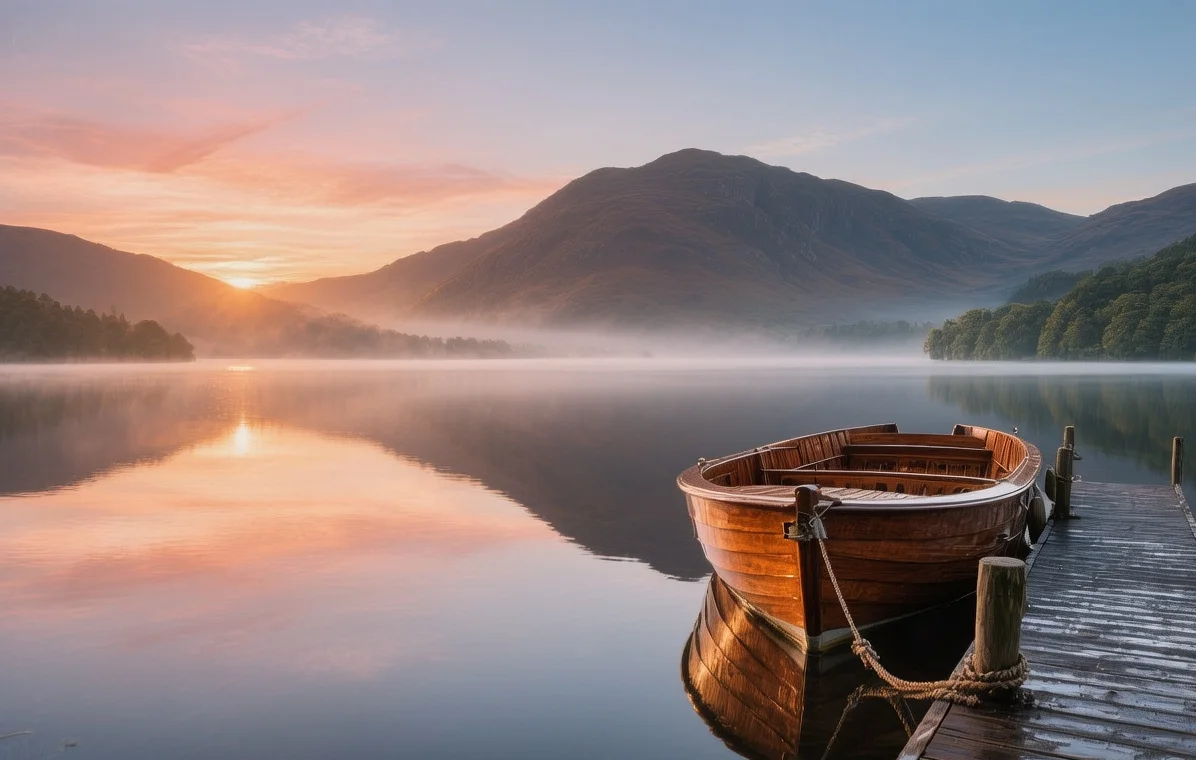
I stand on the gravel shore at ten past nine on a still morning in early September. The lake lies perfectly flat, a sheet of pale blue glass holding the sky whole. Wooded islands rise from the water, their trees reflected sharp and dark below the surface. Catbells stands sentinel on the western shore — a smooth grassy slope curving down to the edge. A few rowing boats rest tied at the landing, their hulls mirrored in the shallows. No engine noise breaks the quiet. Only a single heron glides low across the water, slow and silent. It feels like the world holds its breath.
Why Derwentwater Matters
Derwentwater sits at the heart of the Lake District, three miles long and one mile wide, formed by glacial ice thousands of years ago. For centuries it provided transport, water power, and fishing for Keswick and surrounding farms. Writers and artists arrived in the 18th century, drawn by the light and dramatic setting — Coleridge, Wordsworth, and Southey all lived nearby and walked these shores. In the 20th century, the National Trust purchased most of the shoreline to protect it from development, ensuring the lake remains open to everyone. That protection brings real strain. Popular paths wear thin under millions of feet; boat traffic disturbs the water and wildlife; and summer parking clogs every approach road. The beauty is undeniable, but so is the pressure — this is a fragile place, not an endless playground.
The Best Time to Experience Derwentwater
Late April through May brings fresh green foliage and thinner crowds, temperatures between 7°C and 14°C (45°F to 57°F). Dawn light strikes the eastern shore first, turning the water gold. Wildflowers carpet the wooded banks. June and July offer the longest days — sky stays light until nearly 9.30 p.m. — and temperatures rise to 10°C and 18°C (50°F to 64°F). This is peak season; the lake bus fills by mid-morning and shore paths feel crowded. August stays mild at 11°C to 19°C (52°F to 66°F), but rain falls frequently and low cloud blots out the fells. September holds steady at 10°C to 16°C (50°F to 61°F), crowds thin quickly, and the water stays calm and glassy early each morning. This is widely considered the best month to visit. October cools to 7°C and 12°C (45°F to 54°F), days shorten fast, and autumn colours turn the islands deep red and gold. November through February the lake quiets. Temperatures sit 3°C to 8°C (37°F to 46°F), mist clings to the surface at dawn, and you may walk miles of shoreline with almost no one else. March and April lengthen again, 5°C to 11°C (41°F to 52°F), and daffodils appear along the lanes. Arrive before 9 a.m. any time of year; after that, the atmosphere shifts completely.
Approximate Budget for a 7-Day Trip
These figures assume a base in Keswick or nearby, exploring Derwentwater and surrounding fells and valleys.
- Accommodation: £75–£120 nightly. Shared bunkroom or family-run guesthouse. £525–£840 for 7 nights.
- Food & Drink: £20–£32 daily for breakfasts and lakeside picnics. Evening meal at local pub £26–£48. £322–£560 total.
- Transport: Car rental £50–£75 daily. Lake bus £5 daily unlimited travel. Walk everywhere from central Keswick. £50–£525 total.
- Attractions: Shoreline free. Round-the-lake cruise £16. Rowing boat hire £18 per hour. Castlerigg Stone Circle free. £45–£110 total.
- Miscellaneous: £10–£18 daily for waterproofs, hot drinks, and supplies. £70–£126 total.
Total estimated 7-day cost: £1,012 to £2,161
Cafes directly beside the landing charge premium prices. Buy food in Keswick town and carry it down — it tastes better and costs half as much.
Essential Derwentwater Experiences
- Walk the western shore at dawn — Start from Hawes End or the landing stage before the sun clears the fells. The water stays perfectly still and reflects every tree and crag. Skip this after 10 a.m. in summer; motor boats break the surface and the magic fades.
- Take the lake bus anti-clockwise — The launch stops at four landing stages around the shore. Ride the full loop first to see the whole lake from the water, then walk sections back. Sit on the right-hand side for best views.
- Climb Catbells — The path rises steeply from the western landing to a grassy summit with the lake spread out below. It feels like floating above the water. Skip this at midday; the narrow path becomes a slow shuffling queue. Go early or late.
- Row out to the islands — Hire a boat for an hour and glide between the wooded islets. No noise, no engine wake, just oars dipping in clear water. The experience changes completely away from the shore. Go early; afternoon wind picks up and makes rowing hard.
- Walk the southern shore loop — A flat easy path runs through woods and fields past the old boathouse and lake edge. It suits all ages and stays peaceful even when the town is busy. Allow two hours at gentle pace.
- Watch sunset from Friars Crag — A short rocky promontory juts into the lake just below the road. The sun dips behind the western fells, turning sky and water deep orange. Arrive 30 minutes early; the spot is small and fills fast.
Hidden Gems Most Travelers Miss
- Lodore Falls quiet path — South of the main crowds, a riverside trail follows the beck down to the lake. The waterfall is often dry in summer, but the wooded gorge stays cool and quiet. Very few people walk the full length.
- Abbey Bridge shore — East of the landing, a grassy bank sits beside the water with unobscured views across to Catbells. It has no sign and no name. You can sit and watch the boats pass without being seen from the path.
- Derwent Isle shoreline — From the western path, a gap in the trees frames the privately owned island house perfectly. This spot is widely shared online now and has become overrated. Go before 9 a.m. if you want it empty.
- Great Wood upper trail — Above the southern shore, a high path runs through mature woodland with occasional glimpses of water through the canopy. It feels separate and ancient. The ground is uneven; wear sturdy shoes.
Cultural & Practical Tips
- Park with care. Central lakeside car parks fill before 9 a.m. in summer. Use outer Keswick lots and walk 10 minutes — it saves stress and money.
- Keep noise low. The lake is a sanctuary for wildlife and residents. Loud voices and music carry far across the water.
- Do not swim near boat channels. Deep water, sudden currents, and boat traffic make it dangerous. Swim only in designated quiet bays away from launch routes.
- Stay on marked paths. Short-cutting through woods and banks causes serious erosion. Every person who steps off widens the scar for the next.
- Respect private property. Islands and large stretches of shore are owned. Signs mark boundaries — please do not cross or camp without permission.
- Visit mid-week. Saturday and Sunday bring day-trippers from every direction. Tuesday or Wednesday feel like a different place entirely.
Essential Visitor Information
Location & Access: Derwentwater, Keswick CA12 5DJ — Lake District National Park, directly south of Keswick. Three transport options: car via A66 to Keswick then shore road; train to Penrith then bus to Keswick and short walk; local bus from Keswick town centre to landing stages.
Tickets & Booking: Shoreline free. Round-lake cruise £16 adult. Row boat hire £18–£22 per hour. Book boat hire in peak season.
Operating Hours: Public shore access year-round. Cruise launches generally 10 a.m.–5 p.m. daily; reduced winter schedule.
Visit Duration: Minimum half day for lakeside walk and one boat trip. Full day including Catbells climb and quiet shore sections.
Family Suitability: Southern shore paths flat and accessible; Catbells climb unsuitable for strollers. Keep children back from unrailed water edges. Public toilets at main landing stages.
Timing: Best season May or September. Early morning before 9.30 a.m. offers calmest water and quietest paths.
Highlights: Dawn western shore, Catbells sunrise, island rowing, Friars Crag sunset, southern woodland walk.
Nearby & Day Trip: Keswick Market — 10 minutes; Castlerigg Stone Circle — 15 minutes; Buttermere — 25 minutes; Scafell Pike — 30 minutes; Hill Top — 40 minutes.
Conclusion: Travel with Stillness, Not Just Sight
Derwentwater has drawn visitors for centuries, yet it remains fragile. The water stays clear only if we keep it so; the paths stay open only if we walk gently; the quiet remains only if we do not drown it out. When you visit, pause. Sit still. Let the lake show you more than you came to see. What will you leave unchanged for the next person to find?
Comments
Post a Comment