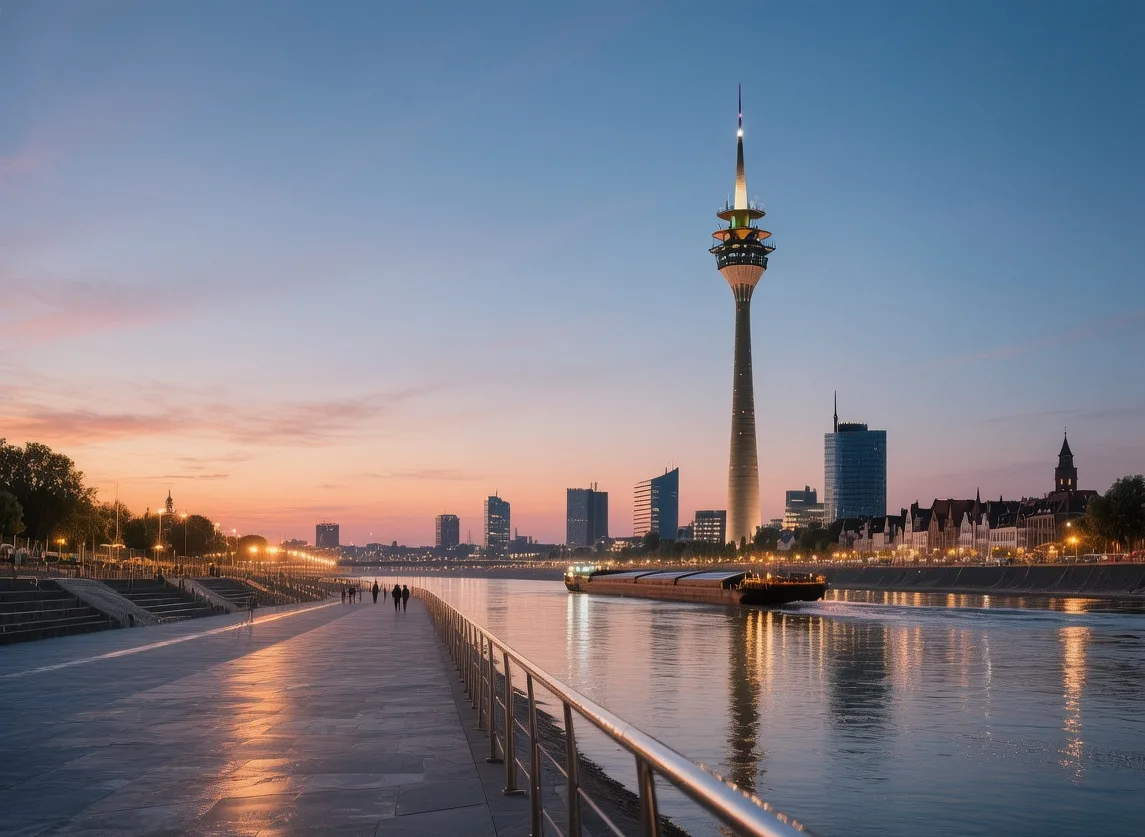
Düsseldorf: Where Old Town Charm Meets Modern Media Harbour
I walked along the Rhine promenade at ten past nine on a Saturday morning. The river moved steady and grey beside me. I paid nine euros for a day pass covering trams and buses. Old town rooftops sloped down toward the water. Glass towers rose downstream like ships at anchor. I expected a wealthy business centre. What I found feels balanced and lived-in. Some streets stay quiet even near the centre. Some areas feel gentrified beyond recognition. That contrast defines the city.
Why Düsseldorf Matters
This has been a Rhine crossing point and trading hub since Roman times. The old town grew around a riverside settlement, later becoming capital of the Rhineland. After wartime destruction, rebuilding blended historic restoration with bold modern design. Today it stands as a centre for fashion, media, art, and international trade. The city balances deep heritage with forward-looking architecture. One honest criticism: popular districts like the Media Harbour feel polished but lack everyday neighbourhood life. Rental costs have pushed long-term residents outward. Public transport works well but connections between far-flung sites can feel slow. Summer weekends draw large crowds; finding space to sit or walk takes patience.
The Best Time to Experience Düsseldorf
May through September brings 12°C to 23°C / 54°F to 73°F. The Rhine promenade stays pleasant until late. Weekday mornings before 11:00 feel quietest. July and August see highs reach 25°C / 77°F; outdoor spaces fill fast. September holds 10°C to 18°C / 50°F to 64°F. Light warms the sandstone buildings and river. October through April brings 2°C to 9°C / 36°F to 48°F. The city feels quieter and museums stay peaceful. The Christmas market season draws visitors but crowds can feel overwhelming. Tuesdays and Wednesdays stay calm year-round.
Approximate Budget for a 7-Day Trip
Costs below are per person based on staying in central Düsseldorf.
- Accommodation: 525 euros — Clean room in a central guesthouse or mid-range hotel. Hotels directly beside the main station or Media Harbour charge 230 euros or more per night and feel overpriced; stay in Friedrichstadt or Oberkassel for better value and genuine atmosphere.
- Food: 294 euros — Altbier lunches, market hall meals, and evening dinners including traditional Rhineland dishes.
- Transport: 98 euros — Weekly transport pass covering trams, buses, and S-Bahn within the city zone.
- Attractions: 77 euros — Museum entry, tower views, and guided walks. Many promenades and parks cost nothing.
- Miscellaneous: 70 euros — Drinks, small purchases, and occasional taxi.
Total: 1064 euros. Tourist restaurants along the Rhine front charge double for identical food found two streets back. Step one block inland for better prices and authentic menus.
Essential Düsseldorf Experiences
- Media Harbour Architecture Walk — Buildings by international designers line the former docklands. The three twisted office towers stand as landmark symbols. Notice how old warehouses sit beside glass structures. Skip if you dislike wide open exposed spaces; wind blows strong off the water.
- Old Town and Market Square — Narrow lanes, traditional pubs, and the Gothic town hall. The square has stood here for seven centuries. Sit inside an Altbier hall and watch the city go by. It feels busy but genuine.
- Rhine Tower View — The 234-metre telecommunications tower offers panoramic views across the city and river. The viewing platform turns slowly. You see the whole layout unfold. Claustrophobic visitors should skip; the lift rises fast and the platform feels enclosed.
- Königsallee and Canal — Tree-lined boulevard with water running down the centre. High-end shops sit beside older arcades. Walk the full length; the quieter northern end feels different from the busy southern stretch.
- Museum Complex — Along the river, five major galleries sit close together. Art, ceramics, film, and literature collections occupy distinct buildings. Choose one or two rather than trying to see everything. The setting alone makes the walk worthwhile.
- Rhine Promenade and Bridges — Walk from the old town upstream to the North Park. Different bridges carry trams, cars, and pedestrians. Each offers a slightly different view. Sunset reflects across the water beautifully.
Hidden Gems Most Travelers Miss
- Kaiserswerth Old Town — North of the centre, a riverside district with narrow streets and castle ruins. It feels like a separate village. The view from the old tower stretches far along the Rhine. Few day-trippers travel this far.
- Carlsplatz Market — Daily food and flower stalls under glass. Locals shop here. The atmosphere stays relaxed even when busy. The so-called "luxury food hall" nearby is often overrated; prices run high and crowds obscure the experience.
- Oberkassel Riverbank — Across the bridge, a wide tree-lined path faces the city skyline. Benches face east for morning sun. It offers the best unobstructed view of the Media Harbour towers from a distance.
- St. Lambert’s Church Side Chapel — Tucked beside the main nave, a quiet stone room holds old memorials. Light falls through tall windows. It stays empty even when the rest of the church draws visitors.
Cultural & Practical Tips
- Order Altbier correctly. Small glasses arrive continuously unless you say stop. It is polite to acknowledge each server with a nod. This is a working tradition, not just tourist theatre.
- Buy a weekly transport pass. Single tickets cost far more and short walks between stops can be long in wet weather.
- Respect quiet hours. Many neighbourhoods enforce evening and Sunday rest. Keep voices low and avoid loud music outdoors.
- Wear comfortable shoes. Cobblestones in the old town and Kaiserswerth are uneven. Smooth soles slip easily.
- Check museum closing days. Most close Mondays. Some smaller sites close additional days midweek.
- Do not swim in the Rhine. Currents run fast and water levels shift unexpectedly. Designated swimming areas sit outside the city centre.
Essential Visitor Information
Location & Access: Düsseldorf lies on the Rhine in western Germany. Central station connects to ICE and international rail. Airport 12 minutes by S-Bahn. Cologne 22 minutes by train. Frankfurt 1 hour 15 minutes. Amsterdam 2 hours 15 minutes. Tram U76 links airport to city centre.
Tickets & Booking: Weekly transport pass roughly 25 euros. Rhine Tower adult 9 euros. Museum entries 6–12 euros. Many offer free entry on first Sunday of the month. Booking recommended for special exhibitions.
Operating Hours: Shops Monday–Saturday 10:00 to 20:00. Museums generally Tuesday–Sunday 10:00 to 18:00. All close Mondays. Promenades and parks open dawn to dusk.
Visit Duration: Minimum 2 days. 4 days lets you explore districts, visit museums, and walk without rushing.
Family Suitability: Children welcome. Trams and buses accommodate strollers well. River promenades need close supervision. Museums offer family programmes; check ahead.
Timing: May, June, September best. Arrive before 11:00. Late afternoon light suits architecture and river views.
Highlights: Media Harbour, old town, Rhine Tower, Königsallee, museum riverside, promenade walks.
Nearby & Day Trip: Neanderthal Museum 30 minutes by S-Bahn. Essen Zollverein 35 minutes. Cologne Cathedral 22 minutes. Bergisches Land trails 40 minutes drive; makes a relaxed afternoon trip.
Conclusion: Travel with Balance, Not Just Glamour
Düsseldorf will not feel perfect everywhere. Some districts have changed beyond recognition. Some streets feel crowded and expensive. But the city holds more than shiny facades. It carries layers of history, trade, and creativity. Look past the most photographed spots. Notice where people actually live and work. A city is never finished. What will you contribute to the places you visit?
Comments
Post a Comment