Ebro Delta Natural Park: Where River Meets Sea and Salt Meets Fresh
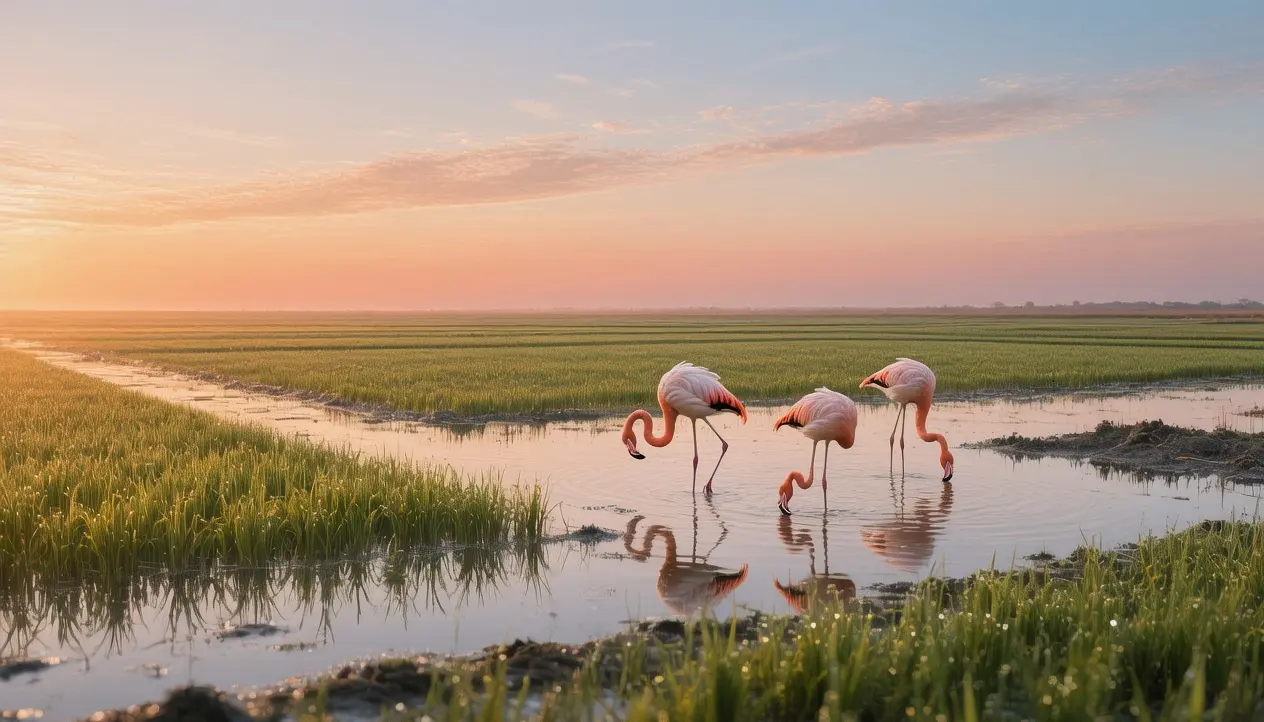
I stand beside the water at nine in the morning. Sun rises low over the lagoon. Flamingos wade in shallow water, their feathers glowing soft pink. Park entry costs nothing. I breathe in air that smells of mud, salt, and growing reeds. A gentle breeze moves across the open water. The Ebro River carries sediment from deep inland and drops it here, building new land where it meets the Mediterranean. Not everything looks neat. Mosquitoes gather near dense vegetation in summer. Some viewpoints feel overgrown and poorly signed. Strong winds can whip across open flats without warning. Yet the scale humbles you. Water, sky, and land blend into one wide horizon.
Why Ebro Delta Natural Park Matters
This is the largest wetland in Catalonia and one of the most important in the western Mediterranean. It covers over 320 square kilometres where the Ebro River reaches the sea. Marshes, lagoons, sandbars, and rice fields form a patchwork that supports more than four hundred bird species. Flamingos breed here — the only place in Catalonia where they do so continuously. Rice farming has shaped the landscape for centuries, balancing nature with human livelihood. The delta faces real threats. Coastal erosion narrows beaches each year. Freshwater flow decreases due to dams and irrigation upstream. Invasive plants take over native habitats in some areas. Restoration work proceeds slowly. Still, the delta survives as a working landscape where farmers, fishermen, and wildlife share the same space.
The Best Time to Experience Ebro Delta Natural Park
April through May brings spring migration and fresh growth. Temperatures sit between 12°C and 22°C (54°F–72°F). Birds are most active then. Rice fields turn vivid green after planting. September through October offers similar conditions — 18°C–26°C (64°F–79°F). Migratory birds return. Summer from June to August runs hot. Highs reach 30°C–35°C (86°F–95°F). Mosquitoes become intense near water. You will need strong repellent. Winter from December to February stays mild — 8°C–16°C (46°F–61°F). Flamingo numbers peak then. The air feels crisp and clear. Rain falls mostly in October. Wind can blow strong year-round, especially March and April. Early morning and late afternoon give the best light and calmest conditions.
Approximate Budget for a 7-Day Trip
- Accommodation: Guesthouse in Deltebre or L’Ampolla — 50–75 euros per night. Small apartment — 60–90 euros per night. Campsite — 25–40 euros per night per person.
- Food: Lunch at a village bar — 10–14 euros. Dinner with local rice dish and drink — 18–28 euros. Bakery or market meal — 5–8 euros.
- Transport: Train from Barcelona to L’Aldea — 10–28 euros one way. Car rental — 35–55 euros per day (highly recommended). Bicycle hire — 8–15 euros per day. Local taxi — 8–15 euros per trip.
- Attractions: Park entry — free. Ecomuseum — 4 euros. Kayak hire — 15–20 euros per hour. Guided boat tour — 35–50 euros per person.
- Miscellaneous: Repellent, water, snacks — 8–12 euros daily.
Total estimated for one person, 7 days: 440–750 euros
Vehicle access to Playa del Trabucador costs 12 euros per day in July and August. Park at the main gate and walk or cycle in instead. It saves money and lets you enjoy the sandbar at a slower pace.
Essential Ebro Delta Experiences
- Walk the southern shore of Laguna de la Tancada. Shallow water stretches wide. Flamingos, herons, and ducks gather here. Early morning offers the best views. Birds move to deeper water by midday. Skip this if strong wind blows — dust and grit travel fast across the flats.
- Kayak through calm channels toward Isla de Gracia. Reeds line the banks. Water reflects sky. The delta sits almost perfectly flat so paddling feels easy. Watch for birds flushing from the margins.
- Drive or cycle out to Punta del Fangar. A long sandspit reaches into the sea. Lighthouse at the end marks the river’s edge. Both sea and bay surround you. The road is unpaved in sections — drive carefully.
- Visit the Ecomuseum in Deltebre. Displays explain the delta’s geology, farming, and wildlife. They connect the landscape to the people who have tended it. The building itself sits beside water and looks out across rice fields.
- Eat local rice at a family restaurant. Calasparra-style rice cooked with seafood or duck comes from fields you can see from the window. The flavour tastes deeper and earthier than standard varieties.
- Watch sunset from Playa del Trabucador. The sandbar runs six kilometres long. Sea on one side, bay on the other. Light turns water gold and pink. It feels like standing at the edge of two worlds.
Hidden Gems Most Travelers Miss
- Laguna de Encanyissada. A quieter lagoon tucked beside the Casa de Fusta building. Wooden boardwalk loops through reeds. It feels secluded. Dragonflies dart above water in summer.
- Old rice barns near Poblenou del Delta. Weathered wooden structures stand beside channels. They show how farming worked before machinery. Few people stop to look closely.
- The so-called "secret beach" north of Riumar. Online lists talk it up as untouched. It sits beside a developed area and often has driftwood piled high. If you have limited time, spend it at Trabucador instead.
Cultural & Practical Tips
- Do not visit without a car unless you enjoy long cycling distances. Public transport connects main towns but rarely reaches the best viewpoints. Distances between sites are greater than they look on maps.
- Bring strong insect repellent and use it every few hours. Mosquitoes are not just annoying — they are persistent near water and rice fields. They can ruin an evening quickly.
- Stay on marked paths. Some areas hold deep mud and soft sediment. It looks solid but gives way unexpectedly. Private rice fields are not public access — respect boundaries.
- Do not approach nesting birds. Keep at least fifty metres away. Use binoculars. Disturbance causes parents to abandon nests and chicks to die.
- Fill your tank in Amposta or Deltebre. Fuel stations inside the delta are scarce and sometimes close without notice.
- Check wind forecasts before heading to exposed points. Punta del Fangar and Trabucador offer no shelter. Gusts can knock bicycles over and make walking difficult.
Essential Visitor Information
Location & Access: Ebro Delta Natural Park, Tarragona province, Catalonia, Spain. From Barcelona: 180 km south via AP-7, roughly 2 hours. From Valencia: 190 km north, roughly 2 hours 15 minutes. Nearest train stations: L’Aldea-Amposta and L’Ampolla. From there, taxi or bicycle onward.
Tickets & Booking: Park entry — free. Ecomuseum — 4 euros adults. Guided activities — prices vary. No reservation needed for general visits. Book kayaks and boat tours 2–3 days ahead in summer.
Operating Hours: Park — open 24 hours daily all year. Visitor centres — 10:00 to 18:00, shorter hours winter. Closed Mondays outside summer season.
Visit Duration: Minimum 2 days. 3–4 days lets you explore both north and south deltas without rushing.
Family Suitability: Good for children. Mostly flat terrain. Strollers work on paved paths. Restrooms available at main centres. Bring protection for everyone against insects.
Timing: Best season — April–May and September–October. Best time of day — early morning before 10:00 or late afternoon after 17:00.
Highlights: Laguna de la Tancada flamingo viewing, Punta del Fangar sandspit and lighthouse, Playa del Trabucador sunset, Isla de Gracia kayak route, rice field landscapes.
Nearby & Day Trip: Tortosa medieval town — 30 minutes by car. L’Ampolla fishing port and beaches — 20 minutes. Tarragona Roman ruins — 1 hour north. Peñíscola Castle — 1 hour south along the coast.
Conclusion: Travel with Care, Not Just Sight
Ebro Delta Natural Park is changing. Land erodes. Water shifts. Some seasons bring more birds than others. It will not look the same ten years from now. That fragility makes every visit matter more. Before you leave, stand quietly beside the water and watch a bird take flight. What will you do to help places like this survive?
Comments
Post a Comment