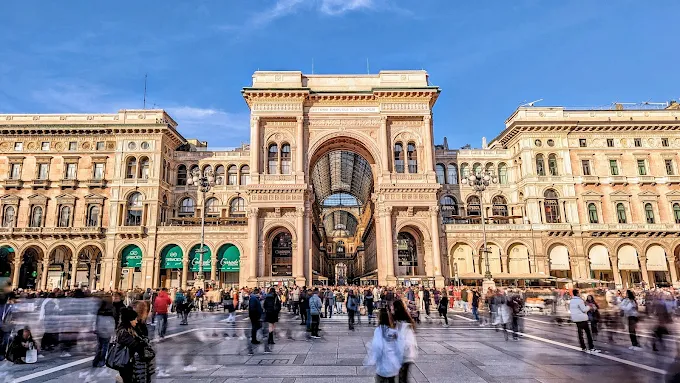
Galleria Vittorio Emanuele II: Where Grand Design Meets Daily Life
I step through the archway from Piazza del Duomo just before eight in the morning. The entry costs nothing. A coffee at one of the counters sits at one euro eighty. The floor mosaics gleam under soft overhead light. Only a few people walk the corridors — shopkeepers unlocking doors, staff setting tables, early visitors who know the quiet hours matter most. By ten, every aisle will fill. Voices will echo between glass and stone. For now, the space feels like what it was always meant to be — a shared living room, not just a tourist attraction.
Why Galleria Vittorio Emanuele II Matters
This structure was built in the late 19th century to connect Milan’s religious heart at the Duomo with its political centre at Piazza della Scala. It took over twelve years to complete. The design was bold — iron and glass vaulting spanning two intersecting arcades, stone facades rising four storeys high, intricate mosaics marking the floors. It stood as one of the earliest large-scale shopping arcades anywhere, a model later copied across Europe. It has survived war damage, economic shifts, and changing tastes. Today it remains fully functional — shops, cafés, and restaurants operate exactly as intended more than a century ago.
It does not feel perfect, though. Sections of mosaic show wear and uneven repair. Restoration work drags on for months at a time, cordoning off walkways with plastic barriers. The most visible spots have become heavily commercialised. You will find luxury brands everywhere and very little that feels local. Prices sit far above average for the rest of the city. The Galleria matters, but it has also become a place where people mostly pass through rather than settle.
The Best Time to Experience Galleria Vittorio Emanuele II
April through June offers ideal conditions. Days run 14°C to 23°C (57°F–73°F). Milan stays pleasant and crowds have not yet reached summer levels. September and early October work equally well. Temperatures hold between 15°C and 24°C (59°F–75°F). Light falls softer through the glass roof and the city feels calmer.
July and August push past 30°C (86°F) most afternoons. Heat builds up under the glass. The space fills completely. Lines form outside every doorway. Winter stays cool — 3°C to 10°C (37°F–50°F) — but the Galleria feels sheltered and draws crowds during holiday periods. Arrive before 9:00 AM or after 7:00 PM then. Midday means long waits and little room to walk freely.
Approximate Budget for a 7-Day Trip
Prices are per person in euros. Staying outside the immediate historic centre cuts accommodation costs noticeably.
- Accommodation: 65–120 per night. A clean room in a guesthouse or B&B within walking distance sits near the lower end. Something central with modern amenities runs higher. Lodging directly facing the Duomo or Galleria costs nearly double comparable rooms two streets away. You see the same atmosphere without paying the premium.
- Food & Drink: 35–55 daily. Lunch at a trattoria, dinner with one drink, coffee, and snacks included. Cafés with outdoor seating inside the Galleria charge 3 to 4 times normal rates for coffee and drinks. Walk two blocks away and prices drop to realistic levels.
- Transport: 15–25 daily. Metro tickets cost roughly 2 euros each. Day passes offer savings if you move around often. Most central sites sit within walking distance. Taxis from the station cost about 15 euros to reach the centre.
- Attractions: 30–50 total for the week. Duomo terrace entry, nearby museums, and theatre visits. The Galleria itself is free — you pay only for what you consume inside.
- Miscellaneous: 20–35 daily. Shopping, souvenirs, unexpected treats.
Total estimated 7-day cost: 945–1,750 euros per person
Essential Galleria Vittorio Emanuele II Experiences
- Walk both intersecting axes — Start at the Duomo end and walk straight through toward Piazza della Scala. Notice how the vault height changes and how light falls differently along each stretch. The full loop takes 15 minutes without stopping.
- Look up at the glass roof — Iron ribs and curved glass panels form a continuous canopy. The engineering dates from the 1860s. It still works perfectly. Stand back from shop displays to see the structure clearly.
- Step carefully over the floor mosaics — Four panels represent the continents known at the time of building. Designs show emblems and symbols. People pause to photograph them, so keep moving if you can.
- Sit at a historic café counter — Several venues have operated here since the Galleria opened. Standing at the counter costs far less than sitting at a table. You get the same atmosphere and often better service. Skip if you prefer slow seated meals — tables fill fast and minimum charges apply.
- Walk through at night — After shops close, the lighting shifts. The vault glows warm and crowds thin out. The space feels grander and quieter then. It stays open 24 hours.
- Notice the building facades — Shops occupy the ground floor but upper levels hold apartments and offices. People still live here. Windows with curtains and flower boxes show this is a working building, not just a museum.
Hidden Gems Most Travelers Miss
- Upper-level side passages — Short corridors connect the main arms to surrounding streets. They hold fewer crowds and clearer views of the vault edges.
- Details above the shop entrances — Scrollwork, crests, and small stone carvings sit at eye level but go unnoticed. They show the craftsmanship of the original builders.
- Quiet approach from Piazza della Scala — Most people enter from the Duomo side. Approaching from the opposite direction gives you the full length of the arcade stretching ahead, with fewer people in the frame.
- Terrace seating inside the Galleria — Several venues offer upstairs tables. The view down onto the floor feels different. It costs extra but beats standing shoulder to shoulder on the main walkway. The central floor mosaics are famous, but they feel overcrowded by mid-morning. You will wait just to take a photo and others will walk straight through your shot.
Cultural & Practical Tips
- Standing at the counter costs less than sitting. Every café posts prices clearly. Check before you order so you know what to expect.
- Keep bags closed and visible. Pickpockets work the busiest sections. Stay alert even when you stop to look up.
- Do not block walkways. The Galleria is a public thoroughfare, not a museum. Move to the side if you want to stop or take photos.
- Respect quiet after 11 PM. People live in the apartments above. Sound carries easily between hard surfaces.
- Visit on weekdays if you can. Saturdays and Sundays bring twice as many people and longer queues everywhere.
- Wear comfortable shoes. The stone floor stays hard and unyielding. You will walk far more than you expect.
- Do not touch or step unnecessarily on the mosaics. They are older and more fragile than they look. Help keep them intact.
Essential Visitor Information
Location & Access: Galleria Vittorio Emanuele II sits between Piazza del Duomo and Piazza della Scala in central Milan. The nearest metro stations are Duomo (lines M1 and M3) and Montenapoleone (line M4). Both sit within 5 minutes’ walk. Linate Airport lies 7 km away; buses run to the city centre in roughly 30 minutes. Centrale Station is 20 minutes by metro. No parking exists directly nearby. Use paid garages a few blocks away and walk in.
Tickets & Booking: Entry to the Galleria is free at all times. You pay only for food, drink, or shopping. Some historic venues accept reservations for tables; others operate walk-in only. No tickets are required to enter or walk through the space itself.
Operating Hours: The Galleria never closes. Shops generally open 10:00 AM to 8:00 PM daily. Cafés and restaurants keep longer hours, often from 7:30 AM through late evening. Individual venues may close one weekday, usually Monday.
Visit Duration: Allow 30 to 45 minutes just to walk through and look. One to two hours lets you sit, have a drink, and examine details without rushing.
Family Suitability: Children are welcome everywhere. The smooth stone floor works well for strollers. Restrooms exist inside some cafés and at nearby public facilities. Keep close watch on children in the busiest sections.
Timing: Arrive before 9:00 AM or after 8:00 PM for quiet and good light. Midday brings the heaviest crowds and harshest overhead lighting.
Highlights: The glass vaulted roof, four-continents floor mosaics, iron-and-stone architecture, historic cafés, and the dual approach from Duomo and Scala.
Nearby & Day Trip: Milan Duomo stands directly adjacent. Museo del Novecento sits across the square. The Last Supper is 15 minutes by metro. Bergamo hilltop city takes one hour by train. Lake Como runs roughly one hour 15 minutes and makes a full rewarding day trip.
Conclusion: Travel with Respect, Not Just Attention
The Galleria was built to connect two parts of the city, not just to draw visitors. It has seen generations of Milanese meet, talk, and pass through. You can walk the full length in ten minutes and take plenty of photos. You will understand it far better if you slow down, notice how light moves through the glass, and treat it as a shared space rather than a backdrop. The most beautiful places stay alive only when we respect them. What quiet detail will you notice first when you walk through?
Comments
Post a Comment