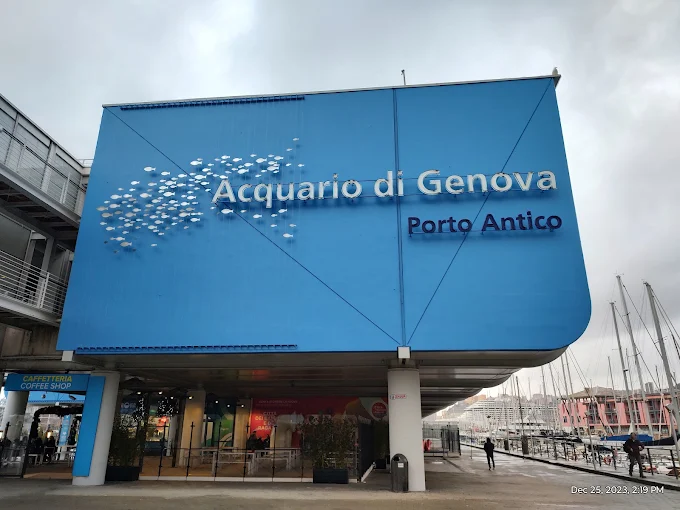
Acquario di Genova: Where Harbour Meets Deep
I stand beneath the great curved tank at 9:00 on a June morning. Rays of sunlight filter through blue-tinted water. An espresso costs one euro forty at a small counter just inside the entrance. I look upward — sharks glide slow overhead, schools of silver fish turn as one, and beyond the glass walls, the real harbour stretches bright and busy, ships moving past the very building that holds the ocean within. Genoa Aquarium sits right where port meets city, built for the 1992 Columbus anniversary and grown since into the largest facility of its kind in Italy. People come for the marine life. They find something deeper — a place that connects the sea outside to the world we rarely see.
Why Acquario di Genova Matters
Genoa has lived by the Mediterranean for over a thousand years. When the aquarium opened, it did not just entertain — it reflected the city’s oldest relationship. Today it houses thousands of creatures across dozens of habitats, from the Ligurian coast to tropical reefs and the cold Antarctic. New sections have been added over time, including outdoor pools and a separate whale museum. That growth brings real strain. The central corridor narrows and crowds fast. Some older tanks feel dimmer or smaller than newer ones. The building follows the curve of the harbour — which means pathways twist, turn, and can feel confusing. The aquarium balances wonder with wear — and that balance is delicate.
The Best Time to Experience the Aquarium
Late April through June brings fresh air and thinner crowds. Temperatures sit between 12°C and 23°C (54°F–73°F). The harbour outside feels pleasant and queues stay short. July and August warm to 20°C and 29°C (68°F–84°F). The aquarium stays cool inside, but entry lines stretch long and pathways feel packed. September offers settled weather — 15°C to 25°C (59°F–77°F). Visitors thin out and light falls soft through the overhead panels. Early October remains pleasant — 13°C to 20°C (55°F–68°F) — but evenings cool fast. Winter holds quiet days: 6°C to 13°C (43°F–55°F). School groups visit mid-week; weekends feel calmest. Arrive before 9:30 AM any time of year — that is when tanks feel clearest and you see marine life most active.
Approximate Budget for a 7-Day Trip
Prices below are per person, in euros, based on staying in central Genoa.
- Accommodation: 7 nights — €65–160 per night. Total: €455–1,120. Staying further from the port costs 25–35% less; walking or taking a bus in takes 10–20 minutes longer.
- Food & Drink: Breakfast, two meals daily — €25–50 daily. Total: €175–350. Restaurants right beside the aquarium charge premium prices; walk two lanes back for fresh pasta, pesto, and local seafood at fair rates.
- Transport & Tickets: Train from Milan — €12–22 return; aquarium entry — €24–32; city bus/metro — €1.70 per ride.
- Activities: Old town, harbour tours, nearby coastal villages — €30–65.
- Miscellaneous: Water, hat, comfortable shoes — €12–22.
Total estimated 7-day cost: €697–1,711
"After-hours private viewing" packages are often overpriced. Standard entry covers every major tank and habitat. Book early and arrive at opening — you experience quiet moments without paying extra.
Essential Acquario di Genova Experiences
- Panoramic Shark Tank — Stand beneath the curved glass. Sharks, rays, and large fish move overhead. It feels immense and calm. They do not hurry — and neither should you. Skip if you arrive late; crowds block the view and the hush vanishes.
- Mediterranean Habitats — Explore the tanks closest to home. Local fish, coral, and sea creatures you might actually see in these waters. It grounds the visit — this is our sea, not just a distant one.
- Manatee and Giant Turtle Pools — Watch slow, gentle movement in spacious pools. These animals live long lives here and feel relaxed. Sit quietly and they will come close to the glass.
- Rainforest and Freshwater Section — Step into warm, humid air. Caimans, colourful birds, and Amazon fish live in a recreated ecosystem. It feels entirely different from the harbour outside — green, dense, and alive.
- Outdoor Dolphin Pools — Walk outside to the open-air tanks. Sunlight, sea breeze, and dolphins moving freely. It connects the building directly to the real ocean beyond.
- Whale Museum — Visit the separate nearby hall. Skeletons, models, and research displays explain the giants that swim in waters just off this coast. It is quieter, more educational, and often overlooked.
Hidden Gems Most Travelers Miss
- The upper-level viewing deck overlooks the main tanks from above. Fewer people pause here, and you see patterns of movement impossible from below. It offers a fresh perspective on familiar spaces.
- The quiet coastal tank near the exit holds small local creatures — seahorses, blennies, and anemones. It is modest and easy to walk past, but rewards slow looking — delicate, colourful, and entirely Ligurian.
- The harbour promenade outside the rear entrance offers evening views back across the water. The aquarium glows blue from within — beautiful and peaceful. No ticket needed.
- The "Genoa Aquarium VIP Exclusive Behind-the-Scenes Tour" is overpriced. Every major habitat and viewing area is included in standard entry. Arrive early, walk slowly, and pause at the upper deck — that is how you truly experience it.
Cultural & Practical Tips
- Arrive before 9:30 AM. The best light, clearest tanks, and genuine atmosphere happen early. After 11:00 AM the dynamic shifts noticeably.
- Book tickets 1–2 weeks ahead. Weekends and holidays sell out fast — same-day entry is rarely available at full price.
- Carry a light jacket. Tanks keep spaces cool and humidity varies — layers help.
- Move with the flow. Pathways run one-way in sections. Shortcuts are not open and you may find yourself blocked. Follow the marked route and you will see everything.
- Do not tap glass. Animals are sensitive to vibration — keep it gentle and quiet.
- Eat outside. The aquarium food court is convenient but expensive. Great local food waits just a few minutes away.
- Stay for the harbour sunset. The lights come on across the water and the building looks its most beautiful from outside.
Essential Visitor Information
Location & Access: Acquario di Genova, Ponte Spinola, 16128 Genoa, Italy. Coordinates roughly 44.41° N, 8.92° E. Three ways to arrive: train from Milan — 1 hour 30 mins; train from Turin — 1 hour 45 mins; bus from Genoa Piazza de Ferrari — 15 mins.
Tickets & Booking: Exterior promenade free. Aquarium — €24–32. Book ahead; same-day availability is limited and costs more.
Operating Hours: Generally 9:00 AM to 9:00 PM in summer; closes 7:00 PM or earlier off-season. Closed selected weekdays in winter.
Visit Duration: Minimum 2.5 hours. Recommended half day to explore fully without rushing.
Family Suitability: Excellent. Wide corridors suit strollers; elevators serve all levels. Younger children engage deeply — allow extra time at their favourite tanks.
Timing: Best seasons are late April–June and September. Best time of day is before 9:30 AM or late afternoon.
Highlights: Shark tank at opening, Mediterranean section, manatee pool, upper deck view, whale museum, sunset from the promenade.
Nearby & Day Trip: Genoa Old Town — 10 mins. Camogli — 30 mins train. Portofino — 45 mins train + boat. Santa Margherita Ligure — 35 mins train.
Conclusion: Travel with Wonder, Not Just Camera
Acquario di Genova gives you beauty that belongs to the sea. You can take photos and leave. Or you can remember — every creature here is part of a living ocean that touches this very shore. Protecting those waters matters more than any visit. Honouring that connection is the finest compliment you can pay. What is the one living place you would visit promising to help keep it safe?
Comments
Post a Comment