Glastonbury Tor: Where Ancient Hill Meets Avalon Plain
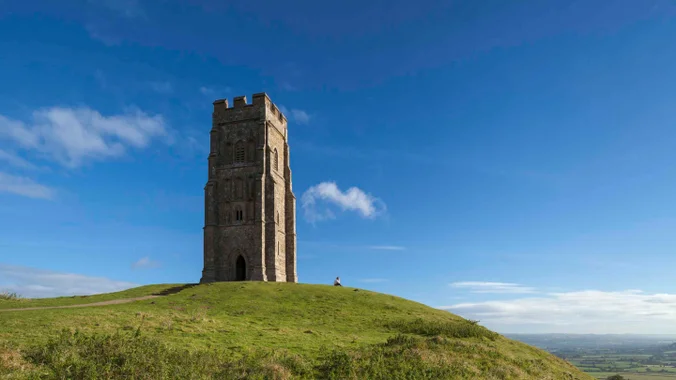
I start climbing the stepped path at ten past nine on a misty Friday morning in late September. The hill rises sharp and solitary from the flat Somerset Levels — a green cone scored by seven terraced ridges winding upward. Halfway up, the mist thins and St. Michael’s Tower appears — weathered stone walls and a single gable standing against pale sky, all that remains of a 14th-century church. No crowds fill the path yet. The air feels cool and still. From the summit, fields stretch endless in every direction — patchwork green and gold, villages tucked low, distant hills soft on the horizon. It feels ancient, solitary, and impossible to ignore.
Why Glastonbury Tor Matters
This hill has drawn people for thousands of years. Prehistoric communities saw it as a sacred landmark; early Christians built hermitages and chapels on its summit; medieval writers linked it to Avalon and King Arthur. The stone tower we see today was part of a church destroyed in the 16th century — only the tower base survived. Today it stands as both holy site and natural landmark, drawing pilgrims, walkers, and story-seekers alike. That broad appeal brings real strain. Footfall erodes the steep paths; weather and wind eat steadily at the stone; and visitors leave litter or damage fragile vegetation. The tor endures — but every step shapes its future.
The Best Time to Experience Glastonbury Tor
Late April through May brings fresh green and clearer skies, temperatures between 8°C and 15°C (46°F to 59°F). Days lengthen fast and the mist burns off earlier. June and July offer the longest daylight — sky stays light until nearly 9.30 p.m. — and temperatures rise to 11°C and 19°C (52°F to 66°F). This is peak season; the path fills by mid-morning and the summit feels crowded. August stays mild at 12°C to 20°C (54°F to 68°F), but mist clings stubbornly to the levels and can shroud the view completely. September holds steady at 11°C to 17°C (52°F to 63°F), crowds thin noticeably, and golden light turns the stone warm amber. This is widely considered the best month to visit. October cools to 8°C and 13°C (46°F to 55°F), days shorten fast, and morning mist creates dramatic, atmospheric conditions. November through February the tor quiets — temperatures sit 5°C to 9°C (41°F to 48°F) — and you may climb and stand atop almost alone. Check visibility before starting; the view vanishes in minutes. Arrive before 10 a.m. any time of year; after that, the day shifts completely.
Approximate Budget for a 7-Day Trip
These figures assume a base in Glastonbury or nearby, exploring the tor, town, and surrounding countryside.
- Accommodation: £80–£150 nightly. Guesthouse or cottage within walking distance. £560–£1,050 for 7 nights.
- Food & Drink: £20–£36 daily — breakfasts, town lunches, evening meals. £336–£504 total.
- Transport: Walkable from town centre. Car parking at base — limited and costly. Bus from Wells — 20 minutes. £35–£100 total.
- Attractions: Tor access free. Nearby Abbey £10 adult. £25–£60 total.
- Miscellaneous: £12–£22 daily — supplies, drinks, warm layers. £84–£154 total.
Total estimated 7-day cost: £1,040 to £1,868
Cafes directly beside the tor approach charge premium prices. Walk five minutes into the high street — same fresh food costs less and supports local families.
Essential Glastonbury Tor Experiences
- Climb the main terraced path early — The seven ridges guide you upward, each turn revealing a new angle. The tower grows larger step by step. Skip this if mist covers the summit; you will see nothing and the stone steps become slippery.
- Stand beside the tower walls — Run a hand along the weathered stone. It has stood here through storms, wars, and centuries. The view opens full — 360 degrees of fields, hills, and distant skyline. It feels vast and humbling.
- Walk the summit rim — A narrow path circles the top. You see the tor from every direction — sharp cone, green slopes, solitary tower. It takes ten minutes and feels entirely different from every angle.
- Watch mist rise or clear — Early morning or late afternoon, fog drifts across the levels, swallowing then revealing the view. The tor appears and disappears like an island in a sea of cloud. It never looks the same twice.
- Descend via the quieter east path — Less steep, less crowded, winding through fields. You look back and see the tor whole — perfect and distinct against the sky. Most people return the same way; take this turn instead.
- See it from the fields below — Stand on the road across the plain. The tower rises alone above flat green land. It explains why people have seen something special here for thousands of years.
Hidden Gems Most Travelers Miss
- South slope quiet bench — Halfway up, a stone bench sits tucked below the ridge. Almost no one pauses here. You look down over the town and across the levels without being part of the flow.
- Field path approach — From the west, a grassy trail leads through meadows then joins the main climb. It feels softer, greener, and far less trodden. Go before 9.30 a.m. to share it only with sheep.
- Dawn from the summit — Most visitors arrive mid-morning. Be there as the sun rises. The world glows gold and the silence feels complete. This spot is widely shared online now and has become overrated. Go on a weekday if you want it truly quiet.
- Terrace detail — Look closely at the ridges as you climb. No one agrees exactly why they exist — ancient tracks, farmland, or something older. Ponder it as you walk; the mystery is part of the power.
Cultural & Practical Tips
- Wear sturdy non-slip shoes. Steps are worn smooth and stay damp long after rain. The climb is shorter than it looks but steeper than it feels.
- Check weather and visibility before starting. Mist arrives within minutes. Carry a phone and know your return route.
- Stay on marked paths. Shortcuts erode the slopes rapidly — what takes seconds to ruin takes decades to heal.
- Carry water and warm layers. The summit is exposed — wind feels 5°C colder than below. Even mild days turn sharp up top.
- Respect different beliefs. People come here for faith, history, nature, or quiet. All belong. Speak softly and let others experience the tor in their own way.
- Park legally. The narrow lane fills fast. Overflow parking creates bottlenecks for residents and emergency vehicles. Walk from town if you can.
Essential Visitor Information
Location & Access: Glastonbury Tor, BA6 8BE — Somerset. Three transport options: bus from Glastonbury town centre — 25 minutes walk; car via A39 — limited parking at base; train to Castle Cary then taxi — 25 minutes.
Tickets & Booking: Access free. No booking required. Tower exterior always visible; interior occasionally open — check locally.
Operating Hours: Open access dawn to dusk daily. No closing gate.
Visit Duration: Minimum 1 hour up and down. 2 hours including slow exploration and quiet pause.
Family Suitability: Uneven stone steps — hold children’s hands constantly. No barriers at summit edges. Public toilets in town centre.
Timing: Best season September — clearer skies, thinner crowds, golden light. Early morning before 10 a.m. offers quietest climb and best visibility.
Highlights: First glimpse of tower, 360-degree rim walk, misty dawn, field path descent, distant view from below.
Nearby & Day Trip: Glastonbury Abbey — 20 minutes walk; Wells — 20 minutes; Cheddar Gorge — 30 minutes; Bath — 45 minutes; Exeter — 1 hour 15 minutes.
Conclusion: Travel with Wonder, Not Just Legend
Legends grow around places that matter. This hill has stood here long before stories attached to it and will remain long after we leave. What you see is what matters most — stone, sky, and the climb itself. Walk gentle. Leave nothing behind. What will you carry down from the top?
Comments
Post a Comment