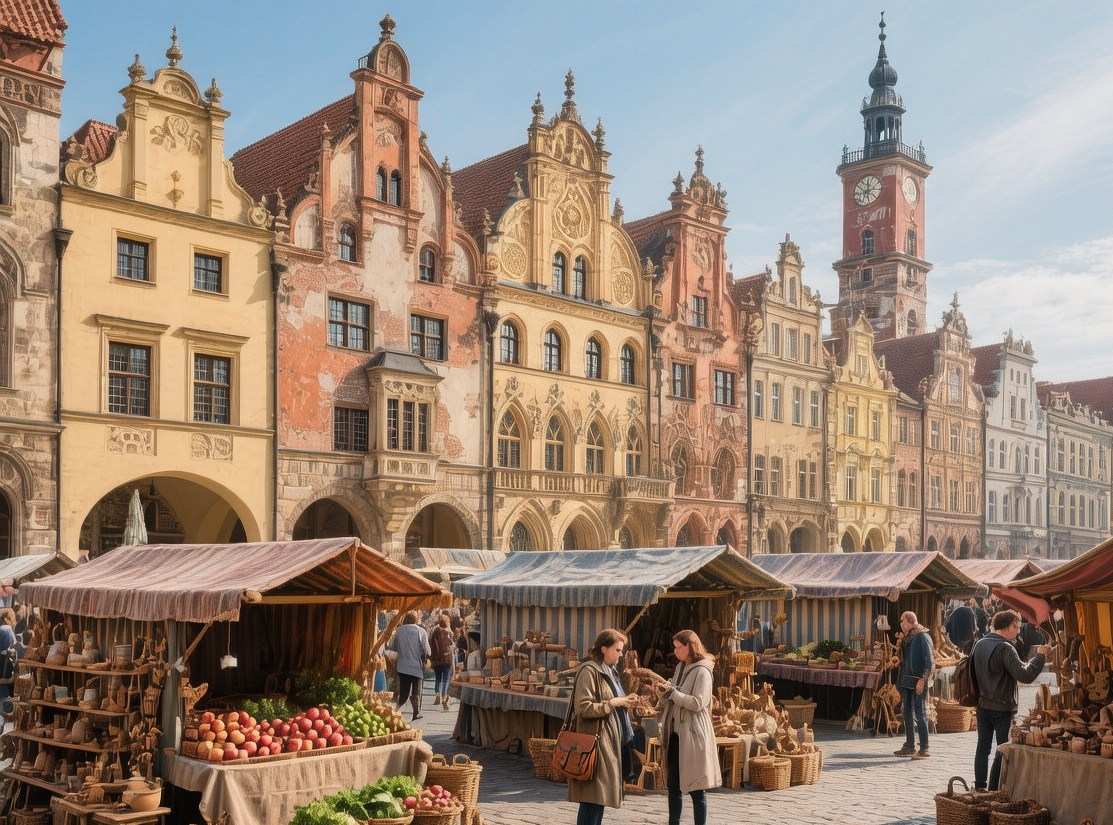
Görlitz: Where Border Crossings Meet Timeless Stone
I walked across the main square at ten past nine on a Wednesday morning. Sunlight warmed pale sandstone walls to honey gold. I paid nothing to wander the lanes. A baker pulled fresh rolls through a doorway and the scent drifted slow and sweet. I expected a town frozen at the edge of the map. What I found feels like a place where two worlds meet — German and Polish, past and present, grand and quiet. Not every facade looks perfect. Some side streets show peeling plaster and faded paint. Restoration proceeds slowly. That gentleness feels real; this is not a stage set polished for visitors.
Why Görlitz Matters
Görlitz stands at the easternmost edge of Germany, split by a river that once marked a closed border and now separates two nations within the European Union. Its old town survived the second world war almost entirely intact — late Gothic, Renaissance, and Baroque buildings line streets that have changed little in centuries. Merchants and weavers built these houses when this was a wealthy crossroads of trade. Today the entire historic centre carries protected status, and the bridges across the river connect two cultures as easily as two towns. One honest criticism: the border district feels quiet and some areas stay underdeveloped. Cafes and shops thin out quickly as you move away from the central square. Public transport across the river runs infrequently; waiting times can stretch long.
The Best Time to Experience Görlitz
April through June brings 7°C to 18°C / 45°F to 64°F. Window boxes fill with flowers and the river glows bright in lengthening light. Arrive before 10:00; the lanes stay nearly empty. July and August warm to 12°C to 23°C / 54°F to 73°F. Days feel long and evening walks stay pleasant. September holds 9°C to 18°C / 48°F to 64°F. Golden light softens the sandstone and crowds thin noticeably. October through March the town feels crisp and quiet. Christmas markets bring warmth and visitors in December; otherwise you will often have whole streets to yourself. Mondays several small museums close; public lanes and churches remain accessible.
Approximate Budget for a 7-Day Trip
Costs below are per person based on staying in Görlitz old town.
- Accommodation: 427 euros — Clean room in a historic guesthouse. Places directly on the main square charge 190 euros or more per night and feel overpriced; stay one lane back for half the cost and equal charm.
- Food: 266 euros — Silesian dumplings, hearty soups, freshly baked bread, and apple pastries.
- Transport: 84 euros — Local bus pass plus train connections. Everything central is walkable; the Polish side is a short bridge crossing away.
- Attractions: 77 euros — Museum entry, church tower access, and guided walking tour.
- Miscellaneous: 63 euros — Drinks, snacks, and small purchases.
Total: 917 euros. Coffee and cake right on the main square carry a clear premium. Walk two minutes to the next lane; the same fresh pastry costs nearly 40 percent less.
Essential Görlitz Experiences
- Market Square and Town Hall — The vast cobbled space sits ringed with pale sandstone houses. The town hall rises at one end, blending architectural styles across centuries. Sit on a low wall and watch the town wake up. Skip if you dislike open exposed spaces; there is little shade and midday sun feels strong.
- St. Peter and Paul Church — The tall spire dominates the skyline. Inside, light falls through ancient glass onto pale stone walls. Climb the tower for wide views across rooftops and the river. Steps are steep and narrow; take your time. The effort rewards you with a different perspective on the whole town.
- River Crossing and Polish Side — Walk across the footbridge. The language changes, the street signs shift, and the atmosphere softens. You see Görlitz from the opposite bank too — a unified town split by history, reunited now in daily life. No passport checks happen; the border feels open and easy.
- Winding Side Streets — Leave the main square and follow any lane downward. Houses lean close, doorways show carved dates, and small courtyards open unexpectedly. Every turn reveals a different colour, a different roofline. Walk slowly; the best details appear at eye level.
- Lower Market and Hidden Lanes — A second smaller square sits below the main one. It feels quieter and older, with fewer visitors. Narrow passages connect it to the river path. Most people stay above and never find this gentler layer of the town.
- Evening Light Walk — As shops close, warm lamp light spills across stone facades. The town feels softer and slower. No tickets needed; just wander until you find a quiet corner to stand still in.
Hidden Gems Most Travelers Miss
- Upper Quiet Lane — Above the main tourist stretch, a paved lane runs parallel. Houses stand beautifully preserved but almost no one walks here. The so-called "famous photo corner" nearby is often overrated; it stays crowded and tripods block the pavement.
- Riverbank Bench — Beside the footbridge, a wooden bench faces both banks. You see the two sides together — shared skyline, shared river, separate histories. Almost no one stops here.
- Inner Courtyard Passage — Tucked between two buildings, a covered archway leads to a cobbled courtyard. It sits open to the public but unmarked. Rest here; the noise of the town fades completely.
- Church Side Glimpse — A narrow path beside the apse offers a clear view of the stonework from below. Flying buttresses and carved details stand out in morning light. Most visitors approach only from the front.
Cultural & Practical Tips
- Respect the border. Two nations meet here. Treat both sides with equal care and curiosity. Local people live and work on both banks.
- Wear sturdy shoes. Cobblestones are uneven and slippery when wet. You will walk far more than you expect.
- Carry cash. Some smaller cafes and shops across the bridge prefer local currency. Cards work in most places but having both is helpful.
- Check opening days. Many small museums and galleries close Mondays or midweek. Plan accordingly so you do not find shutters down.
- Look up. The finest details — gables, carvings, decorative window frames — sit above eye level. Most visitors walk past without noticing.
- Allow extra crossing time. Bridge access is easy but bus connections across run less often. Check schedules or simply walk; the river is narrow and the crossing takes minutes.
Essential Visitor Information
Location & Access: Görlitz, Saxony, Germany. GPS 51.1532, 14.9834. Train from Dresden 1 hour 45 minutes. Berlin 2.5 hours. Prague 2 hours. Walk from Görlitz station to market square roughly 15 minutes.
Tickets & Booking: Church tower entry roughly 4 euros. Museum entry roughly 8 euros. Combined tickets available. Booking recommended online weekends, holidays, and July–September.
Operating Hours: Public lanes open always. Churches generally 10:00 to 17:00; shorter hours winter. Small shops typically 10:00 to 18:00; many close Mondays.
Visit Duration: Minimum one full day. Two days lets you explore both banks, climb the tower, and sit undisturbed.
Family Suitability: Children welcome. Stroller access is possible but cobblestones make it bumpy. Restrooms at the market square and station. Hold hands near river edges and unguarded drops.
Timing: September offers best light and least crowding. Arrive before 10:00.
Highlights: Market square, church tower, river crossing, winding side streets, lower market, evening light walk.
Nearby & Day Trip: Zgorzelec Polish district across the river. Bautzen historic town 45 minutes drive. Dresden 1 hour 45 minutes by train; makes a rewarding full-day trip. Prague 2 hours; cross-border excursion straightforward.
Conclusion: Travel with Bridge, Not Just Border
Görlitz will not feel polished everywhere. Some facades wait their turn, some lanes stay quiet, and the pace feels unhurried. But that is its true gift — it shows that places divided can still be whole. Great towns do not exist just to be seen. They exist to connect people. What bridge will you build in your own journeys?
Comments
Post a Comment