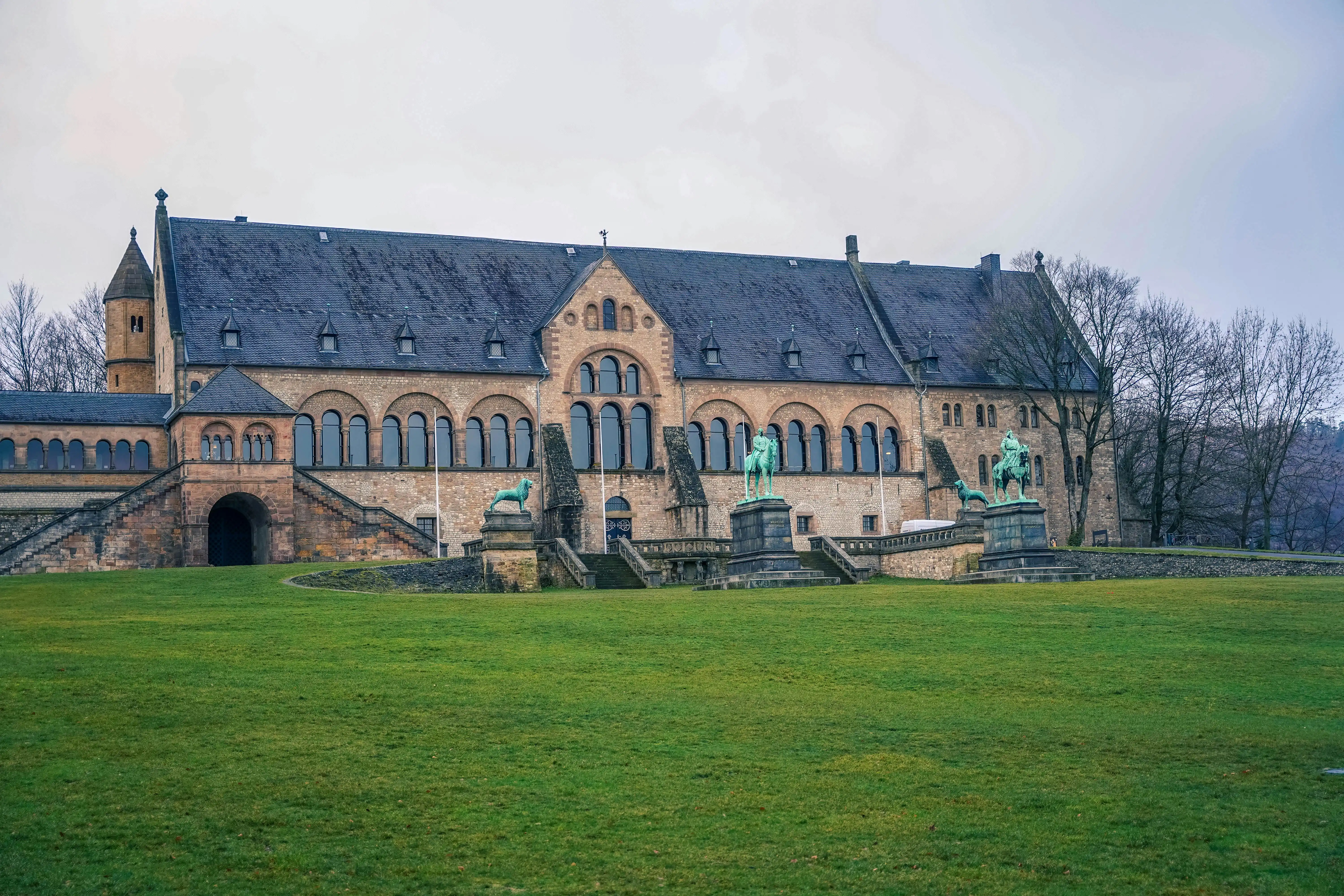
Goslar Imperial Palace: Where Medieval Power Meets Mountain Memory
I stepped through the arched gateway at ten past nine on a Thursday morning. Rough grey stone felt cool and solid beneath my hands. I paid ten euros at the ticket office. The palace stood open before me — great hall, chapel, and residential wings arranged around a quiet courtyard. I expected a ruin left to fade. What I found feels remarkably intact, a place where emperors once walked and ruled, still holding its quiet authority. Not every part dates from the same era. Later renovations show clearly. Some sections were rebuilt in the 19th century. That layering tells the full story — this site mattered enough to be preserved, restored, and loved across centuries.
Why Goslar Imperial Palace Matters
Built from the 11th century onward, this was one of the most important royal residences of the Holy Roman Empire. Emperors held court here, issued decrees, and governed vast lands from these halls. The palace stood beside rich silver mines that brought wealth and power to the region. Over time the town grew up around it, half-timbered houses climbing the slopes below. Today the entire historic district carries UNESCO recognition. The palace remains one of the most complete medieval imperial complexes north of the Alps. One honest criticism: display rooms feel crowded with information. Text panels are dense and some visitors find them overwhelming. The great hall is vast and imposing but nearly empty; benches are few and there is little to sit on. Steep stairs connect levels and there is no lift; upper floors remain hard to reach.
The Best Time to Experience Goslar Imperial Palace
April through June brings 8°C to 18°C / 46°F to 64°F. Days lengthen and the surrounding forest turns fresh green. Arrive before 10:00; morning light falls across the stone beautifully. July and August warm to 13°C to 22°C / 55°F to 72°F. Outdoor events and medieval festivals happen regularly. September holds 10°C to 17°C / 50°F to 63°F. Crowds thin and golden light softens the grey stone. October through March the palace feels stark and quiet. Winter days end early; visiting hours shorten. Mondays some museum sections close; the courtyard and exterior stay visible year-round.
Approximate Budget for a 7-Day Trip
Costs below are per person based on staying in Goslar old town.
- Accommodation: 441 euros — Clean room in a historic guesthouse or apartment. Hotels directly beside the palace charge 200 euros or more per night and feel overpriced; stay one lane back for half the cost and equal charm.
- Food: 273 euros — Savoury regional dishes, hearty soups, and freshly baked bread.
- Transport: 91 euros — Local bus pass plus train connection from the nearest major city. The palace is ten minutes walk from the town centre.
- Attractions: 77 euros — Palace entry, mine tour, and museum visits. Walking the historic streets costs nothing.
- Miscellaneous: 63 euros — Drinks, snacks, and small purchases.
Total: 945 euros. Souvenir shops right beside the palace gate mark up every item. Walk five minutes into the old town; identical gifts and local treats cost nearly 40 percent less.
Essential Goslar Imperial Palace Experiences
- Great Hall and Imperial Throne — The vast main hall stretches wide and high. Columns support the roof and a raised dais marks where the emperor sat. Imagine assemblies, feasts, and ceremonies held here centuries ago. Visit early; after 11:00 groups gather and the space feels crowded. Skip if you struggle with standing long; seating is very limited.
- Chapel and Crypt — A smaller stone chapel connects to the main building. Light falls through narrow windows onto plain walls. Steps lead down to a quiet crypt below. It feels peaceful and deeply still. Few visitors pause here; most hurry past to the larger rooms.
- Courtyard and Facade View — Stand in the open central space and look upward. The palace rises tall and unadorned — strength, not decoration, was the point. Different eras appear in the stonework. Notice how later additions matched the original style. This is the best place to feel the scale of the whole complex.
- Historical Exhibition — Rooms along the wings explain how the palace was built, how it functioned, and how it fell into neglect before being restored. Portraits, artefacts, and models bring the story to life. Allot forty minutes minimum; the detail rewards slow reading.
- Town Approach Walk — Climb up through the narrow cobbled lanes from the market square. The palace appears above rooftops, growing larger as you draw near. This is how generations first saw it — framed between gables and timber beams. It changes the whole impression.
- Evening Light Walk — After closing, the palace facade stays softly lit. Day visitors drift away. The stone glows warm against dark trees. No ticket needed; just stand and look from the gate below.
Hidden Gems Most Travelers Miss
- East Wall Bench — Beside a quiet path outside the main gate, a stone bench faces the palace side. Almost no one walks this far. The so-called "famous photo spot" nearby is often overrated; it sits right beside the road and traffic noise carries constantly.
- Chapel Upper Gallery — A narrow wooden gallery runs along the chapel upper level. It looks down into the quiet space below. You see the layout from a different angle. Most visitors never notice the stairs leading up here.
- Old Foundation Outline — In the grassy area beside the palace, low stone lines mark where earlier buildings stood. They sit flush with the ground and easy to miss. They show how this hilltop was fortified long before the great palace arose.
- Downhill Lane Glimpse — On the path back toward the market square, a gap between houses frames the palace perfectly. It appears high above the rooftops. Stop here on your way down; it is the most memorable view in the whole town.
Cultural & Practical Tips
- Wear sturdy shoes. Cobblestones are uneven and slopes are steep. You will walk up and down repeatedly.
- Allow extra time. The exhibition is dense and there is much to read. Rushing means missing the most important context.
- Check opening days. Mondays the museum sections close; the exterior and courtyard remain accessible.
- Respect quiet zones. The palace grounds feel peaceful. Keep voices low; sound carries across the open courtyard.
- Carry water. Kiosks are spaced far apart. The climb up from town warms you quickly.
- Combine with a mine tour. The wealth that built this palace came from the mountains. Visiting the nearby silver mines completes the story.
Essential Visitor Information
Location & Access: Goslar Imperial Palace, Kaiserpfalz 1, 38640 Goslar, Germany. GPS 51.9072, 10.4283. Train from Hannover roughly 1 hour 30 minutes. Braunschweig 1 hour. Leipzig 2 hours. Walk from Goslar market square ten minutes uphill; limited parking available nearby.
Tickets & Booking: Adult entry roughly 10 euros. Reduced rates available. Combined tickets with other historic sites offered. Booking recommended online weekends, holidays, and July–August.
Operating Hours: Daily 10:00 to 17:00 summer; shorter hours winter. Closed Mondays November through March. Last entry roughly one hour before closing.
Visit Duration: Minimum 2 hours. Half day lets you explore thoroughly, walk the lanes, and sit undisturbed.
Family Suitability: Children welcome. Stroller access is limited due to slopes and stairs. Restrooms at the main entrance. Younger ones may grow restless reading text panels.
Timing: May, June, September best. Arrive before 10:00. Late afternoon light warms the stone beautifully.
Highlights: Great Hall, chapel and crypt, courtyard view, historical exhibition, uphill approach, evening illumination.
Nearby & Day Trip: Goslar old town market square 10 minutes walk. Rammelsberg Mine 20 minutes by bus. Wernigerode Castle 30 minutes drive. Hannover 1 hour 30 minutes by train; makes a rewarding full-day trip.
Conclusion: Travel with Memory, Not Just Stone
Goslar Imperial Palace will not feel grand or perfect everywhere. Parts feel plain, others feel rebuilt. But that is its true beauty — it has stood through empires, wars, and quiet centuries, always changing, always remaining. Great monuments do not just belong to the past. They belong to everyone who tends them, visits them, and remembers. What story will you carry forward from the places you see?
Comments
Post a Comment