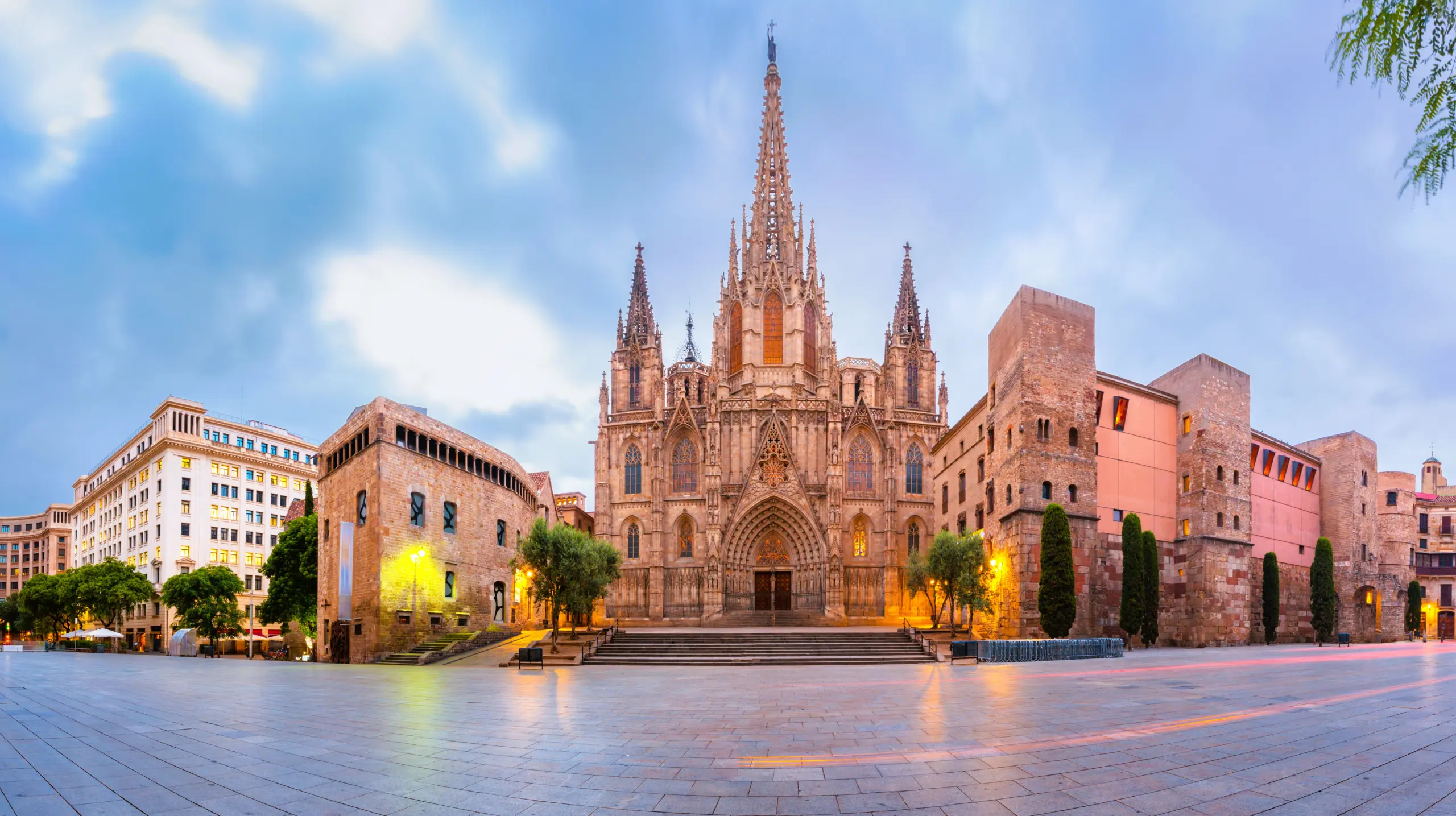
Gothic Quarter: Where Ancient Stones Meet Living Streets
I step from Via Laietana into Carrer de Jaume I just after eight in the morning. The air feels cooler here. Sunlight slants down narrow lanes in thin, bright strips. Cobblestones under my shoes are uneven and worn smooth in places. A bakery door opens and lets out the smell of baking bread. I walk toward the cathedral without crossing a single busy road. Most shops remain shuttered. The quiet makes the tall, close-set buildings feel more present. I pass a fragment of Roman wall set into a modern facade. Two thousand years of history stand side by side. No ticket gates separate them. This is not a museum behind glass. It is a place people still live, work, and walk through every day.
Why Gothic Quarter Matters
This district sits where the Romans founded Barcino around 15 BC. Parts of their original walls still stand. In the Middle Ages it grew into a wealthy Mediterranean capital. Countless churches, palaces, and guild halls rose within the old Roman footprint. By the 19th century the city expanded outward, and this quarter stayed largely untouched. Much of what you see today was restored or rebuilt between 1900 and 1930 to match a medieval ideal. The cathedral facade was finished in 1913. The famous Pont del Bisbe bridge dates only to 1928. These reconstructions drew criticism at the time and still divide opinion. Some areas feel staged rather than authentic. Tourist crowds now push out long-term residents. Rental prices have risen fast. Many family-run shops have closed and given way to souvenir chains. The history is real, but the living community that sustained it has thinned noticeably.
The Best Time to Experience Gothic Quarter
Go from mid-April to mid-June or mid-September through October. Temperatures range 15°C to 22°C (59°F–72°F). Morning light filters gently down the lanes. July and August see highs above 30°C (86°F). Stone walls hold heat and alleys offer little breeze. Winter months are mild, 9°C to 14°C (48°F–57°F), but rain falls more often. Arrive before 09:00. You will see the quietest version of the quarter. Most landmarks open by 08:00. After 11:00, groups fill the main routes and movement slows. Late afternoon after 17:00 brings warm light and thinner crowds, but museums close early.
Approximate Budget for a 7-Day Trip
- Accommodation: €75–€165 per night; €525–€1,155 total. Staying inside the quarter costs most.
- Food: €24–€42 per day; €168–€294 total. Menus del dia offer best value at lunch.
- Transport: €13 per day; €91 total. You will walk everywhere here.
- Attractions: €0–€35 depending on sites; cathedral free mornings, rooftop extra.
- Miscellaneous: €14–€28 per day; €98–€196 total.
Total estimated: €902–€1,779
Restaurants on Plaça Reial charge nearly double what places one street away charge. A simple meal there costs €18 more than at spots five minutes away. Walk one block off the main squares to eat. You will find better food and fair prices.
Essential Gothic Quarter Experiences
- Enter Barcelona Cathedral — Walk through the great doors and into the high, wide nave. The cloister holds thirteen white geese. Arrive before 12:30 on weekdays for free entry. Skip if you only have an hour; the full pace deserves time.
- Stand beside Roman columns at Temple of Augustus — Four tall, weathered shafts rise inside a quiet courtyard. They once anchored a temple to the emperor. The space feels surprisingly private.
- Walk Plaça del Rei underground — Descend to see excavated streets and foundations from Roman Barcino. You walk where people lived nearly two thousand years ago. The scale is smaller than many expect.
- Cross beneath Pont del Bisbe — Look up at the stone bridge linking two buildings. The detail is fine, but the structure is barely a hundred years old. It makes for a striking photograph.
- Wander El Call Jewish Quarter — Narrow lanes twist through what was once a thriving community. Reminders remain in stone and street names. Respect privacy in the residential sections.
- Stop at Plaça Sant Jaume — Two imposing buildings face each other across the square. City Hall and the regional government stand here. Public life has unfolded here for centuries.
Hidden Gems Most Travelers Miss
- Carrer de l'Argenteria quiet stretches. These lanes hold old shopfronts and fewer tour groups. Step off the main path and the noise drops fast.
- Original Roman wall sections along Carrer del Sotstinent Navarro. Look low, near eye level. Stones from the first century still form the building base.
- Plaça de Sant Felip Neri. A small, sunken square with a plain church facade. Pockmarks in the stone mark shrapnel from the 1930s. It carries a heavy, quiet weight.
- Do not wait in line for the "oldest synagogue" tourist stop. The building is small, views are limited, and the entry fee feels overpriced. The exterior plaque tells the story well enough.
Cultural & Practical Tips
- Keep bags in front of you. Pickpockets target slow-moving groups and crowded entryways.
- Wear sturdy, closed-toe shoes. Cobblestones are uneven and slippery when damp.
- Do not block narrow lanes for photos. Step to the side so others can pass.
- Check opening times individually. Some sites close early or shut entirely on Mondays.
- Do not treat residents as part of the scenery. People live here; keep noise down after dark.
- Free entry to the cathedral ends at 12:30 sharp. Arrive late and you pay full price.
- Water fountains exist but are not everywhere. Carry a bottle; lines at kiosks grow long.
Essential Visitor Information
Location & Access: Ciutat Vella, central Barcelona. Bordered by La Rambla, Via Laietana, and Ronda de Sant Pere. Metro Jaume I (L4), Liceu (L3), or Plaça Catalunya (L1/L3). Aerobus from airport to Plaça Catalunya then 10 minutes on foot. Taxi from airport €30–€35, 30–45 minutes depending on traffic.
Tickets & Booking: District access free. Cathedral free 08:00–12:30 weekdays; €9 after. Rooftop €16, separate ticket. Temple of Augustus free. Plaça del Rei underground ~€7; free after 15:00 Sundays and all day first Sunday of month.
Operating Hours: Public streets open all day, every day. Major sites typically 09:00–19:00 summer; close 18:00 winter. Some close Mondays.
Visit Duration: Minimum 3 hours. Allow 5–6 hours to include cathedral, underground ruins, and slow wandering.
Family Suitability: Children welcome. Strollers work but cobblestones make it hard; baby carriers are easier. Public restrooms available near Plaça Sant Jaume and the cathedral.
Timing: Best season: May, June, September. Best time: 08:30 to 10:30 in the morning.
Highlights: Barcelona Cathedral, Temple of Augustus columns, Plaça del Rei underground, Pont del Bisbe, El Call lanes.
Nearby & Day Trip: La Boqueria Market 5 minutes. El Born district 10 minutes. La Rambla waterfront 15 minutes. Montserrat one hour by train makes a rewarding day trip.
Conclusion: Travel with Awareness, Not Just A Camera
The Gothic Quarter is not perfect. Crowds swell too thick. Prices rise fast. Some sights are newer than they appear. Still, layers of history remain visible everywhere you look. Roman stones sit below medieval arches. Medieval arches sit below modern windows. When you leave, walk a block away and find a café without a view. Sit and watch people going about their day. That is the real heart of this place.
Comments
Post a Comment