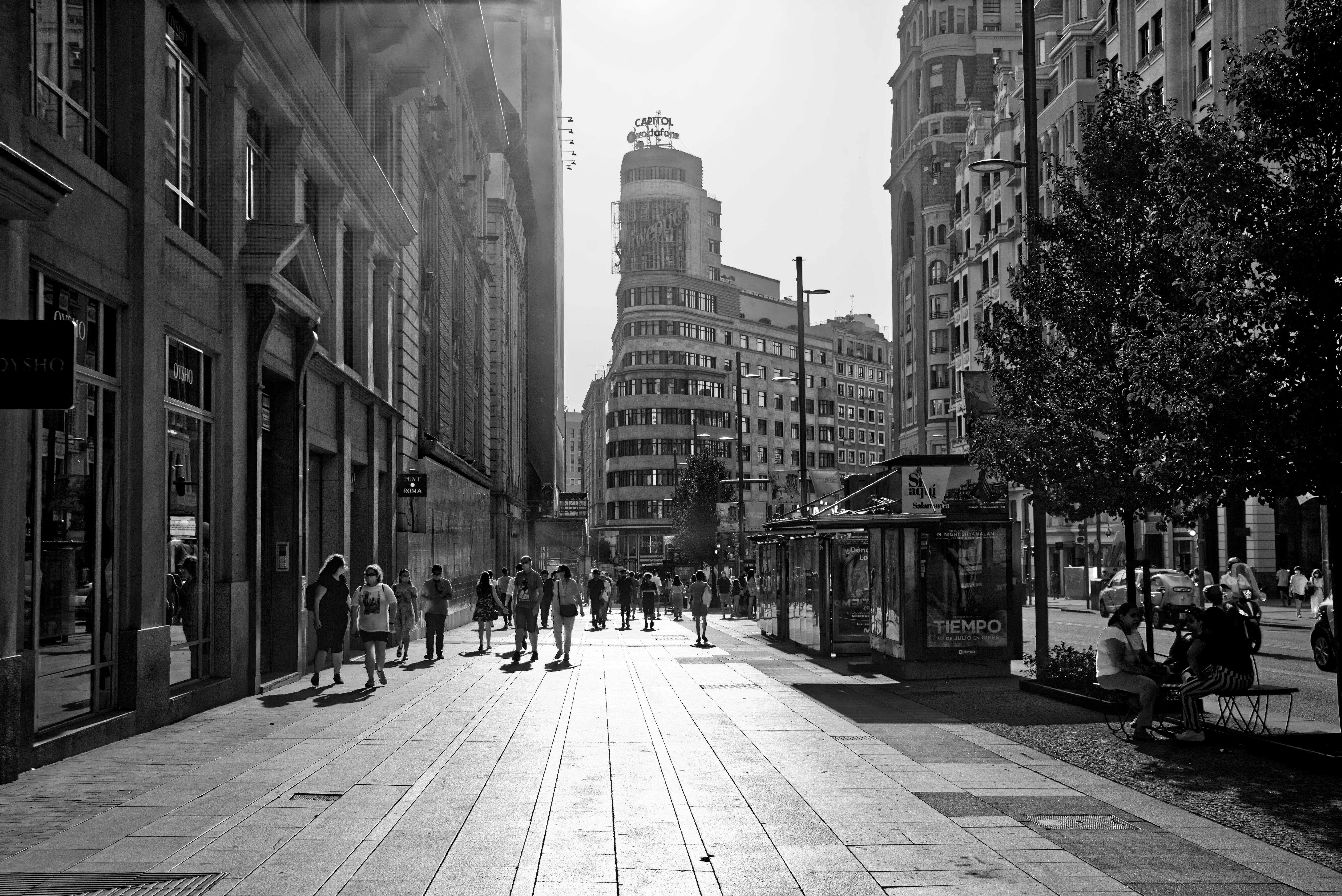
Gran Vía: Where Grand Architecture Meets City Pulse
The sun dips low at seven in the evening. I stand on a pavement corner, warm stone rising five storeys on every side. Streetlamps flick on one by one, gilding carved cornices and bronze window frames. A tram rumbles past. People walk fast, heads up, taking in the scale. Gran Vía is Madrid’s showpiece — built to impress, designed to connect. Most visitors walk from one end to the other, snap photos, and hurry onward. They miss how this avenue carries a century of stories, and how the quieter lanes just off it hold the city’s true heart.
Why Gran Vía Matters
Construction began in 1910. The idea was bold — slice a wide, straight avenue through Madrid’s tangled medieval centre, linking the historic Puerta del Sol with the newer districts beyond. Buildings rose in elaborate early 20th-century styles — Beaux-Arts, Art Deco, and modern influences blending together. This was Madrid announcing itself as a modern capital. Cinemas, hotels, and businesses moved in; generations walked these pavements through peace, war, and change. Yet the avenue bears constant strain. Traffic still runs heavy along sections. Restoration work is frequent — scaffolding often covers favourite facades. Prices climb higher every year. Small family shops vanish, replaced by international chains. The grandeur remains, but the character shifts.
The Best Time to Experience It
Late April through early June offers ideal days. Temperatures sit 13°C to 22°C (55°F–72°F). Evening light lingers long, crowds stay manageable, and walking feels easy. September and early October match these numbers — warm evenings, soft golden glow, and locals returning from holidays. July and August reach 22°C to 34°C (72°F–93°F). Heat reflects off stone; pavements feel crowded and loud. November stays mild at 8°C to 16°C (46°F–61°F). Winter months run 4°C to 12°C (39°F–54°F). Christmas lights go on late November — beautiful but extremely crowded. Arrive before ten in the morning. You will share the avenue with far fewer people.
Approximate Budget for a 7-Day Trip
Plan your spending with these daily averages:
- Accommodation: 80–170. Apartments one lane back sit closer to 80; rooms with avenue views push well above 160. Right on Gran Vía is overpriced. Stay two streets away — save 45 a night with quiet sleep and a two-minute walk to everything.
- Food & Drink: 32–55. Coffee and pastry cost 3–5. Tapas and a drink cost 9–13. A proper meal runs 25–42. Terraces directly on the avenue charge nearly double.
- Transport: 12–28. Metro connects both ends — single fare 1.50. Trains from other Spanish cities arrive at nearby stations. Most central spots are walkable from here.
- Attractions & Small Costs: 0–20. The avenue itself is free; rooftop viewpoints 5–10; nearby historic sites 4–12.
- Miscellaneous: 8–22. Snacks, postcards, or small purchases.
Total for 7 days: 750–1,400 per person
Drinks and meals on Gran Vía frontages carry a heavy premium. Step fifty metres down a side street — eat better, pay less, and sit where locals sit.
Essential Experiences
- Walk the full length from Sol to Plaza de España. Notice how the architecture changes block by block — bolder, taller, more decorative as you go. Look up constantly; the best detail sits high above eye level. Skip this if you rush — the pleasure lies in moving slowly.
- Climb a viewpoint rooftop. Several buildings open terraces. You see the avenue slice straight through the city — red roofs, domes, and distant mountains beyond. Go late afternoon; the light turns soft and golden.
- Stand under the Telefónica Building. One of the tallest structures when built. Symmetrical, stately, instantly recognisable. It has watched over the avenue since 1929. Imagine how the city looked when it was new.
- Step into the quieter side lanes. Streets branching off hold old taverns, small plazas, and hidden corners. The noise drops instantly. This is where daily life happens.
- Return after dark. Illuminated facades glow against the night sky. The atmosphere shifts — lively but not chaotic. It feels completely different from daytime.
- Walk toward Plaza de España at sunset. The open space at the western end frames the sky beautifully. People gather quietly. No ticket needed — just stand and watch the light fade.
Hidden Gems Most Travelers Miss
- Calle de la Montera branch. Quiet and narrower, running toward Sol. Old shopfronts, vintage signage, and fewer tourists. It feels like stepping fifty years back.
- Plaza de las Cortes side passage. Tucked between grand buildings. Stone benches, shade trees, and almost no crowds. A perfect pause spot.
- Lower levels of historic passages. Some buildings have preserved entryways and staircases visible from the street. Look through doorways — intricate tile and ironwork often remain.
- The main central stretch is famous but overcrowded. Walk the outer pavements instead — same views, fewer people, easier walking.
Cultural & Practical Tips
- Stick to the pavements. Road crossings are busy and fast. Do not step into traffic to take photos — it is dangerous and illegal.
- Keep bags close. Crowded areas attract opportunistic pickpockets. Hold phones securely and keep valuables out of easy reach.
- Respect business hours. Many shops close 14:00–17:00. This is not laziness — it is how the city works. Plan accordingly.
- Do not block doorways or steps. Pavements are wide but fill fast. Step aside and let others pass.
- Check opening times for rooftops. Many close in bad weather or private events. Arrive early to avoid disappointment.
- Wear comfortable shoes. The full avenue walk plus nearby lanes covers several kilometres. Uneven paving and long stretches call for flat soles.
- Visit on a weekday. Weekends and holidays crowd heavily. Tuesday and Wednesday feel calmest.
Essential Visitor Information
Location & Access: Central Madrid, connecting Puerta del Sol east to Plaza de España west. Metro Gran Vía lines 1 and 5 directly underneath; Sol station 5 minutes walk; Santo Domingo 5 minutes. Atocha railway station 15 minutes walk; Chamartín 20 minutes by metro. Airport 30 minutes by metro or taxi.
Tickets & Booking: Avenue access free. Rooftop viewpoints 5–10; some require advance booking. Nearby historic sites vary 4–12.
Operating Hours: Public thoroughfare — accessible all day and night. Shops generally 10:00–21:00; restaurants 13:00–23:30; shorter hours Sundays.
Visit Duration: Minimum half a day. Plan a full day to walk both sides, explore side lanes, rest at viewpoints, and dine without rushing.
Family Suitability: Excellent. Wide pavements, pedestrian crossings, and nearby parks. Keep children close in crowded sections.
Timing: Best seasons April–June and September–October. Best times: before 10:00 and 19:00–21:00.
Highlights: Full avenue walk, Telefónica Building, rooftop views, side lanes, sunset at Plaza de España, evening architecture lights.
Nearby & Day Trip: Puerta del Sol 5 minutes; Royal Palace 10 minutes; Prado Museum 20 minutes; Reina Sofía 20 minutes; Thyssen 15 minutes. Toledo 30 minutes by train; Segovia 30 minutes; El Escorial 45 minutes. All make satisfying half-day or full-day trips.
Conclusion: Travel with Eyes Up, Not Just Forward
Gran Vía has seen decades change. You will find crowded pavements, higher prices facing the avenue, and days when scaffolding covers the view. That is real. Slow down. Look up. Ask yourself what you remember most — the shops you passed, or standing beneath a century-old facade feeling the city breathe all around you.
Comments
Post a Comment