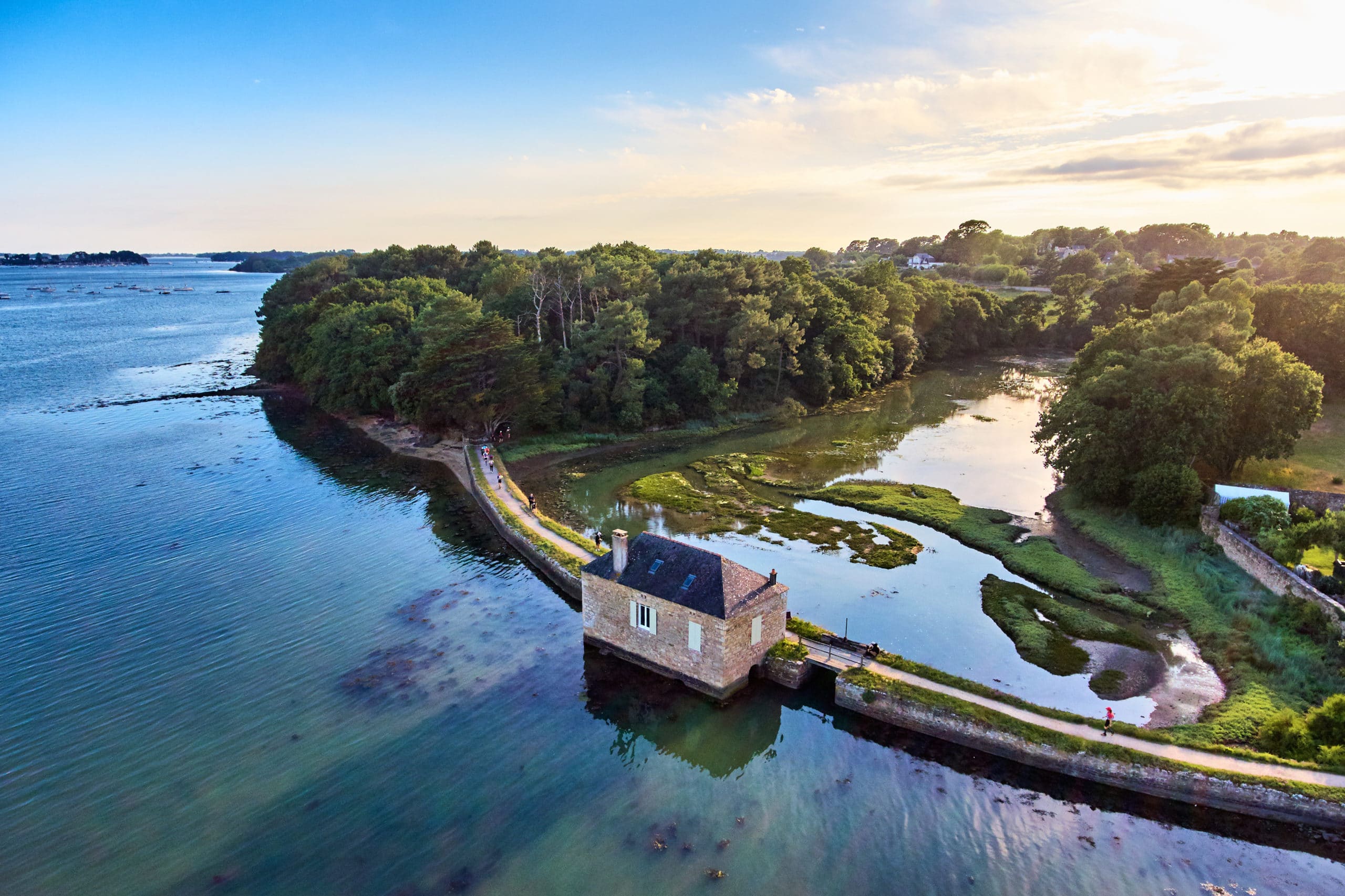
Gulf of Morbihan: Where Inland Sea Meets Island Heritage
I stand on the quayside at Vannes at 10:30 on a Saturday morning. Sunlight reflects off still water. A boat horn sounds soft across the bay. I paid 14 euros for a day pass to the main islands. The boat pulled away ten minutes later. White wake trailed behind. The gulf opens wide — sixty islands and more scattered across sheltered blue. Wooded slopes meet stone shores. Old farmhouses sit low on the land. It feels like a separate world, calm and contained, where the sea moves slowly and time seems to follow a different tide.
Why Gulf of Morbihan Matters
The gulf is a partly enclosed bay on Brittany’s south coast, sheltered from the Atlantic by the Presqu’Île de Rhuys. Its name means “little sea” in Breton. Neolithic people built stone monuments here more than five thousand years ago. Standing stones, cairns, and dolmens dot the shore and islands. In the Middle Ages, monks and farmers settled the larger islands, leaving chapels, wells, and traditional cottages. Fishing and oyster farming still shape daily life. The gulf supports rich birdlife and seagrass beds. Yet popularity brings pressure. Summer boat traffic creates noise and wakes that disturb quiet coves. Some island paths show wear from heavy footfall. The most accessible spots feel crowded by midday. You will find fewer quiet corners than maps suggest.
The Best Time to Experience Gulf of Morbihan
Late May through June offers mildest weather — 11°C (52°F) to 20°C (68°F). Sea stays calm and islands feel fresh. July and August reach 15°C (59°F) to 24°C (75°F), but boats fill fast and popular beaches vanish under visitors. September holds steady at 13°C (55°F) to 21°C (70°F). Crowds thin and golden light suits the water. October runs cooler — 9°C (48°F) to 16°C (61°F). Some island ferries cut frequency or close for winter. Visit midweek. Tuesday through Thursday stays quietest. Take the earliest boat out. You will share islands almost entirely with locals.
Approximate Budget for a 7-Day Trip
- Accommodation: 7 nights in a family-run guesthouse near Vannes — 567 euros. Staying on the Rhuys Peninsula adds roughly 130 euros total but puts you closer to open ocean views.
- Food: Daily breakfast, harbour lunches, evening meals — 441 euros. Seafood platters at the most visible quayside restaurants cost nearly double what places one street back charge. They are overpriced.
- Transport: Train from Paris to Vannes plus local buses and short ferries — 126 euros. Private boat tours are overpriced. Regular scheduled ferries cover the same ground for far less.
- Attractions: Island passes, megalithic sites, museum entry — 52 euros combined. Coastal paths and many shoreline spots stay free.
- Miscellaneous: Drinks, cider, maps, rain gear — 93 euros.
Total estimated cost: 1,279 euros per person
Skip the souvenir stall right beside Vannes ferry terminal. The bookshop on Place des Lices sells identical local guides and cards at lower prices.
Essential Gulf of Morbihan Experiences
- Île aux Moines circuit — The largest inhabited island. Ferry takes 15 minutes. Circular path runs 14 kilometres around wooded shores, small coves, and whitewashed cottages. Walk half or full loop. Views open constantly. Go early to claim quiet.
- Visit Gavrinis cairn — Neolithic passage tomb on a small island. Stone slabs carved with spiral and axe patterns date from 3500 BC. The chamber feels intimate and powerful. Skip if you cannot climb narrow steps — there is no alternative access.
- Boat tour around uninhabited islets — Smaller boats glide close to craggy shores, heron nests, and old chapels. Guides point out wildlife and hidden coves. The pace feels relaxed. Keep camera ready.
- Walk the Rhuys Peninsula coast path — Where the gulf meets open Atlantic. Views stretch across islands to distant shore. The path stays uneven in places. It connects small ports and sheltered beaches.
- Explore Vannes medieval centre — Cobbled lanes, half-timbered houses, ramparts overlooking the water. The gulf adventure starts here. Allow time to wander before your boat departs.
- See Île d’Arz — Quieter than Île aux Moines. Small farms, a historic priory, and low stone walls. The rhythm feels slower. Few day-trippers stay long. It stays peaceful most days.
- Watch sunset from Pointe d’Arzon — Southern tip of the peninsula. Sun drops over open water. Islands darken in silhouette. Crowds gather but space remains. Arrive early to sit at the edge.
Hidden Gems Most Travelers Miss
- The footpath along the gulf shoreline east of Vannes runs through woods and meadows. It stays almost empty. Small beaches appear where you least expect them. You can walk for hours without meeting another visitor.
- Île de Tascon, off the Rhuys coast, has no regular ferry. Local boatmen run crossings on request. A small cove and ruined chapel sit amid woodland. It feels truly private. Do not expect grand sights — the island is quiet and simple.
- The market in Surzur, inland from the coast, happens Sunday mornings. Locals sell vegetables, bread, and cider. No souvenir stalls. It feels authentic and unhurried. The waterfront market in Vannes is overrated — prices stay higher and goods feel less genuine.
- The old coastal road between Arzon and Port-Navalo runs just above the shore. Park and walk short stretches. Views open across the gulf entrance. Benches sit empty even in summer.
Cultural & Practical Tips
- Book island ferries in July and August. Popular crossings sell out days ahead. Do not assume you can buy a ticket on arrival.
- Respect private property. Most islands have working farms and homes. Stay on marked paths. Close gates behind you.
- Check tide times. Some shore paths and small beaches vanish at high water. Plan accordingly so you do not get cut off.
- Wear waterproof layers. Weather shifts fast. Grey skies can clear in an hour, and sun can turn to rain just as quickly.
- Do not swim near oyster beds. Marked areas stay active. Harvest boats move quietly through shallow water. Observe from a safe distance.
- Carry cash. Some island shops and cafés close out of season and prefer notes when open. Cards work in main towns but fail on smaller islets.
- Leave no trace. The gulf ecosystem stays fragile. Take all rubbish back with you. What seems small accumulates fast in sheltered waters.
Essential Visitor Information
Location & Access: Gulf of Morbihan, Morbihan, Brittany. GPS coordinates 47.63, -2.80. Three options: TGV from Paris Montparnasse to Vannes (about 2 hours 45 minutes), then walk to ferry terminals; drive via Rennes and N165 (4 hours from Paris); fly to Nantes then drive 1 hour 45 minutes to Vannes.
Tickets & Booking: Day island pass — 14–18 euros adults. Gavrinis separate — 8 euros. Combined passes available. Booking essential July–August. Some smaller ferries operate only weekends off-season.
Operating Hours: Main ferries run daily April–September, reduced schedule October–March. Gavrinis: April–September 10:00–18:00; closed Mondays October–March. Some sites close January.
Visit Duration: Minimum 2 days for main islands and Vannes. Recommended 4–5 days to include Rhuys Peninsula, quieter islets, and relaxed shore walks.
Family Suitability: Ferries accessible. Island paths generally flat but uneven. Gavrinis chamber has narrow stairs only. Public restrooms at ferry terminals and larger islands.
Timing: Best season: late May–June or September. Best time: first ferry of the day. Quietest islands, calmest water, softest light.
Highlights: Île aux Moines circular path, Gavrinis carved stones, Île d’Arz farms, Rhuys coastal views, Vannes medieval ramparts, Pointe d’Arzon sunset.
Nearby & Day Trip: Three nearby stops: Carnac standing stones and beaches (30 minutes drive), Quiberon Peninsula wild coast (40 minutes), Rochefort-en-Terre flower-strewn village (45 minutes). Belle-Île-en-Mer makes a rewarding full-day trip by ferry from Quiberon.
Conclusion: Travel with Respect, Not Just Sightseeing
The Gulf of Morbihan holds beauty in every cove and island. It also carries pressure — wakes, crowds, worn paths. Those things do not erase its magic. They simply mean this place needs care. You do not need to visit every islet to understand it. Sit quietly on a stone shore. Watch light shift across the water. Notice how the tides shape everything here. What quiet moment will you carry home?
Comments
Post a Comment