Hadrian's Wall: Where Roman Frontier Meets Northern Moor
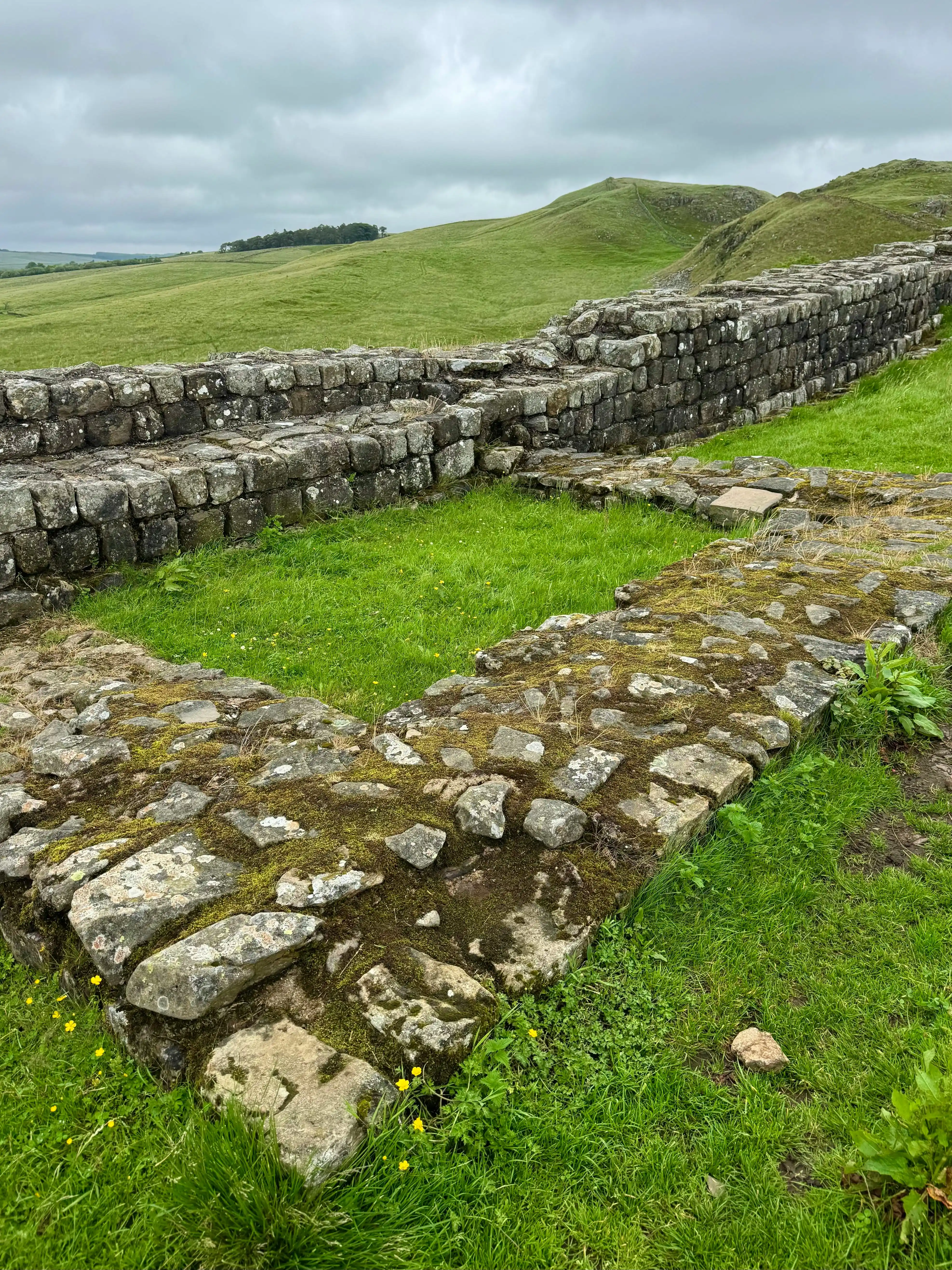
I stand beside the stone wall at ten past ten on a breezy morning in late May. Grey blocks stretch ahead, following the ridge line up and over distant hills, fading into haze. The ground drops away sharply on both sides — green fields, rough moorland, sheep grazing slow and scattered. A lark sings high overhead. No other sound carries far. Nearly 1,900 years ago, soldiers stood right here, watching the same horizon, wondering what lay beyond. The silence feels heavy with history.
Why Hadrian's Wall Matters
Built starting in AD 122 on the orders of Emperor Hadrian, this wall ran 73 miles across northern Britain — from the Tyne to the Solway — marking the northern edge of the Roman Empire. It was not just a barrier: milecastles, turrets, forts, and a wide ditch guarded the line, while a civilian settlement grew up behind it. For nearly 300 years it stood manned, connecting cultures and protecting trade. After the Romans left, stones were carried away to build farmhouses, cottages, and roads across the region. Today the remaining sections stand as one of Europe’s most important ancient monuments. That legacy brings real strain. Erosion wears the soft sandstone; foot traffic compacts the fragile earth beside it; and nearby development pressures the wider landscape. The wall is magnificent, but it is also fragile — every visitor must walk gently.
The Best Time to Experience Hadrian's Wall
Late April through May brings fresh grass and thinner crowds, temperatures between 7°C and 14°C (45°F to 57°F). Wildflowers carpet the ditch edges and moorland below. The wall stands bright against clear sky before summer crowds arrive. June and July offer the longest days — sky stays light until nearly 9.30 p.m. — and temperatures rise to 10°C and 18°C (50°F to 64°F). This is peak season; popular sections fill by midday and car parks run full. August stays mild at 11°C to 19°C (52°F to 66°F), but rain falls frequently and low wind sweeps unimpeded across the tops. September holds steady at 9°C to 15°C (48°F to 59°F), crowds thin quickly, and golden light turns the stone warm amber. This is widely considered the best month to visit. October cools to 6°C and 12°C (43°F to 54°F), days shorten fast, and bracken turns deep bronze across the moors. November through February the wall feels wild and exposed. Temperatures sit 2°C to 7°C (36°F to 45°F), wind howls across the ridge, and you may walk miles with almost no one else. March and April lengthen again, 4°C to 10°C (39°F to 50°F), and daffodils appear in village lanes, though cold winds persist. Always check weather; there is no shelter along the high sections.
Approximate Budget for a 7-Day Trip
These figures assume a base in a village along or near the wall, exploring forts, museums, and walking sections.
- Accommodation: £65–£100 nightly. Shared room or village guesthouse. £455–£700 for 7 nights.
- Food & Drink: £18–£30 daily — hearty breakfasts, pub lunches, packed supplies. Evening meal £24–£45. £294–£525 total.
- Transport: Car rental £45–£70 daily — best option for reaching remote sections. AD122 bus runs along the route. £60–£490 total.
- Attractions: Wall walking free. Major forts £8–£14 each. Combined tickets offer savings. £40–£110 total.
- Miscellaneous: £10–£18 daily — warm layers, drinks, guidebooks. £70–£126 total.
Total estimated 7-day cost: £919 to £1,951
Cafes right beside major forts charge premium prices. Stop in the nearest village instead — prices are fairer and queues shorter.
Essential Hadrian's Wall Experiences
- Walk the high ridge section — Between Housesteads and Steel Rigg the wall climbs the Whin Sill escarpment, dropping dramatically on one side and stretching far ahead. This is the iconic view. Skip this at midday in summer; crowds block the path and break the atmosphere. Go early or late.
- Explore Housesteads Fort — The best-preserved Roman site in Britain. Headquarters, barracks, latrines, and gateways still stand. You can trace streets, walls, and foundations clearly. Imagine 800 soldiers living here — and the civilians who settled outside.
- See Vindolanda remains — South of the wall, this garrison town reveals layers of occupation: timber forts, stone buildings, wooden artefacts, and writing tablets preserved in anaerobic soil. It feels remarkably human — letters, lists, shoes, and tools left behind.
- Clayton's Turrets section — Near Crag Lough, the wall stands tall and complete, restored in the 19th century. It shows what the full height looked like. The view across the lake below is unforgettable.
- Walk a quiet western stretch — Beyond Carlisle the wall runs through farmland, smaller, quieter, often unmarked. You find short hidden sections in fields and lanes. It feels forgotten and personal. Follow public footpaths only.
- Watch sunset from a high turret — Find a turret with open west view. The sun dips low, turning stone deep gold and long shadows stretching across the moor. Arrive 40 minutes early; good spots fill fast.
Hidden Gems Most Travelers Miss
- Highshield's Crag quiet stretch — East of the main ridge, a path follows the wall through rougher ground. Fewer people walk here. The stone runs straight and true toward distant hills.
- Black Carts Turret — North of the main road, a well-preserved turret sits beside a field boundary. You can stand inside and see the thick walls and narrow doorway exactly as soldiers did. Very few visitors stop.
- Cawfields gap view — Where the wall dips into a wooded valley, a quiet path overlooks the missing section. This spot is widely shared online now and has become overrated. Go before 9.30 a.m. if you want it empty.
- Leahill Turret & Pike Hill — West of the main cluster, a short intact section stands beside a minor road. The path runs onward through fields with almost no one in sight. It feels peaceful and timeless.
Cultural & Practical Tips
- Stay on the marked path. Walking on the wall itself damages the stone and weakens it. Use the parallel footpath — the view is just as good and you protect the monument.
- Carry windproof and warm layers. The ridge is fully exposed. Even mild days feel freezing standing still. Hat and gloves are useful year-round.
- Respect farmland. The wall runs through active working land. Close gates, keep dogs on leads, and stay on public rights of way.
- Book major sites in advance. Vindolanda and Housesteads sell out on busy days. Pre-booking saves queueing and disappointment.
- Allow more time than you think. Distances look short on the map but climb constantly. The terrain is uneven and slows you down.
- Do not rush. This is not a checklist. Stand, look, and imagine — soldiers, traders, families, all passing this same spot over 1,800 years.
Essential Visitor Information
Location & Access: Hadrian's Wall spans Northumberland — Wallsend Newcastle to Bowness-on-Solway. Three transport options: car via A69 then B6318; train to Newcastle/Carlisle then bus; AD122 dedicated bus along central section.
Tickets & Booking: Walking free. English Heritage forts £8–£14; Vindolanda £12. Book online to skip queues.
Operating Hours: Public paths open year-round. Forts generally 10 a.m.–5 p.m.; shorter hours winter.
Visit Duration: Minimum 2 days for central section highlights. 4–5 days to walk significant stretches at relaxed pace.
Family Suitability: Central paths accessible; high sections uneven and exposed. Keep children back from unrailed wall edges. Public toilets at main car parks and sites.
Timing: Best season May or September. Early morning before 10 a.m. offers quietest paths and best light.
Highlights: Housesteads ridge view, Vindolanda artefacts, sunset turret, Crag Lough reflection, quiet western farmland stretches.
Nearby & Day Trip: Newcastle — 1 hour; Durham Cathedral — 1 hour; Northumberland Coast — 1 hour; Scottish Borders — 1 hour; York — 2 hours.
Conclusion: Travel with Respect, Not Just Wonder
Hadrian's Wall was built by hands long gone. It stood through empire, withdrawal, reuse, and rediscovery — and it survives today because people protect it. When you visit, walk beside it, not on it. Leave it whole. What will you do to ensure it still stands for those who come after you?
Comments
Post a Comment