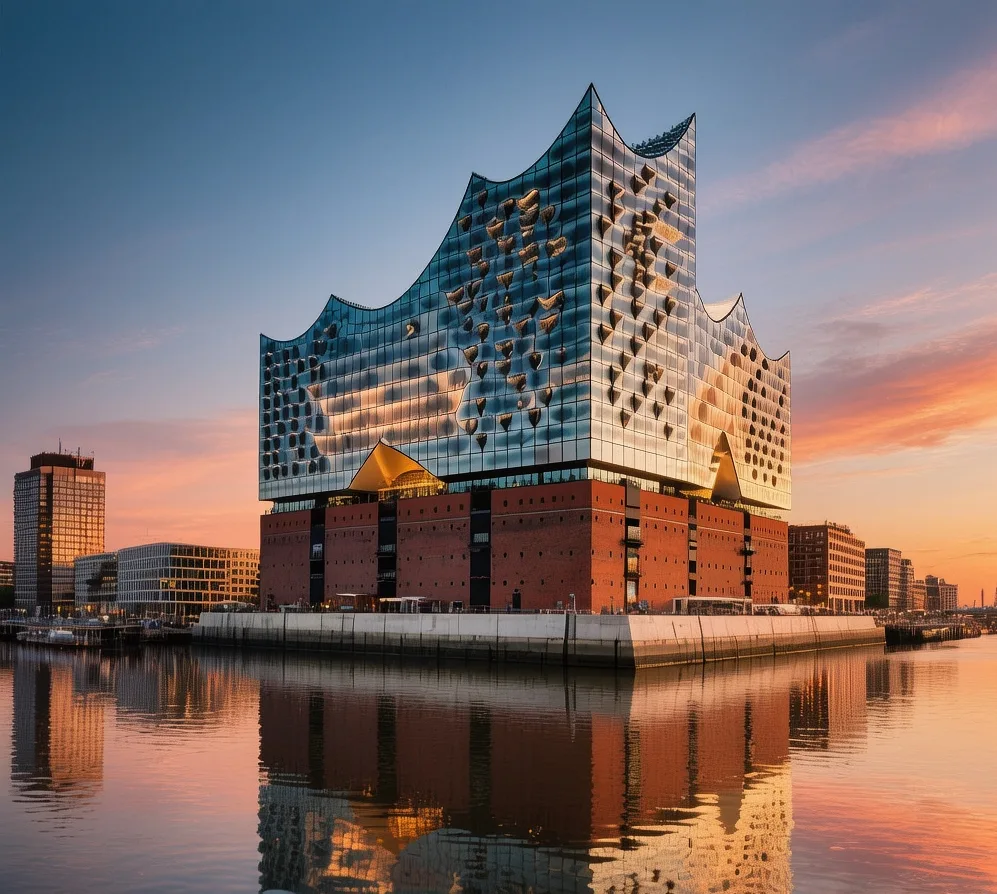
Hamburg Elbphilharmonie: Where Glass Crown Meets Brick Foundation
I stepped onto the Plaza at ten past ten on a Tuesday morning. The river stretched wide and grey below. I paid nothing to walk out there. Wind pulled softly at my coat and carried the hum of the city. I expected a landmark seen from afar. What I found feels like two buildings joined as one — heavy solid history below, light soaring vision above. Not every part lives up to the exterior promise. Some interior spaces feel smaller than photos suggest. Acclaimed acoustics shine during concerts but remain unremarkable when the hall is empty. That contrast is exactly what makes it interesting.
Why Elbphilharmonie Matters
The structure sits atop an enormous brick warehouse built in the 1960s to store goods bound for the world. Decades later, architects chose not to demolish it but to build something entirely new on its roof — a shimmering wave of glass housing concert halls, a hotel, and public spaces. Completed in 2017 after years of debate and rising cost, it became Hamburg's new symbol. It says something powerful: we do not always need to start from zero. We can build on what came before. One honest criticism: tickets to performances sell out months in advance and carry premium pricing. Even the public Plaza requires a booked time slot; same-day access is rarely possible. The surrounding district feels unfinished and windswept; shelter is hard to find when weather turns.
The Best Time to Experience Elbphilharmonie
April through June brings 10°C to 19°C / 50°F to 66°F. Days lengthen and sunlight reflects beautifully across the glass curves. Arrive before 11:00; the Plaza stays quietest then. July and August warm to 15°C to 24°C / 59°F to 75°F. Evening concerts feel special as the river darkens below. September holds 11°C to 19°C / 52°F to 66°F. Golden light softens the hard edges of the district. October through March the wind feels sharp and long nights suit indoor performances perfectly. Mondays the building operates on reduced hours; check opening times carefully.
Approximate Budget for a 7-Day Trip
Costs below are per person based on staying in central Hamburg.
- Accommodation: 595 euros — Clean room in a central neighbourhood. The hotel inside Elbphilharmonie charges 450 euros or more per night and feels overpriced; stay one S-Bahn stop away for equal comfort at half the cost.
- Food: 322 euros — Fresh fish, bakery lunches, and waterfront dining.
- Transport: 112 euros — Hamburg public transport pass covering trains, buses, and harbour ferries.
- Attractions: 147 euros — Plaza access free; one concert ticket plus nearby museum and harbour tour.
- Miscellaneous: 84 euros — Drinks, snacks, and small purchases.
Total: 1260 euros. Drinks and meals inside the building carry a premium. Walk five minutes to the neighbouring district; identical items cost roughly 35 percent less.
Essential Elbphilharmonie Experiences
- The Plaza — An open viewing deck wraps around the building at the transition between brick and glass. The city spreads out below — river, docks, spires, and distant cranes. It is free to visit but booking is required. Skip if you dislike heights or exposed spaces; the wind feels strong and unobstructed.
- Great Hall Performance — Vineyard-style seating surrounds the stage on all levels. Every seat feels close. Sound projects evenly; no spot feels favoured above others. Tickets sell out fast. If you cannot secure one, consider a rehearsal ticket; they cost less and offer similar insight.
- Grand Staircase Approach — A long gently curving escalator carries you from the brick base up into the glass structure. Light changes as you rise — dim and solid below, bright and open above. It sets the tone perfectly. Most people hurry past; pause halfway to feel the shift.
- West Side Sunset — The Plaza faces west. As the sun dips low, golden light floods through the glass and warms every surface. The river turns amber and the city lights begin to twinkle. Arrive thirty minutes early; crowds gather quickly.
- Architecture Tour — Guides explain how the building was conceived, how it nearly stalled, and how the two very different layers were made to work together. Technical details feel surprisingly engaging. Book ahead; these tours fill weeks out.
- Waterfront View from Afar — Cross the river or stand down the shoreline. The building rises above the water like a ship under sail. This perspective completes the picture — it was always meant to be seen from the water as much as from inside.
Hidden Gems Most Travelers Miss
- East Side Quiet Corner — Most visitors cluster on the west side. The eastern edge offers an unobstructed view up the river. Barges pass close by and few people stand here. The so-called "famous photo spot" nearby is often overrated; it sits right beside the main path and crowds block the light.
- Lower Brick Passage — At the base of the building, a covered walkway runs beneath the arches. The scale feels massive and old. Sunlight filters through in long slanted beams. Almost no one stops here.
- Side Elevator Glimpse — A smaller less-used elevator travels from the ground floor to the Plaza level. It offers a sudden clear view up through the interior structure. Ride it once; the main escalator hides this perspective.
- Riverbank Bench — Five minutes walk away, a wooden bench faces the building directly across the water. It sits off the main path. You can sit and watch light shift across the glass without being seen by anyone else.
Cultural & Practical Tips
- Book Plaza access online days ahead. Same-day slots are extremely rare. Arrive exactly at your time; latecomers are turned away.
- Dress in layers. The Plaza is fully exposed; wind makes it feel several degrees colder than street level. Even warm days bring sharp gusts.
- Check what is on. The building houses multiple venues. Confirm which hall hosts your event; they feel completely different in character and scale.
- Do not photograph without permission. Performers and audience members have rights. Flash photography is strictly forbidden everywhere inside.
- Allow extra travel time. The nearest station is a ten-minute walk through a windswept district. Leave with a buffer against weather or delays.
- Respect the neighbourhood. The area is still developing. Construction zones are active and paths change. Follow marked routes and do not wander into restricted areas.
Essential Visitor Information
Location & Access: Elbphilharmonie, Platz der Deutschen Einheit, 20457 Hamburg, Germany. GPS 53.5414, 9.9833. S-Bahn to Stadthausbrücke 10 minutes walk. Hamburg main station 20 minutes by train. Ferry from Landungsbrücken 15 minutes by water. On-site parking available but expensive and limited.
Tickets & Booking: Plaza entry free with booked time slot. Concert tickets from roughly 35 euros; premium seats 100 euros plus. Architecture tour roughly 18 euros. Booking strongly recommended weeks ahead.
Operating Hours: Plaza daily 09:00 to 23:00. Performance hours vary; box office generally 10:00 to 18:00. Closed only a few days annually.
Visit Duration: Minimum 1 hour for Plaza only. Half day lets you explore the building, walk the waterfront, and sit undisturbed.
Family Suitability: Children welcome. Stroller access is excellent via elevators. Restrooms on every level. Concerts often offer family-friendly programmes; check listings.
Timing: May, June, September best. Arrive before 11:00 or late afternoon for sunset.
Highlights: The Plaza, Great Hall concert, grand escalator, sunset view, architecture tour, distant waterfront perspective.
Nearby & Day Trip: Miniatur Wunderland 10 minutes walk. Hamburg Harbour 15 minutes. Lübeck 45 minutes by train; makes a rewarding half-day trip.
Conclusion: Travel with Foundation, Not Just Facade
Elbphilharmonie will not feel perfect everywhere. It cost far more than planned and took years to finish. Tickets remain hard to get. But that is its real story — something difficult, built on something old, rising higher than what stood before. Great things often begin with what we already have. What will you build upon the solid ground beneath your own feet?
Comments
Post a Comment