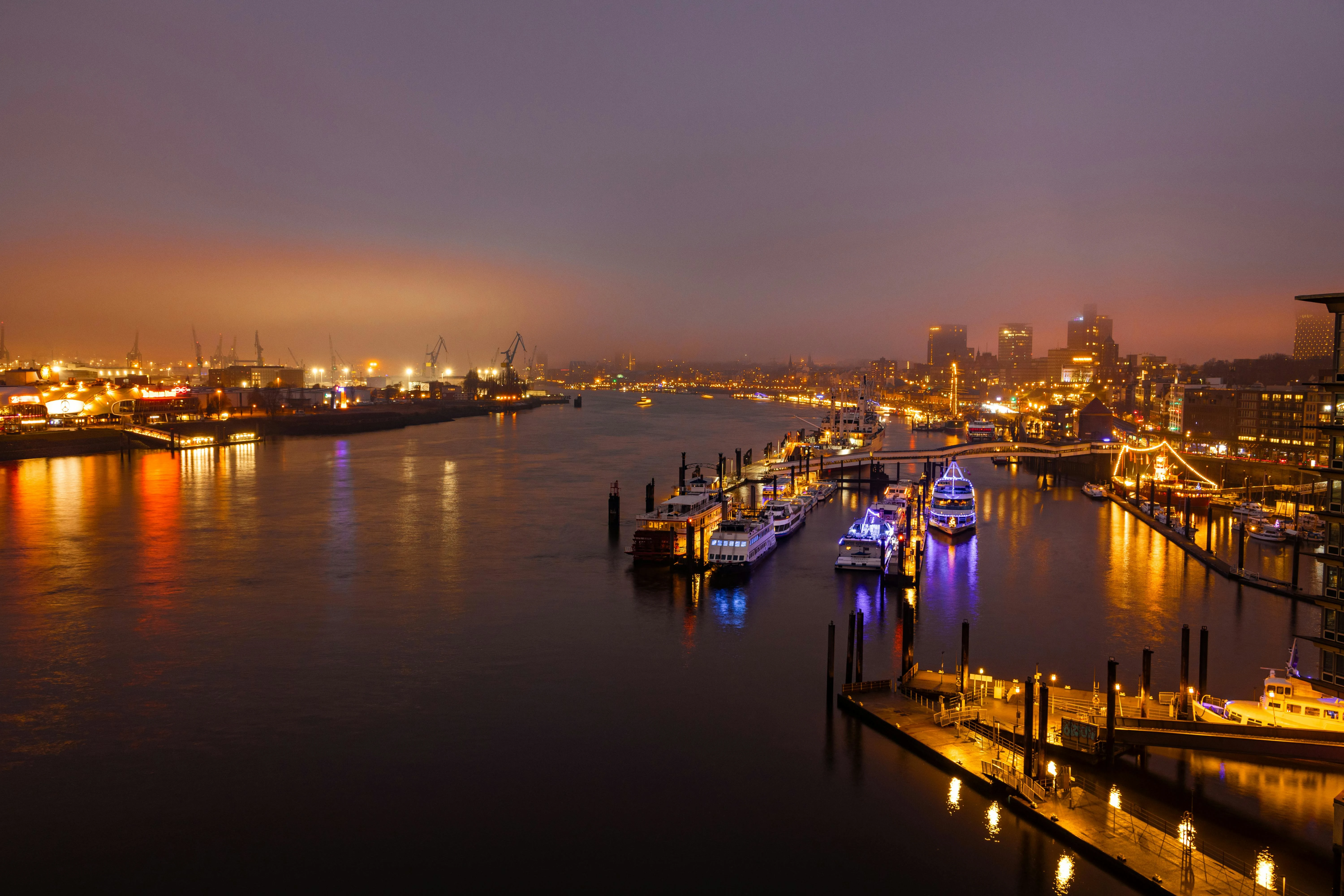
Hamburg Harbor: Where Working Docks Meet Waterfront Life
I walked along the paved quay at ten past ten on a Friday morning. Salt wind carried the smell of sea and diesel. I paid nothing to stand there. Container ships moved slowly past, tall and steady. I expected industrial noise and endless cargo. What I found feels like a living city built on water — ships, people, and architecture all sharing the same shore. Not every section looks polished. Working docks stay rough and fenced off. Some lanes feel gritty and grey. That authenticity makes the shiny new districts feel earned, not just built.
Why Hamburg Harbor Matters
This has been Germany's gateway to the world for more than eight centuries. Ships arrived from distant lands carrying goods, ideas, and people. The harbour grew from wooden piers to one of Europe's largest container ports. Today it balances two worlds — a massive industrial hub handling millions of containers each year, and a beloved waterfront where residents walk, eat, and live. Districts like HafenCity blend old dock structures with bold modern design. One honest criticism: distances are vast. Walking from one end to the other takes hours. Public transport links exist but some stops feel far apart. Waterfront restaurants charge premium rates; sitting with a drink can cost double what it does five minutes inland.
The Best Time to Experience Hamburg Harbor
May through September brings 12°C to 22°C / 54°F to 72°F. Days stay long and evenings feel lively. Arrive before 11:00 to see ship movements without crowds. July and August warm to 15°C to 25°C / 59°F to 77°F. Outdoor seating fills fast. September holds 11°C to 19°C / 52°F to 66°F. Light softens and cruise ships arrive in greater numbers. October through April the harbour feels grey and quiet. Wind makes it feel colder than shown. Some boat tours reduce service or close entirely. Mondays several museums shut; check ahead.
Approximate Budget for a 7-Day Trip
Costs below are per person based on staying in central Hamburg.
- Accommodation: 560 euros — Clean room in a central neighbourhood. Hotels directly on the Elbe waterfront charge 290 euros or more per night and feel overpriced; stay one S-Bahn stop away for half the cost and equal comfort.
- Food: 315 euros — Fresh fish sandwiches, hearty local meals, and international dining.
- Transport: 112 euros — Hamburg public transport pass covering trains, buses, and harbour ferries.
- Attractions: 119 euros — Elbphilharmonie, museum entry, and boat tour tickets.
- Miscellaneous: 84 euros — Drinks, snacks, and small purchases.
Total: 1190 euros. Fish sandwiches right at the main piers carry a location markup. Walk two blocks inland; the same fresh fish costs nearly half as much.
Essential Hamburg Harbor Experiences
- Boat Tour of the Port — Small vessels glide past container terminals, shipyards, and historic docks. Guides explain what you see and how it works. The scale hits you from the water — cranes tower like giants. Skip if you dislike engine noise or open water; shoreline paths offer excellent views.
- Elbphilharmonie Plaza View — The curved glass building sits atop an old brick warehouse. The public plaza offers wide views across the river and harbour. It feels grand but accessible. Book the free time slot online ahead; same-day tickets are rare.
- St. Pauli Landing Bridges — The central waterfront promenade lines the river. Ferries depart constantly, street food stalls open from morning until late, and ships pass close by. This is where the harbour feels most alive. Visit early; after midday it grows crowded and loud.
- HafenCity Walk — Rebuilt docks now hold apartments, cafes, and museums. Old brick warehouses stand beside sleek glass buildings. The contrast tells the city's whole story — evolving but never forgetting its roots. The International Maritime Museum adds clear context.
- Public Ferry Ride — Regular commuter boats run along the river. They cost standard transport fare and offer the same great views as paid tours. Ride Line 62 for the classic route. Sit outside; the wind and spray are part of the experience.
- Sunset from the Elbe Shore — Cross to the far bank. The sun dips low behind the city skyline. Cranes and ships turn dark against gold and orange. Most visitors stay on the near side; this view stays peaceful long after day visitors leave.
Hidden Gems Most Travelers Miss
- Kaispeicher Brick Lane — Behind the main tourist stretch, a quiet paved lane runs beside restored historic warehouses. Red brick facades rise tall and still. Almost no one walks here. The so-called "famous photo pier" nearby is often overrated; it stays packed and ships block the view constantly.
- Bankside Wooden Bench — Further along the river, past the ferry terminals, a weathered bench faces open water. No sign points to it. Ships pass close enough to see names and flags. It feels like your own secret lookout.
- Old Dry Dock Glimpse — Through an opening beside a fence, you see a stone-lined dock basin where ships were once repaired. Moss grows on the walls and water sits still. It feels frozen in time.
- Quiet Canal Path — Inland from the main river, a narrow canal runs past old moorings and small workshops. Houseboats line the banks. It feels calm and residential — a side of the harbour few visitors see.
Cultural & Practical Tips
- Respect fenced zones. Working docks are dangerous. Do not climb barriers or enter restricted areas for photos.
- Book Elbphilharmonie plaza entry ahead. Slots fill weeks in advance. Arrive five minutes early; late arrivals are turned away.
- Dress in layers. The river wind makes the temperature feel several degrees lower. A waterproof jacket is useful year-round.
- Use public ferries not tourist boats. They follow the same routes, pass the same sights, and cost a fraction of dedicated tours.
- Watch your step. Paved quays can be slippery and edges are unguarded in places. Keep children close.
- Check tide tables. Water levels change noticeably. Low tide reveals muddy banks; high tide brings ships closer to the quay. Both are worth seeing.
Essential Visitor Information
Location & Access: Hamburg Harbor, Hamburg, Germany. Central point: St. Pauli Landing Bridges. GPS 53.5430, 9.9780. Train from Berlin roughly 1 hour 45 minutes. Bremen 1 hour. Lübeck 45 minutes. S-Bahn to Landungsbrücken station serves the waterfront directly.
Tickets & Booking: Harbour ferry included in standard transport pass. Paid boat tours from 18 euros adult. Elbphilharmonie plaza free but requires booked time slot. Museums 8–14 euros.
Operating Hours: Waterfront paths open year-round. Boat tours generally March–October 09:00 to 18:00; reduced schedule winter. Museums typically Tuesday–Sunday 10:00 to 18:00. Many close Mondays.
Visit Duration: Minimum half day. 1 to 2 full days lets you explore both sides, take a ferry, and visit key sites without rushing.
Family Suitability: Children welcome. Stroller access is excellent on paved promenades; older quays have uneven surfaces. Hold hands near open water edges. Restrooms at main piers and stations.
Timing: May, June, September best. Arrive before 11:00. Late afternoon light warms the water and buildings beautifully.
Highlights: Port boat tour, Elbphilharmonie plaza, Landing Bridges, HafenCity, public ferry ride, sunset across the Elbe.
Nearby & Day Trip: Hamburg city centre 15 minutes by S-Bahn. Lübeck 45 minutes by train. Bremen 1 hour. Helgoland island by ferry 2 hours; makes a memorable full-day trip.
Conclusion: Travel with Function, Not Just Facade
Hamburg Harbor will not feel perfect everywhere. It is loud, gritty, and constantly moving. But that is its true beauty — it works. It feeds the city, connects it to the world, and changes gracefully with time. Real places do not stay frozen for visitors. They live, breathe, and keep moving forward. What will you build that stays useful and alive for generations?
Comments
Post a Comment