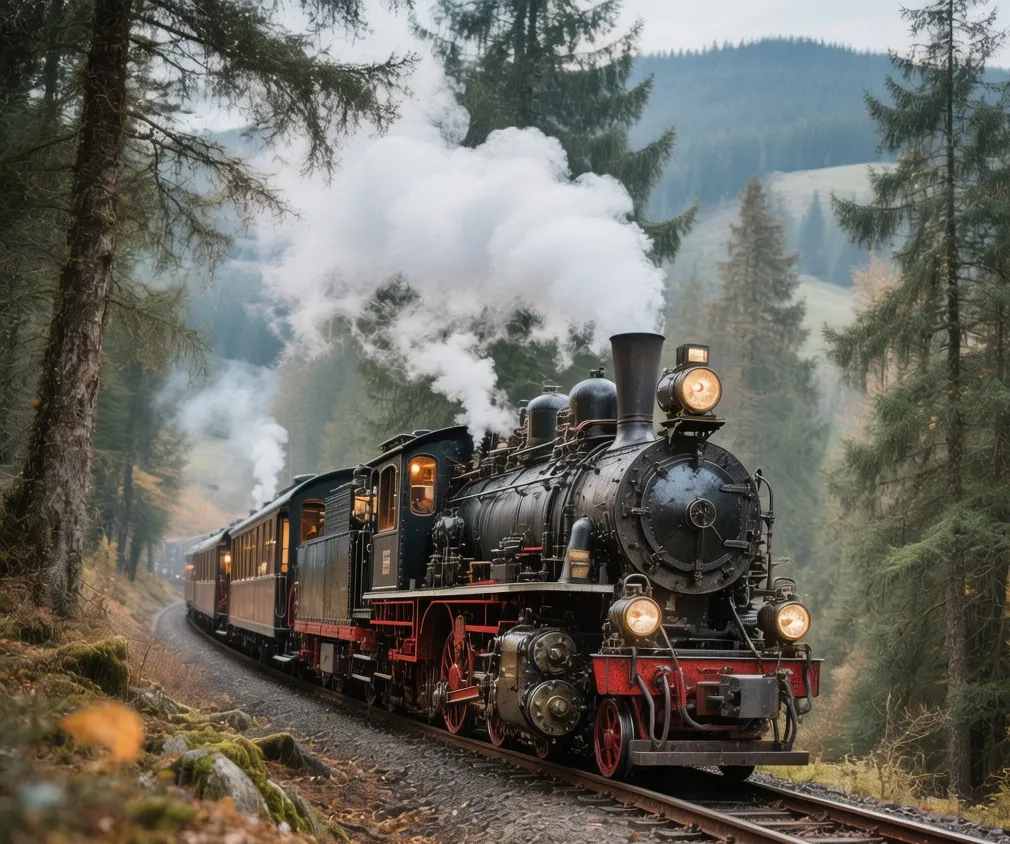
Harz Mountains Narrow Railway: Where Steam Power Meets High Peaks
I stepped into the wooden carriage at ten past nine on a Saturday morning. Warm air carried the faint smell of oil and coal smoke. I paid twenty-eight euros for a return ticket to the summit. The whistle blew long and low. Wheels jolted gently then turned steadily. I expected a slow ride up a hill. What I found feels like travelling through time as much as terrain — a working heritage line that still serves local people as well as visitors. Not every section runs smoothly. Older carriages rattle noticeably. Windows do not always seal tight; smoke and cold air drift in. That imperfection feels authentic. This is not a polished replica.
Why Harz Mountains Narrow Railway Matters
The network opened in stages between 1899 and 1903. Three separate lines connect towns and villages across the Harz region, climbing steep gradients and winding through deep forest. The route to Brocken summit reaches 1,141 metres — the highest point in northern Germany. Today the railway spans more than 140 kilometres of track. Steam locomotives built decades ago still pull trains daily. It stands as one of Europe's largest and best-preserved narrow-gauge systems. One honest criticism: capacity is limited. Popular departures sell out weeks in advance. The line shares tracks in places; delays can happen and connections are not guaranteed. Some smaller stations have no shelter; waiting in rain or wind feels hard.
The Best Time to Experience Harz Mountains Narrow Railway
May through June brings 8°C to 18°C / 46°F to 64°F. Beech trees turn fresh green and sunlight filters thick through new leaves. Arrive on the earliest scheduled train; carriages stay emptiest. July and August warm to 12°C to 22°C / 54°F to 72°F. Days stay longest but trains fill completely. September holds 9°C to 17°C / 48°F to 63°F. Forests turn gold and amber; this is the most beautiful season. October through March the landscape feels quiet and stark. Snow settles thick on the slopes. Steam rises vivid against white. Services run year-round but some routes reduce frequency. Mondays certain stations close; check timetables carefully.
Approximate Budget for a 7-Day Trip
Costs below are per person based on staying in Wernigerode.
- Accommodation: 448 euros — Clean room within walking distance of a railway station. Places directly beside the main platform charge 190 euros or more per night and feel overpriced; stay two lanes back for half the cost and equal comfort.
- Food: 273 euros — Hearty mountain stews, local bread, and freshly baked pastries.
- Transport: 112 euros — Multi-line pass covering all narrow railway routes. Return tickets cost more separately.
- Attractions: 77 euros — Brocken summit entry plus nearby castle and mine visits.
- Miscellaneous: 63 euros — Drinks, snacks, and small purchases.
Total: 973 euros. Drinks and simple meals sold on board carry a premium. Carry a water bottle and something to eat; station kiosks offer fairer prices and wider choice.
Essential Harz Mountains Narrow Railway Experiences
- Brocken Summit Route — The most famous climb carries you upward through dense forest. Trees thin gradually as the air grows sharper. The train emerges onto open moorland just before the top. Views open wide. Skip if you fear heights or exposed spaces; the upper section runs along steep slopes.
- Valley and River Line — A second route follows a river through gentler terrain. Meadows, farmhouses, and quiet villages pass slowly. The pace feels relaxed and calm. Few visitors ride this far; it shows everyday life in the mountains, not just the landmarks.
- Steam Departure View — Stand on the platform as the train pulls away. Steam billows, wheels slip, and the whole carriage moves with steady purpose. Arrive ten minutes early; this moment sets the tone for the whole journey.
- Evening Return Journey — Late afternoon light warms the carriage wood and gilds the treetops. Crowds thin on the way down. The ride feels quieter and slower. Sit on the left side going up, right side coming back for best light.
- Locomotive at the Summit — At the top the engine runs around to the other end of the train. Watch the crew work — coupling, checking, signalling. It reminds you this is working machinery, not a display. Stay clear of moving parts.
- Winter Steam in Snow — When the ground is white, exhaust plumes stretch long and bright against the trees. The whole landscape feels still and silent. Check schedules; fewer trains run but each one feels special.
Hidden Gems Most Travelers Miss
- Quiet Middle Station — One stop below the summit, a tiny platform sits surrounded by trees. Almost no one alights here. The so-called "famous viewpoint stop" nearby is often overrated; it stays crowded and buses block the view.
- Last Carriage View — The rearmost carriage offers an unobstructed look backward along the track. The train curves away through the forest. Few people choose to sit here; everyone rushes forward.
- Lower Line Village Stop — On the valley route, a wooden shelter serves a small hamlet. No shops, no crowds — just houses and fields. You can sit on the bench and watch the next train pass without getting on it.
- Sunset Run — On selected summer evenings one late train returns from the heights. The sun dips low and lights the windows from outside. Check the printed timetable; this service does not appear on every summary.
Cultural & Practical Tips
- Book weeks ahead. The Brocken train sells out fast. Same-day tickets are extremely rare, especially in summer.
- Buy a multi-ride pass. It covers all three lines and pays for itself after two trips. Individual return fares add up quickly.
- Dress warm. Carriages heat unevenly or not at all. Windows open wide. Even mild days feel cooler in motion.
- Respect the crew. They work hard in difficult conditions. Follow their instructions promptly; they know the line better than anyone.
- Stay behind barriers. Trains move silently in places and clearance is narrow. Do not step onto the track for photos.
- Allow extra connection time. Services run on separate schedules. Leave at least thirty minutes between trains; delays happen.
Essential Visitor Information
Location & Access: Harz Narrow Railways, Wernigerode station, Germany. GPS 51.8392, 10.7861. Main line train from Hannover 2 hours. Leipzig 2.5 hours. Berlin 3 hours. Local trains connect to Wernigerode; change there for narrow-gauge services.
Tickets & Booking: Brocken return roughly 28 euros adult. Multi-line pass roughly 42 euros. Booking essential online for summit services. Other routes can be boarded on the day but seats are not guaranteed.
Operating Hours: Daily year-round. First departures generally 09:00; last returns roughly 18:00 summer, 16:00 winter. Reduced service mid-winter. Some branch lines close Mondays.
Visit Duration: Half day minimum for Brocken return. Full day lets you ride two different routes and explore a village or two.
Family Suitability: Children welcome and fascinated. Stroller access is limited; older carriages have narrow doorways. Restrooms at main stations only.
Timing: September offers best colour and light. Take the earliest train available for quietest travel.
Highlights: Brocken climb, valley river route, evening return, steam departure, winter snow run, village stops.
Nearby & Day Trip: Wernigerode Castle 10 minutes by tram. Goslar Imperial Palace 45 minutes drive. Quedlinburg UNESCO site 1 hour. Hannover 2 hours; makes a rewarding full-day trip.
Conclusion: Travel with Rhythm, Not Just Speed
The Harz railway will never be fast. It will never be perfectly smooth or completely quiet. But that is exactly why it matters. It moves at a pace that lets you see the world change — from valley to peak, from town to forest, from now back to then. Some journeys are not about how quickly you arrive. They are about how much you notice along the way. What will you slow down to see next?
Comments
Post a Comment