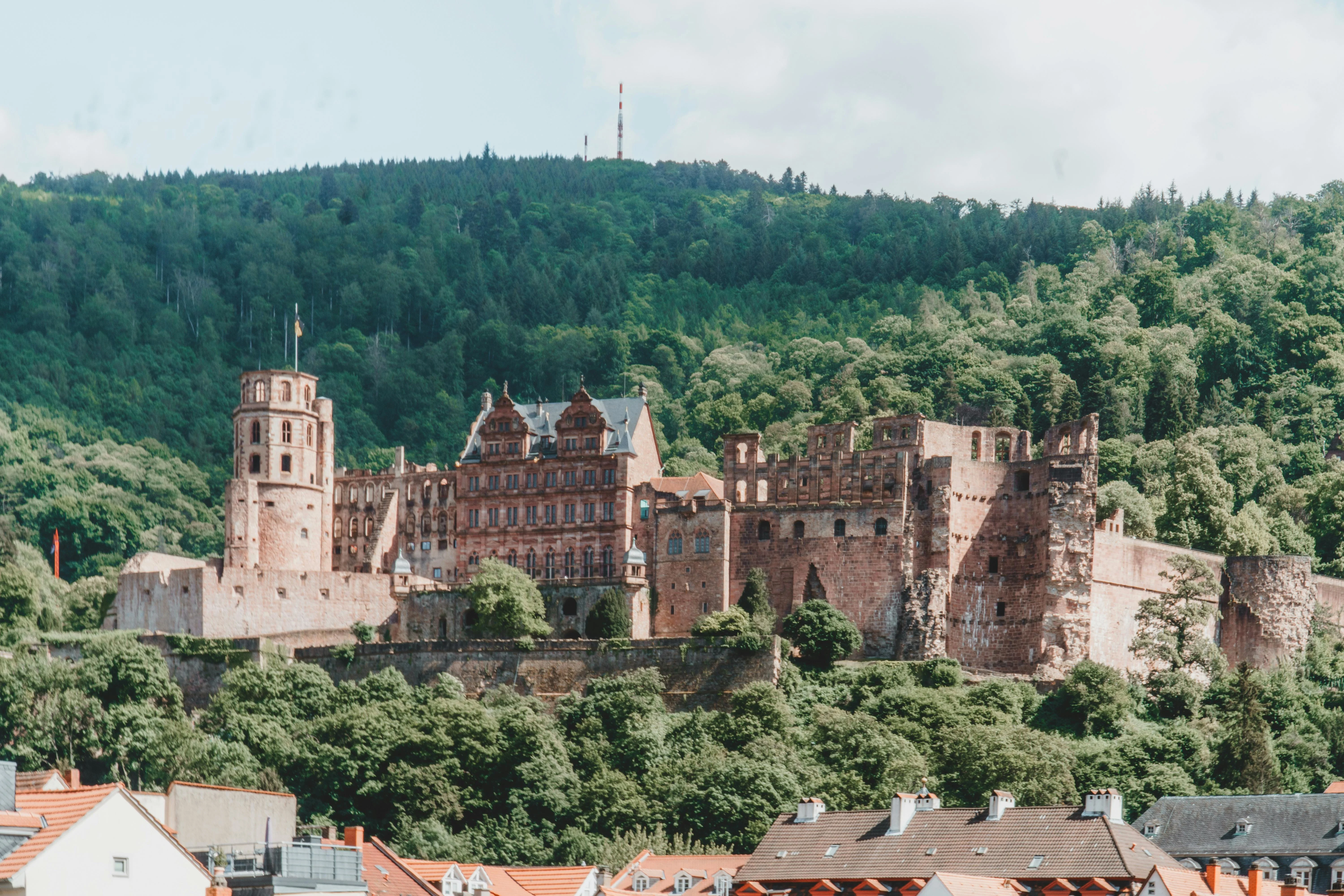
Heidelberg Castle: Where Stone Ruin Meets River Valley
I stand in the castle courtyard just before nine in the morning. Sunlight warms the red sandstone walls, turning them deep amber. A breeze carries the scent of pine from the Königstuhl slope behind. The Great Barrel chamber sits cool and dim nearby. A few other visitors spread out, touching weathered stone or leaning against balustrades. The view down over red roofs and the curving Neckar River stretches clear and bright. It feels grand and quiet all at once. But by eleven the funicular disgorges steady crowds. Voices echo off every wall. The cafe right by the entrance charges steep prices for simple drinks.
Why Heidelberg Castle Matters
Construction began here in the 13th century. Over four hundred years, rulers added towers, halls, and wings until this stood as one of the grandest palaces north of the Alps. It served the Electors Palatine, shaping politics across the Rhine region. Then war and fire struck. French armies destroyed large sections in the 1680s. Lightning finished much of what remained in 1764. Instead of rebuilding everything, people chose to preserve what was left. That decision turned a broken palace into a powerful symbol — of endurance, of loss, of beauty that persists. Today over a million people visit each year. That popularity brings real strain. The pathways feel narrow when full. Some areas show wear from decades of foot traffic. Locals say the castle can feel less like shared heritage and more like a busy stage set in peak season.
The Best Time to Experience Heidelberg Castle
Late April through June brings fresh green foliage and softer light. Temperatures sit between 10°C and 21°C (50°F–70°F). Crowds stay lighter than in summer. July and August see 16°C to 26°C (61°F–79°F). Days stay warm late, but lines form early and the courtyard fills fast. September and early October offer 11°C to 22°C (52°F–72°F). Trees turn gold and purple, and visitor numbers drop noticeably. November through March runs 2°C to 9°C (36°F–48°F). The castle feels quiet and atmospheric. Some guided tours run less frequently, and the gardens look bare. Evening illuminations happen a few times each year — the castle glows red against dark sky. Check dates ahead; they sell out quickly.
Approximate Budget for a 7-Day Trip
Prices below are per person in euros, mid-range spending.
- Accommodation: Old Town hotels cost €120–€260 per night. Guesthouses west of the station run €75–€150. Apartments in nearby towns like Schwetzingen or Ladenburg drop to €55–€110.
- Food & Drink: Expect €35–€55 daily. The restaurant right beside the castle entrance is overpriced. A meal there costs €15–€20 more per person than places five minutes downhill. Bakeries near Bismarckplatz sell hearty sandwiches for €4.50–€7 and warm pretzels for €2.80 — excellent value.
- Transport: Round-trip train from Frankfurt €18–€30. Local day pass €7. Funicular round trip €5 included in some tickets. Walking up takes 20–25 minutes and costs nothing.
- Attractions: Combined castle ticket €11 adult, €5.50 reduced, under 6 free. Guided interior tour extra €6. Audio guide €5. Heidelberg Card covers entry and public transport — worth checking if you plan multiple sights.
- Miscellaneous: Souvenirs average €12–€28 daily. Branded items at the castle gift shop carry heavy markups. Small bookshops and craft stores in the lower lane sell thoughtful alternatives at fair prices.
Total estimated for 7 days: €450–€1,020 per person. The funicular is convenient but walking up is easy and gives you time to ease into the view as you climb.
Essential Heidelberg Castle Experiences
- Walk the courtyard and outer terraces. Open to all without extra tour tickets. You see the most famous facades and broad valley views. Go early to stand at the stone balustrade with almost no one else there.
- See the Great Barrel. The largest wine barrel ever built holds over 200,000 liters. It stands in a cool vaulted cellar. The wooden dance platform on top feels surreal. Skip it if you have trouble bending or climbing narrow steps.
- Tour the preserved interior rooms. The Friedrichsbau wing retains ceilings, wall paintings, and furnishings. Guides explain the palace in its prime. Tours run in English several times daily; check schedule on arrival.
- Explore the German Pharmacy Museum. Displays trace medicine and healing across centuries. Jars, instruments, and whole old apothecary shops appear as they once stood. Included in main ticket.
- Walk the castle gardens. Terraced paths run behind and beside the ruins. Benches sit shaded under trees with quiet views. Hardly everyone walks the full length — do not miss the upper terrace.
- View the castle from across the river. Cross the Old Bridge and climb slightly to the Philosophers’ Path. This is the classic perspective — red stone rising above roofs and water. Free and often less crowded than the castle itself.
Hidden Gems Most Travelers Miss
- The upper garden terrace beyond the main viewing platform. It extends into trees and stays quiet. You look down on the back of the palace and across to the forested Königstuhl.
- The narrow path down through the forest on the north side. It winds past stone ruins and old retaining walls. It takes longer than the paved route but feels entirely different.
- The small courtyard behind the Ottheinrich Building. It sits slightly off the main flow. The light hits the Renaissance facade beautifully in late afternoon.
- The main viewing terrace right by the gate is overrated. It stays packed and the view gets blocked. Walk fifty meters left or right along the wall and you find better spots with fewer people.
Cultural & Practical Tips
- Wear sturdy shoes. The walk up from town is steep and uneven in places. Cobblestones inside the courtyard stay slippery when wet.
- Do not lean on broken walls or climb over railings. Sections of the castle are genuinely unstable. Signs mark hazards — respect them.
- Buy your ticket at the lower station or visitor centre. The line right at the castle gate moves slower and grows long by mid-morning.
- Do not assume every card works everywhere. A few small stalls and older eateries take cash only.
- Arrive before 09:30 or stay past 16:00. Day tours arrive between 10:30 and 15:00 — the castle feels twice as crowded then.
- Respect quiet in the museum and exhibition spaces. Echo carries easily in stone rooms and disturbs other visitors.
Essential Visitor Information
Location & Access: Heidelberg Castle, Schlosshof 1, 69117 Heidelberg, Germany. Roughly 80 meters above the Neckar River. From Frankfurt 50 minutes by train. From Stuttgart 40 minutes. From Mannheim 20 minutes. Three options: funicular from Kornmarkt/Bergbahn station round trip €5; walk uphill from Bismarckplatz 20–25 minutes; car via B37 with parking at Kornmarkt or Karlsplatz garages then short walk.
Tickets & Booking: Combined ticket €11 adult, €5.50 reduced, under 6 free. Includes courtyard, Great Barrel, museum, and funicular. Guided interior tour extra €6. Booking ahead not required for individuals but recommended on weekends.
Operating Hours: Castle grounds daily 08:00–18:00, last entry 17:30. Museum 10:00–18:00 (to 17:30 November–March). Closed December 25, half closed December 24 and 31.
Visit Duration: Minimum two hours for main sights. Three hours lets you tour inside, see the museum, and walk the gardens slowly.
Family Suitability: Welcomes children of all ages. Most areas accessible but steep cobblestones make strollers tricky — carry or use a sturdy off-road model. High chairs available at nearby cafes.
Timing: Best seasons May–June and September. Arrive before 09:30 or after 16:00 for thinner crowds and softer light.
Highlights: Courtyard and facades, Great Barrel, guided interior tour, Pharmacy Museum, garden terraces, Philosophers’ Path view.
Nearby & Day Trip: Schwetzingen Palace 20 minutes; Neckarsteinach castles 30 minutes; Rothenburg ob der Tauber 90 minutes; Strasbourg 75 minutes. All make comfortable half-day or full-day outings.
Conclusion: Travel with Wonder, Not Just Proof
Heidelberg Castle does not stand whole and perfect. That is exactly why it matters. The broken walls carry as much meaning as the rooms that still stand. Do not rush from one landmark to the next. Pause and imagine what it was, then look at what remains. Both deserve your attention. What building or ruin has stayed with you long after you left it?
Comments
Post a Comment