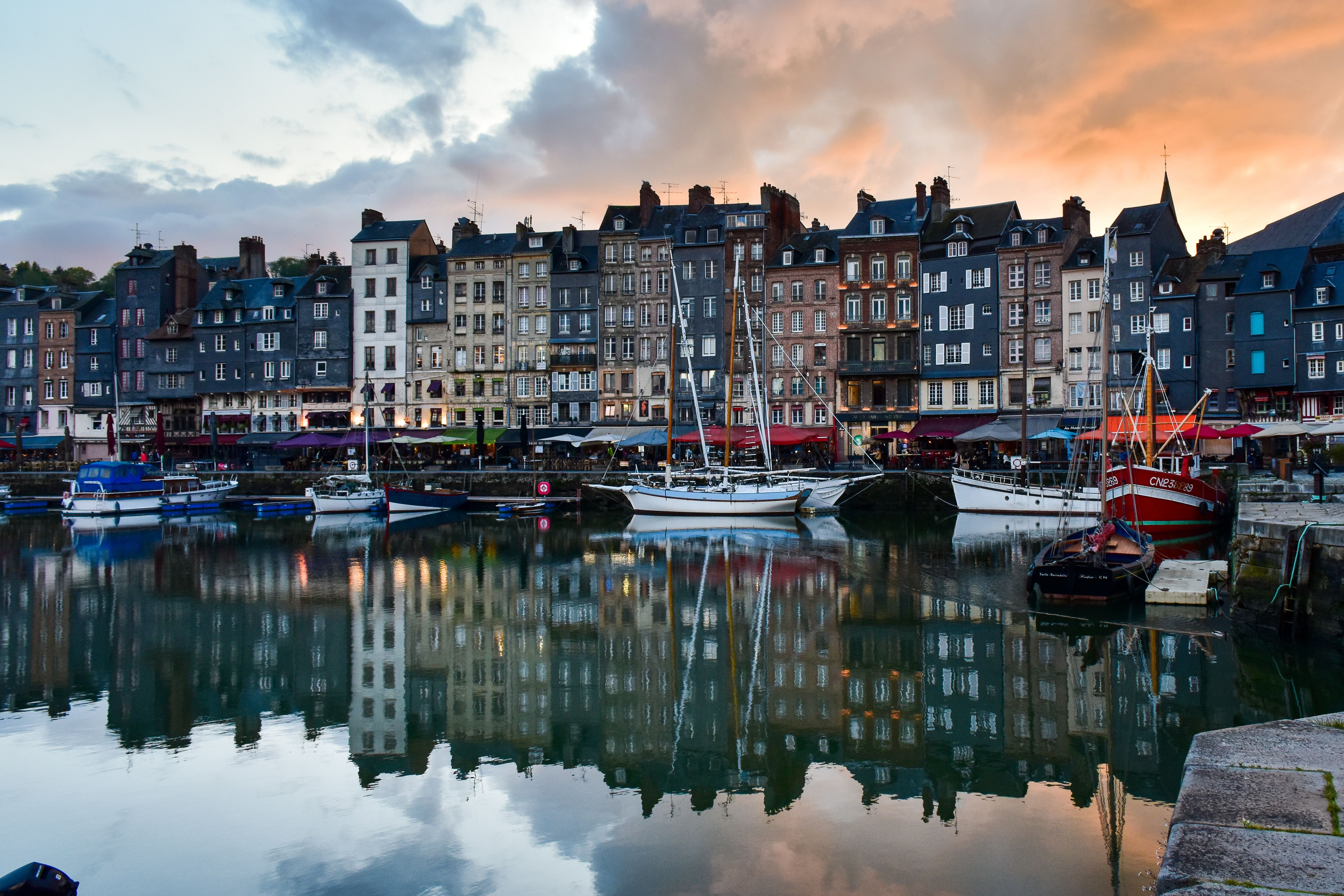
Honfleur: Where Timbered Harbour Meets Estuary Light
I walk along the quay just after eight in the morning. A coffee and buttered brioche cost four euros fifty. The tide is full — water laps gently against stone. Slate‑clad houses rise straight from the quay, their facades reflecting deep grey and blue in the still surface. A fisherman unloads crates of oysters from a small boat. He nods and calls out a greeting. The light here feels different — softer, clearer, as if filtered through the wide estuary where the Seine meets the English Channel. No wonder painters came here in their hundreds. You see what they saw immediately.
Why Honfleur Matters
Honfleur sits on the southern bank of the Seine estuary in Normandy. By the 19th century it was a busy trading port, but its true influence came through art. The distinctive quality of the light — bright yet diffused by sea mist and river haze — drew Eugène Boudin, Claude Monet, and others who began painting outdoors here in the 1860s. Honfleur became the cradle of Impressionism. Today the old town remains remarkably intact — narrow cobbled lanes, wooden church, and that famous slate‑fronted harbour. That beauty brings real pressure. Tour buses arrive by mid‑morning. The quay fills completely by midday. Restaurants raise prices for the view while service can feel rushed. Some historic lanes are quiet and genuine; others have become almost entirely souvenir shops. Honfleur is still beautiful, but you must choose your hours carefully.
The Best Time to Experience Honfleur
Late April through June and mid‑September through mid‑October work best. Daytime temperatures sit 14°C to 20°C (57°F to 68°F). The light is soft and mornings stay mist‑free long enough to explore. July and August see 18°C to 22°C (64°F to 72°F) plus very large crowds — the harbour feels packed from 11 AM onward. Winter from November through March stays quiet and atmospheric at 6°C to 10°C (43°F to 50°F). Some restaurants and galleries close, but the town belongs to itself again. Arrive before nine in the morning. You will walk the quay with space to look and think. After ten thirty, the tone shifts.
Approximate Budget for a 7‑Day Trip
These figures are per person, based on staying independently and exploring the Normandy coast.
- Accommodation: €65–€95 per night in Honfleur town; €50–€75 in nearby villages like Pennedepie or Équemauville — short drive, quieter nights, and lower prices.
- Food: Harbourfront meal €22–€38; inland bistro €16–€26. Oysters from a stall €9–€12 per dozen. Bakery lunch — cider, apple tart, baguette — €8–€13.
- Transport: Train from Paris to Lisieux then bus €22–€30 one way; direct bus from Caen €8.50. Rental car €35–€50 daily — recommended for seeing the surrounding coast.
- Attractions: Musée Eugène‑Boudin €8; Satie House €6; old town free. Combined passes available.
- Miscellaneous: €14–€26 daily for cider, calvados, books, and small purchases.
Total estimated 7‑day cost: €520–€830 per person. The "harbour view" restaurant at €40+ per person is overpriced. Walk two lanes back and find authentic Norman dining for €18–€25. The food is the same; the atmosphere is more genuine.
Essential Honfleur Experiences
- Walk the inner and outer quays at dawn. High tide makes the houses float on reflection. The light shifts minute by minute. Skip if you sleep late — the magic vanishes when crowds arrive.
- Visit the wooden church of Sainte‑Catherine. Built entirely of timber by shipwrights in the 15th century. Two naves, separate bell tower, warm and resonant inside. It feels like an upturned boat.
- Explore the Musée Eugène‑Boudin. Works by Boudin, Monet, and others who painted here. Small, intimate, and beautifully curated. You recognise the scenes instantly.
- Eat oysters at the water’s edge. Fresh from the estuary — briny, plump, and served simply with bread and lemon. A glass of dry cider completes it.
- Follow the painters’ trail. Marked paths lead to viewpoints where artists set up their easels. Outside the town centre, they stay quiet and green.
- Walk the coast path to Cap L’Hospice. Cliffs, sea, and panoramic view over the estuary. One hour each way — worth every step.
Hidden Gems Most Travelers Miss
- Rue de la Ville behind the harbour. Parallel lane lined with tall townhouses. Almost no tourists walk here. It feels like the real Honfleur.
- Jardin des Personnalités. Quiet park overlooking the water. Benches, statues, and apple trees. Perfect for sitting and watching boats pass.
- The main quay at midday is famous; it is overrated then. Go early or stay until dusk. The slate facades glow differently when the sun drops low.
- Le Perrey quarter. West of the centre, with small fishing houses and a sheltered beach. Locals walk here; visitors rarely find it.
Cultural & Practical Tips
- Park outside the centre. The historic core is largely pedestrian and parking is scarce. Use the riverfront car park and walk five minutes.
- Respect tide times. The harbour changes completely — full water then wide mud flats. Both are beautiful but watch your step.
- Try cider not calvados with food. Dry cider pairs perfectly with oysters, cheese, and Norman dishes. Calvados is better as a digestif.
- Book ahead July and August. Popular restaurants fill fast. Even mid‑week reservations are worth making.
- Wear sturdy shoes. Cobblestones are uneven and slippery when damp. Rain can come suddenly — carry a light jacket.
- Step off the quay. The best food, cider, and prices are found in the lanes behind the harbour, not right on it.
Essential Visitor Information
Location & Access: Honfleur, Calvados, Normandy, France. GPS roughly 49.42° N, 0.23° E. Reach it by train from Paris to Lisieux then bus 45 min; by train to Caen then bus 1 hour; or by car via A13 motorway 2 hours from Paris.
Tickets & Booking: Town free. Musée Eugène‑Boudin €8; Satie House €6. No booking needed for most visits.
Operating Hours: Always accessible. Museums 10 AM–12:30 PM and 2 PM–6 PM; closed some weekdays winter. Restaurants close one or two days weekly.
Visit Duration: Minimum half a day. 1 full day lets you explore town, museum, and coast path. Two days including nearby beaches and villages.
Family Suitability: Very family‑friendly. Flat harbour paths suit strollers. Shallow beach at low tide appeals to children.
Timing: Best months May, June, September. Best time of day: before 9 AM or after 5 PM.
Highlights: Harbour at high tide, Sainte‑Catherine Church, Musée Eugène‑Boudin, waterfront oysters, painters’ trail, Cap L’Hospice walk.
Nearby & Day Trip: Deauville 15 km — chic beach resort. Etretat 40 km — dramatic chalk cliffs. Caen 50 km — memorial museum and medieval castle. All make comfortable half‑day or full‑day outings.
Conclusion: Travel with Eyes Open, Not Just Camera Ready
Honfleur is not a museum piece. It is a living, working place that has inspired generations. You do not need to know art history to feel its light. Arrive early. Walk the back lanes. Sit and watch the water change. The best moments here are unplanned and unphotographed. What colour of light will you carry home?
Comments
Post a Comment