
Iglesias Mining Heritage Industrial Echoes Meet Mediterranean Resilience
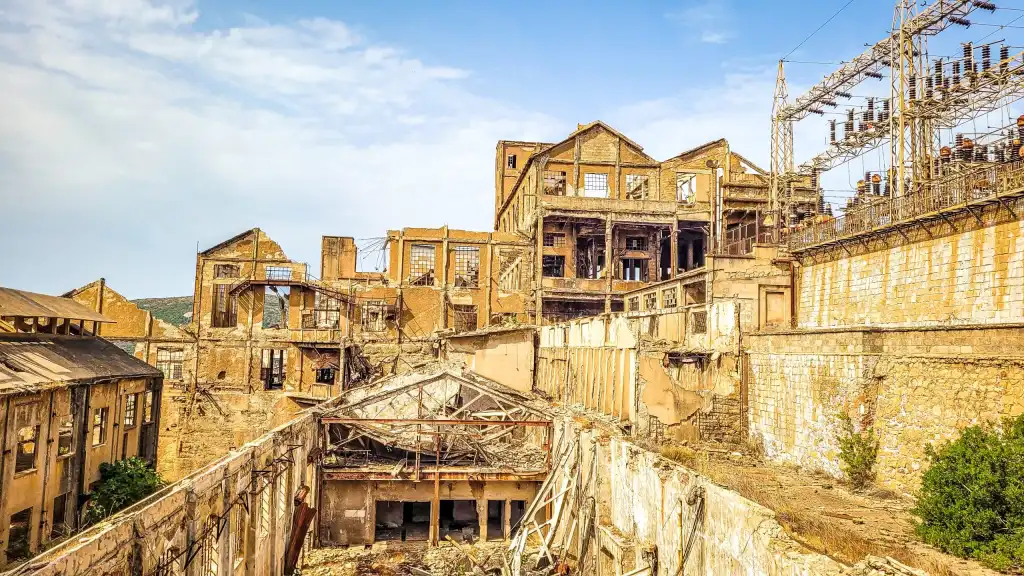
Dusk settles over the Monteponi mine as the last light gilds rusted headframes and crumbling processing plants—structures that once powered Europe’s silver economy. You stand where Pisan engineers drove tunnels 600 meters into the earth in 1272, where Belgian investors built Sardinia’s first electric railway in 1870, and where generations of minatori (miners) risked their lives for lead, zinc, and silver. The air carries the metallic tang of oxidized pyrite mingled with wild myrtle clinging to slag heaps now softened by time. At 300 meters above sea level in southwestern Sardinia, this UNESCO-recognized mining landscape spans 15,000 hectares across the Iglesiente region, containing over 100 abandoned mines that operated from the 13th century until the 1990s. The most significant—Monteponi, discovered in 1848—produced 1.2 million tons of lead-zinc ore between 1850–1990, making it Europe’s richest deposit [[33]]. Today, these industrial ruins tell a story of boom and bust, colonialism and resilience, where Catalan administrators, Genoese merchants, and Sardinian laborers shaped a landscape that now serves as both memorial and museum. In 2026, as post-industrial communities worldwide seek sustainable reinvention, Iglesias matters precisely because it transforms extraction scars into cultural assets—a place where history isn’t buried but repurposed.
Why Iglesias Mining Heritage Embodies Industrial Transformation
Iglesias solves a fundamental post-industrial paradox: how to honor painful history while creating sustainable futures. Its mining legacy began in 1272 when Pisan rulers established the Regia Miniere di Monteponi, but exploded during the 19th-century mining boom when Belgian and French companies invested heavily in infrastructure. The engineering marvels are staggering: the 1870 Iglesias–Portovesme electric railway (Sardinia’s first) transported ore 35 kilometers using hydroelectric power from Monte Pranu reservoir; the 1888 Monteponi processing plant featured 120-meter-tall chimneys that still dominate the skyline; and underground, tunnels extended 600 meters vertically with ventilation systems that maintained 12°C temperatures year-round. Culturally, the mines created a unique social fabric—Catalan administrators lived in elegant villas on Via Roma while miners crowded into cortes (company housing) with shared courtyards. The 1904 Miners’ Strike, which demanded 8-hour workdays and safety reforms, became a landmark labor movement that influenced Italian worker protections. After closure in 1990, the challenge was repurposing: the 2001 UNESCO recognition as part of the “Sardinian Geomineral Park” catalyzed transformation—the Monteponi complex now houses the Museo dell’Arte Mineraria with original machinery; the railway route became a cycling path; and slag heaps were stabilized with native vegetation to prevent heavy metal leaching. Critically, this heritage now fuels cultural tourism that employs former miners as guides, ensuring living memory informs historical interpretation.
The Best Time to Experience Iglesias Mining Heritage
For optimal exploration conditions and comfortable temperatures, visit between May 18–June 12 or September 15–October 10, 2026—when daytime temperatures average 20–25°C (68–77°F) with minimal rainfall and stable trail conditions [[34]]. Schedule underground tours of Monteponi Mine between 9:00–11:00 AM when temperatures remain cool (12°C/54°F year-round) and lighting enhances geological features. Avoid July 15–August 25 when surface temperatures exceed 33°C (91°F), making outdoor exploration of slag heaps and ruins uncomfortable, and many local guides take seasonal breaks. Winter visits (November–February) offer solitude but present challenges: shorter daylight hours (sunset at 17:15), occasional rain that makes trails slippery, and reduced museum hours. For real-time updates on tour availability and weather-related closures, verify with the Parco Geominerario Storico ed Ambientale della Sardegna’s portal at
Approximate Budget for a 7-Day Trip (2026)
This budget reflects mid-range cultural-historical travel based in Iglesias with day excursions to mining sites, using 2026 projected pricing with 3.8% inflation adjustment from 2024 baseline figures per ISTAT regional data. All costs in euros (€).
- Accommodation: €75–€110 per night for historic B&B or 3-star hotel in Iglesias center (e.g., Hotel Belvedere or B&B Sa Sciga); includes mountain views and breakfast featuring local cheeses
- Food: €40 per day average—breakfast €8 (fresh ricotta and pane carasau), lunch €14 (panino with roast lamb at local bar), dinner €18 (primo of malloreddus pasta with sausage, secondo of grilled goat at family-run trattoria)
- Transportation: €220 total—Cagliari Elmas Airport to Iglesias via ARST bus line 1072 (€9.50, 2h 15m); daily car rental from Iglesias €48 including fuel for mining site exploration; parking free at most heritage sites
- Attractions: Guided Monteponi Mine tour €22; Museo dell’Arte Mineraria €8; Mining Railway Cycling Path rental €15; Miners’ Strike Historical Walk €12
- Miscellaneous: €60—handwoven textile souvenir €25, Sardinian wine tasting €20, donation to mining heritage preservation fund €15
Total estimated cost: €920–€1,120 for seven days
6 Essential Iglesias Mining Heritage Experiences
- Descend into Monteponi Mine: Join the 10:00 AM guided tour to explore 600 meters of tunnels where miners extracted lead-zinc ore from 1850–1990. Wear the provided helmet with headlamp to navigate narrow passages; feel the constant 12°C temperature and hear stories of the 1904 strike that changed Italian labor laws.
- Explore the Mining Machinery Museum: Visit the Museo dell’Arte Mineraria at 14:00 to see operational steam engines, ore crushers, and ventilation systems. The highlight: the 1888 compressor that powered pneumatic drills—still functional during weekend demonstrations.
- Cycle the Historic Railway Path: Rent a bike at 8:30 AM to traverse the 12-kilometer route of Sardinia’s first electric railway (1870). The flat, paved path winds through slag heaps now covered in wildflowers, with interpretive signs explaining how ore was transported to Portovesme harbor.
- Attend a Miners’ Descendants Talk: Book the “Voices from Below” session (Tuesdays/Thursdays at 16:00) where former miners share firsthand accounts of life in the cortes. Learn about the unique mining dialect that blended Sardinian, Catalan, and technical terms.
- Photograph Industrial Silhouettes at Golden Hour: Position yourself on Monte Crobu ridge at 19:00 to capture Monteponi’s headframes and chimneys bathed in warm light against the Sulcis mountains. Use a telephoto lens to compress the dramatic scale of these industrial monuments.
- Walk the Miners’ Strike Route: Follow the 3-kilometer historical path from Piazza Matteotti to the 1904 protest site between 9:00–11:00 AM. Audio guides explain how 2,000 miners marched for safer conditions, leading to Italy’s first mining safety regulations.
3 Hidden Gems Most Travelers Miss
- Laveria Brassey Processing Plant: Located 8 kilometers north of Iglesias, this 1870s British-built facility features intact Cornish-style boilers rarely seen outside Wales. Access requires advance booking with Parco Geominerario (+39 0781 230011); tours depart only on Wednesdays at 10:00 AM.
- Pozzo Gal Mine Observatory: A 20-minute drive from town leads to this restored shaft house with panoramic views of the entire mining district. Visit at dawn (6:00–8:00 AM) when mist clings to slag heaps, creating ethereal landscapes; the unmarked trail starts opposite the old schoolhouse.
- Archivio Storico Minerario: In Iglesias’ town hall basement, unpublished payroll records from 1850–1950 document miners’ lives. Email archivio@comune.iglesias.ci.it 72 hours ahead specifying interest in “Documenti Minatori 1850–1950”; bring ID for the 30-minute viewing.
Cultural & Practical Tips
- Wear sturdy boots with ankle support—even “stable” slag heaps have loose scree; sandals risk ankle injuries on uneven terrain around industrial ruins.
- Greet locals with "Sa buna orta" (SAH BOO-nah OR-tah)—Sardinian for "good harvest"—a traditional blessing acknowledging the region’s agricultural roots beyond mining.
- Carry 1.5 liters of water minimum; many mining sites lack facilities, and dehydration risk escalates rapidly in exposed areas despite moderate temperatures.
- Respect private property—some mining structures are on land still owned by former companies; stick to marked trails and authorized tour routes.
- Photography drones require special authorization from Parco Geominerario (+39 0781 230011); handheld cameras are permitted but avoid disturbing wildlife in reclaimed areas.
- Support preservation by purchasing the official mining heritage map (€8) from Iglesias tourist office—proceeds fund archival digitization projects.
- Learn basic Italian phrases for emergencies—"Dov’è l’ospedale?" (Where is the hospital?) could be critical given the remote location of some sites.
Conclusion: Travel with Respect, Not Just Curiosity
To experience Iglesias mining heritage is to confront industry’s double-edged legacy—a landscape scarred by extraction yet redeemed through memory. In 2026, as post-industrial communities worldwide grapple with reinvention, this Sardinian enclave stands as both cautionary tale and inspiration: its rusted headframes and slag heaps transformed not into theme parks but into spaces of honest reckoning. Your presence here carries consequence—the €22 mine tour fee employs former miners as guides, ensuring living memory informs historical interpretation, yet your footsteps simultaneously accelerate erosion on fragile industrial ruins. True engagement means slowing beyond documentation: listening to a miner’s descendant describe life in the cortes, understanding that preservation requires both financial support and physical restraint. Leave no trace beyond respect; take no fragment beyond photographs. For Iglesias endures not as a monument to exploitation, but as a testament to resilience—a covenant written in iron and stone that asks only this: that we remember why some histories must be preserved, not just visited.
Image Description: Sunset over Iglesias mining heritage site in Sardinia, golden light illuminating abandoned mine structures and industrial ruins against mountainous backdrop