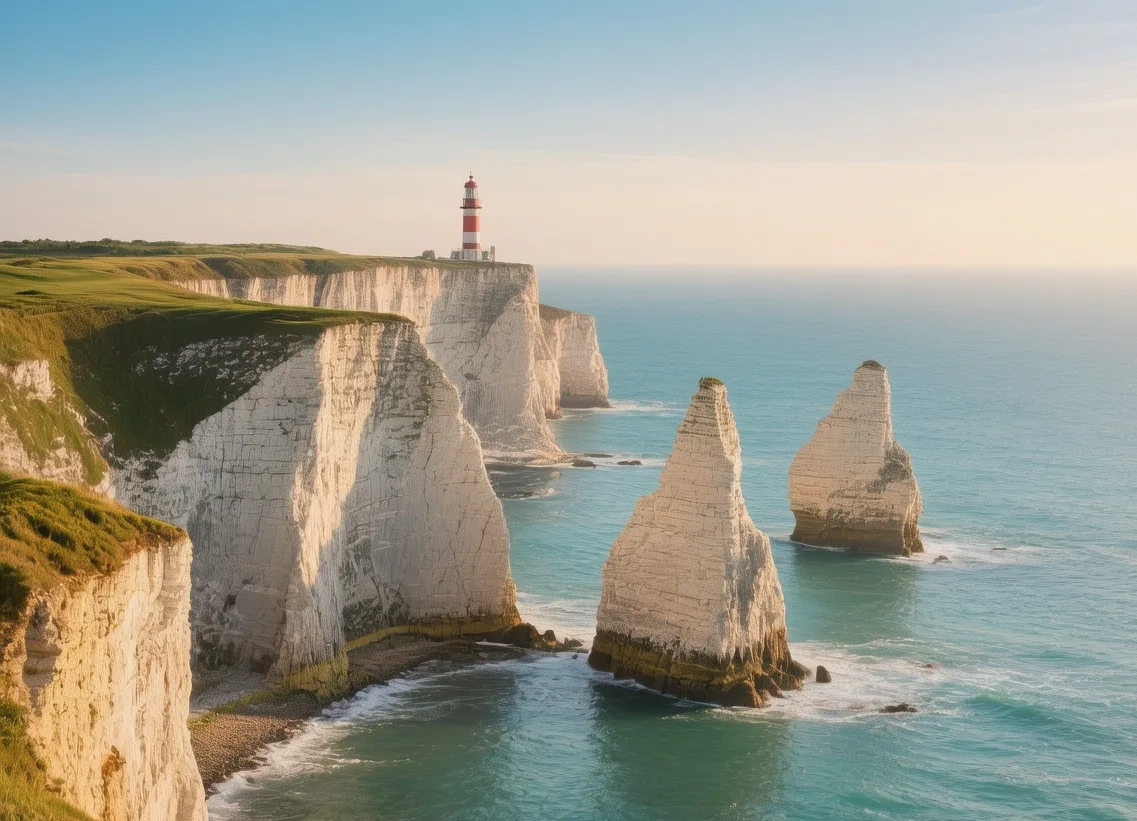
Isle of Wight: Where Chalk Cliffs Meet Island Village Life
I stand at the end of the headland above The Needles at 10:05 on a Friday in mid-September. The wind carries salt and the faint tang of pine from the ridge behind. Three white stacks stand separated from the mainland, the lighthouse clinging to the farthest one. Parking cost me nine pounds for the day. The view stretches clear across to the mainland on one side and out toward open sea on the other. This place feels distinct—separate from England yet deeply part of it. You cross water to get here, and that short crossing changes everything. The pace slows. The light shifts. You notice the difference before you even step onto the beach.
Why Isle of Wight Matters
Separated from the south coast by the narrow Solent, this diamond-shaped island has drawn visitors since Victorian times. Queen Victoria made Osborne House her beloved retreat, and her legacy shaped the architecture and attitude across the land. The cliffs hold a fossil record spanning 125 million years; dinosaur remains appear regularly after storms. The Needles stand as the westernmost point, a geological marker visible for miles. Festivals, sailing traditions, and quiet farming villages add layers of living culture. That said, do not expect untouched wilderness. Car parks and amusement arcades cluster at popular spots. Roads narrow and wind, slowing travel across short distances. Some coastal paths have eroded dangerously in places. The island feels loved, but it also feels worn in sections. You will see weathered signage and faded infrastructure alongside the beauty.
The Best Time to Experience Isle of Wight
May through early June brings mild days at 11°C (52°F) to 18°C (64°F), blooming bluebells, and thinner crowds. Late July to August reaches 15°C (59°F) to 22°C (72°F) but accommodation prices jump and ferries fill fast. Cowes Week in early August draws sailing enthusiasts and drives rates even higher; avoid those days if you want quiet. September offers the sweetest balance—13°C (55°F) to 19°C (66°F), warm seas still good for swimming, and most families have left. October cools to 10°C (50°F) to 16°C (61°F) with golden light across the south coast. November through February drops to 4°C (39°F) to 9°C (48°F); many attractions close, roads stay quiet, and the island feels entirely your own. Arrive on an early ferry and leave on a late one to maximise your time without rush.
Approximate Budget for a 7-Day Trip
These figures cover one person including return ferry from the mainland:
- Return Ferry: £35 – £60 foot passenger; £90 – £160 if bringing a car. Book six weeks ahead for best rates.
- Accommodation: £315 – £490 for a clean B&B room or self-catering cottage. West Wight offers better value than Shanklin or Sandown.
- Food & Drink: £175 – £260. Fish and chips on the esplanade costs more than meals inland; plan accordingly.
- Local Transport: £42 – £85. Island buses cover most routes but run infrequently; bike hire costs £25 – £32 daily.
- Attractions & Entry Fees: £40 – £75. Osborne House, steam railway, and The Needles chairlift are the main paid sites.
- Miscellaneous: £40 – £70 for ice cream, beach supplies, and small purchases.
Total estimated budget: £647 – £1,040
The Needles chairlift and package attractions cost £18 per person. Skip the full fairground bundle. Walk the headland path instead for free and see the stacks from above without the crowds.
Essential Isle of Wight Experiences
- Walk the headland to The Needles viewpoint. The chalk stacks and striped lighthouse stand framed by open water. The path is mostly flat but exposed. Skip this in high winds; gusts can push hard against you.
- Explore Osborne House and grounds. The private beach and terraced gardens show how Victoria and Albert lived. You see the sea view they chose for their home. The house feels lived-in rather than perfectly polished, which makes it more human.
- Search for fossils along Compton Bay. Dark sandstone ledges hold shells and bone fragments. Check tide times before you go—the best stretches vanish under water twice daily.
- Ride the Isle of Wight Steam Railway. The slow chug between Havenstreet and Wootton crosses fields and woods at a pace from another era. It feels gentle and unhurried. Service days reduce in winter; confirm opening before travelling.
- Wander Shanklin Old Village and Chine. Thatched cottages line lanes leading down through a wooded gorge to the beach. The descent feels cooler and quieter than the promenade above.
- Cycle the coastal path from Sandown to Bembridge. Flat, open, and facing east. You see the sun rise over the sea and watch fishing boats drift slowly home.
Hidden Gems Most Travelers Miss
- Fort Victoria near Yarmouth has wide grassy ramparts and quiet woodland paths. The old military structure sits half overgrown and peaceful. Few visitors wander beyond the car park.
- Bembridge Windmill stands visible from the shore but often overlooked. It still turns on windy days and offers a quiet climb to the top with views across the harbour.
- St Catherine’s Oratory above Niton is a stone tower built as a memorial and sea mark. The path up from the village takes twenty minutes and gives wide views south toward the Channel.
- Ryde Pier feels overrated on sunny weekends when crowds pack the amusement arcades. Walk the full length at dusk instead; the lights reflect on the water and most people have gone home.
Cultural & Practical Tips
- Book ferries well in advance in summer. Prices rise closer to departure and crossings sell out completely.
- Do not climb crumbling cliffs. Erosion happens fast here; sections give way without warning.
- Check bus timetables before you set out. Rural routes run once an hour or less frequently on Sundays.
- Respect private land and garden boundaries. Many lanes run close to houses; keep noise low and dogs under control.
- Carry water and sun protection. Coastal paths offer little shade and distances between shops stretch longer than the map suggests.
- Do not assume every beach has toilets or refreshments. Remote coves have no facilities at all—pack everything you need.
Essential Visitor Information
Location & Access: Island off England’s south coast separated by the Solent. Cross from Portsmouth, Southampton, or Lymington. Foot passenger hovercraft from Southsea to Ryde takes just 10 minutes; car ferries take 40–60 minutes.
Tickets & Booking: Ferry fares vary by route and vehicle. Major attractions charge £9–£15. Reserve accommodation and ferries 6–8 weeks ahead for July and August.
Operating Hours: Most sites open 10:00 to 17:00 April through October. Many close or run shorter days November through March; check individually before travelling.
Visit Duration: Allow a minimum of three days. Seven days lets you explore east and west without rushing the travel between them.
Family Suitability: Excellent for children. Beaches are safe and shallow in many areas. Pushchairs work on promenades and main paths; chines and cliff walks have steep steps.
Timing: Arrive on the earliest ferry you can manage. 08:30 crossings let you claim quiet spots before day-trippers arrive.
Highlights: The Needles, Osborne House, Compton Bay fossil beaches, Shanklin Chine, and the west coast headland paths.
Nearby & Day Trip: New Forest National Park lies 35 minutes by ferry plus short drive. Jurassic Coast starts 45 minutes west by road and ferry. Southampton and Portsmouth offer city and museum visits across the Solent.
Conclusion: Travel with Patience, Not Just Speed
The Isle of Wight does not hurry you. It will not let you hurry even if you try. Roads curve. Ferries run to their own schedule. The light changes slowly over the water. That is not inefficiency. That is the island’s gift. Walk the shore. Look closely at the rock layers. Notice how the light hits the chalk differently in the morning and afternoon. What will you take time to slow down and notice first?
Comments
Post a Comment