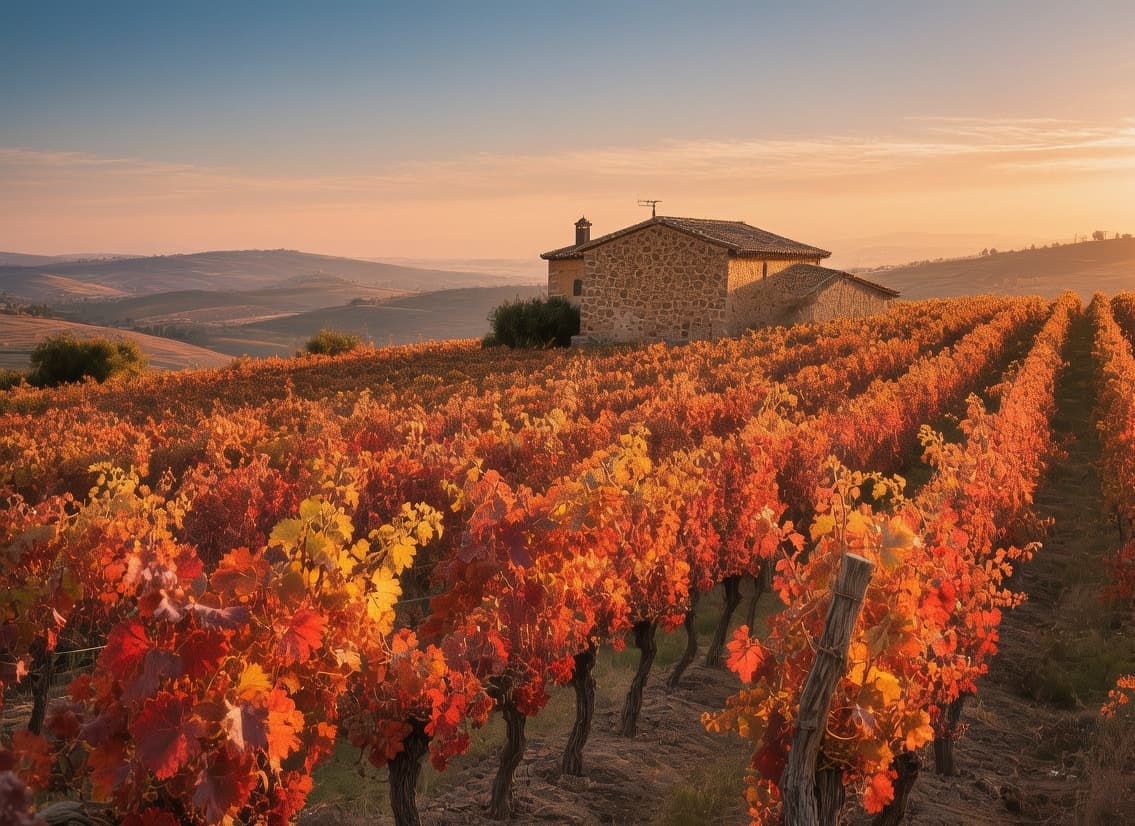
La Rioja Vineyards: Where Tempranillo Meets Limestone Soil
I stand between two rows at ten in the morning. Sun warms dark green leaves and dry earth. A guided tasting costs twelve euros. I crumble a handful of soil between fingers — crumbly, pale, mixed with small stones. Tempranillo vines stretch straight as far as I can see. Their fruit hangs small, dark, and tight. Bees move slow from flower to leaf. Not everything feels perfect. Summer heat bakes the valley hard. Some commercial bodegas feel more showroom than cellar. Prices rise fastest in the most famous villages. Yet this land has nurtured the same grape for centuries. It carries more history than any label can tell.
Why La Rioja Matters
La Rioja sits along the Ebro River in northern Spain — sheltered by mountains, fed by limestone hills. Tempranillo arrived here centuries ago. It adapted perfectly to the region’s unique mix of clay, iron, and chalk. Today the grape makes up over three-quarters of all vines planted. It gives wines deep ruby colour, red fruit flavour, and the ability to age gracefully for decades. The region divides into three zones: Alta — higher, cooler, slower ripening; Baja — lower, warmer, bolder wines; and Alavesa — steeper, stonier, intensely structured. That diversity is La Rioja’s greatest strength. But change presses in. Large corporations buy up small family plots. Some modern styles lose the traditional character that made the region famous. Still, Tempranillo remains the heart and soul here — rooted, resilient, and deeply loved.
The Best Time to Experience the Vineyards
Late May through June offers fresh growth and gentle weather — 14°C to 24°C (57°F–75°F). Vines are full and green. September and early October bring harvest — 15°C to 25°C (59°F–77°F). Leaves turn gold and amber. The air smells of crushed grapes and fermentation. This is the most vivid time to visit. July and August feel hot — 22°C to 34°C (72°F–93°F). Midday walks in open rows stay exhausting. Winter from December to March stays quiet — 6°C to 14°C (43°F–57°F). Many smaller family bodegas close for rest and refurbishment. Weekdays offer personal attention. Saturday and Sunday bookings fill weeks ahead. Arrive before 10:00 to see vines in soft morning light.
Approximate Budget for a 7-Day Trip
- Accommodation: Guesthouse in village — 55–85 euros per night. Rural boutique hotel — 90–170 euros per night. Bodega with rooms — 110–220 euros per night. Apartment in Logroño — 50–95 euros per night.
- Food: Lunch with local wine — 14–24 euros. Traditional dinner — 22–40 euros. Pincho crawl — 10–16 euros. Market meal — 6–10 euros.
- Transport: Car rental — 35–55 euros per day (recommended). Bus between towns — 3–6 euros. Logroño train from Madrid — 30–55 euros one way. Parking — free or 3–5 euros daily.
- Tastings & Tours: Family bodega — 12–20 euros. Premium estate — 25–45 euros. Vineyard walk + tasting — 18–30 euros.
- Miscellaneous: Water, snacks, bottles to take home — 15–35 euros daily.
Total estimated for one person, 7 days: 450–850 euros
Tastings at the most famous, Instagram-famous estates cost double what smaller family places charge. The wine is often simpler. Seek out the quiet, unmarked bodegas. You will taste better Tempranillo and speak with the people who actually tend the vines.
Essential Tempranillo Experiences
- Walk the vines at sunrise. Rows stretch long and shadowed. Mist lingers in the valleys. The air feels cool and still. You see how slopes catch light differently — each angle changes how the fruit ripens. Skip this after heavy rain — clay paths turn sticky and slippery.
- Taste young and aged Tempranillo side by side. Fresh wine tastes of plum and cherry. Aged years in oak brings leather, tobacco, and vanilla. The difference astonishes you — same grape, entirely new voice. It explains why ageing matters here.
- Stand in a century-old vineyard. Gnarled, twisted bushes produce less fruit but deeper flavour. The ground feels wilder. The wine tastes concentrated and intense. Ask if they use Tempranillo clones or traditional vines — older stock carries distinct character.
- Visit a working family bodega. Not polished, not staged — concrete tanks, old barrels, hands-on owners. They pour from barrels they made themselves. The stories feel real. The wine tastes honest.
- Eat lamb with Tempranillo Crianza. Slow-roasted local lamb pairs perfectly — tender, rich, earthy. The wine cuts through fat and lifts the flavour. It is the region’s classic marriage.
- Watch sunset from a high ridge. Rows glow amber and red. The valley stretches out golden. It feels like the whole land breathes. This is when you understand why people stay here generations.
Hidden Gems Most Travelers Miss
- The Alavesa villages north of the river. Steeper slopes, whiter stone, cooler air. Tempranillo grows slower and tastes brighter. Fewer crowds, quieter roads, authentic taverns.
- Old vineyards around San Vicente de la Sonsierra. Deep-rooted Tempranillo planted before modern machinery. The wines feel structured and memorable. The village itself holds quiet medieval charm.
- The so-called "iconic viewpoint" beside the main road. It fills with tour buses by mid-morning. Drive ten minutes further up any side valley. The same land opens out with no crowds in frame.
Cultural & Practical Tips
- Do not walk into vineyards without permission. These are working farms. Owners care deeply about their land. Knock at the house or call ahead. Most will welcome you if you ask first.
- Drink Tempranillo at the right temperature. Too cold and it tastes thin. Too warm and it feels heavy. Room temperature in a stone house is perfect — about 16°C. That is how locals have always served it.
- Book visits 1–2 weeks ahead. Walk-ins are rarely welcome. Small bodegas run on tight schedules. Respect their time and they will share their best wines.
- Do not treat harvest like a festival show. It is hard, physical work. Long hours, early starts, tired families. Visit respectfully and stay out of the way.
- Wear sturdy shoes. Vineyard soil is loose, stony, and muddy after rain. Smooth soles slide easily. Ankle support matters on slopes.
- Spend your evenings in Logroño’s old quarter. The pincho scene feels lively and genuine. Every bar serves local Tempranillo by the glass. It is the best place to compare wines side by side.
Essential Visitor Information
Location & Access: La Rioja, northern Spain. Logroño — capital and main hub. 330 km north of Madrid — 3 hours by train or car. 120 km south of Bilbao — 1 hour 30 minutes. 180 km east of San Sebastián — 2 hours. Three subzones: Rioja Alta, Rioja Baja, Rioja Alavesa.
Tickets & Booking: Tastings — 12–45 euros. Vineyard + tour — 18–50 euros. No general entry fee. Reserve directly with each bodega. Popular estates book weeks ahead.
Best Seasons & Timing: Harvest — mid-September to early October. Spring — May–June. Avoid mid-July to mid-August heat. Best time of day — 10:00 morning or 16:00 afternoon.
Visit Duration: Minimum 2 days. 3–4 days lets you explore different subzones, taste across price ranges, and enjoy evenings without rushing.
Family Suitability: Good for older children. Many bodegas welcome them. Vineyard walks are safe and open. Strollers work on paved paths but not in rows.
Highlights: Sunrise vineyard walks, young vs aged Tempranillo tasting, century-old plots, family bodega visits, lamb and wine dinner, ridge sunset.
Nearby & Day Trip: Laguardia — 30 minutes. Haro — 35 minutes. San Millán de la Cogolla — 45 minutes. Pamplona — 1 hour 15 minutes.
Conclusion: Travel with Respect, Not Just Glasses
Tempranillo does not make itself great — the land does. Sun, rain, soil, and generations of careful tending. Before you leave, pour a glass slowly. What will you remember — the brand, or the earth that gave it life?
Comments
Post a Comment