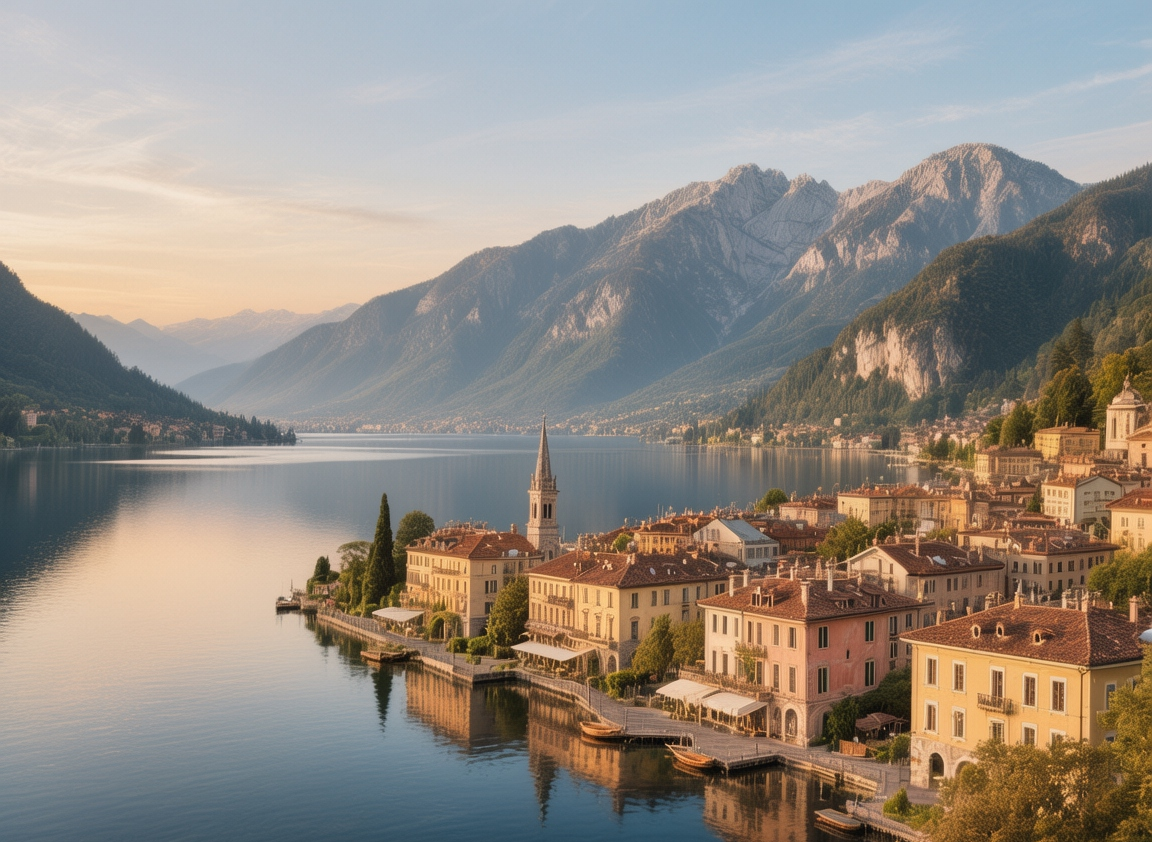
Lake Como: Where Alpine Waters Meet Human Ambition
I board the first ferry from Como at eight in the morning. A one-way ticket to Varenna costs four euros eighty. The air feels cool and damp. Only a handful of people stand on deck. The boat glides past stone villas half-hidden behind cypress and wisteria. Mountains rise steeply from the water, their slopes patterned with terraces built over centuries. By eleven, every ferry will be full. Queues will stretch down the docks. For now, the water stays calm and the view belongs to whoever wakes early enough to see it.
Why Lake Como Matters
This deep, Y-shaped lake sits north of Milan where the Alps meet the plains. Roman nobles built villas here. Medieval merchants traded across its waters. In the 19th century, it became a retreat for writers, artists, and European royalty. Silk manufacturing once dominated the shores — the industry shaped towns like Como and Lecco, built grand homes, and employed thousands. Today the silk mills have mostly gone, but the lake remains a place where people come to step away from busier lives. It balances natural drama with carefully tended beauty — gardens, terraces, and villas laid out to frame the view.
It carries real flaws, though. The western shore road clogs with traffic in summer. Large sections feel overtouristed. Prices have risen sharply. Some villages now consist almost entirely of cafés and boutiques with no visible local life. You will find stretches where every doorway faces outward toward visitors, not inward toward the community that lives here.
The Best Time to Experience Lake Como
Late April through early June works best. Days sit between 15°C and 23°C (59°F–73°F). Gardens bloom fully. Crowds stay manageable. September through mid-October runs equally well. Temperatures hold at 16°C to 24°C (61°F–75°F). The water remains warm enough for swimming and summer visitors have mostly gone home.
July and August push past 30°C (86°F) most afternoons. Humidity makes it feel heavier. Ferry queues stretch long. Accommodation costs rise 30 to 50 percent. Winter stays quiet — 4°C to 11°C (39°F–52°F). Many villas, gardens, and small eateries close completely. Ferry services run less often. The lake looks dramatic in mist, but you will find fewer places open to enjoy it.
Approximate Budget for a 7-Day Trip
Prices are per person in euros. Staying in Como town or smaller villages cuts costs noticeably.
- Accommodation: 55–110 per night. A simple room in Como city or Lecco sits near the lower end. Something central in Varenna or Menaggio runs higher. Lodging in Bellagio carries a heavy premium. Stay one town away and take the short ferry ride. The view from the water looks identical.
- Food & Drink: 30–50 daily. Lunch at a trattoria, dinner with one drink, coffee, and snacks included. Lakeside terrace seating charges double. Walk two streets inward and prices drop to normal levels.
- Transport: 15–30 daily. Ferry day passes cost about 18 euros. Trains from Milan to Como run frequently and cost roughly 5 euros one-way. Water taxis are extremely expensive — 50 euros or more for a short hop. The ferry covers the same route for a fraction of the price.
- Attractions: 35–55 total for the week. Villa del Balbianello entry runs about 16 euros. Villa Carlotta and Villa Melzi cost 12 to 14 euros each. Combined passes offer savings where available.
- Miscellaneous: 15–25 daily. Gelato, extra drinks, small purchases.
Total estimated 7-day cost: 770–1,470 euros per person
Essential Lake Como Experiences
- Take the ferry between Varenna and Bellagio — The short crossing offers the classic perspective. Water reflects mountains and facades. Sit on the open deck. Go early. Skip if you dislike waiting — queues stretch long by midday in summer.
- Visit Villa del Balbianello — Gardens and terraces extend into the lake. The setting appears in films and photos everywhere. Book timed entry well ahead. Walk from Lenno rather than taking a private boat — it costs nothing and the path follows the shore.
- Walk Varenna lakeside — The promenade passes Villa Monastero and Villa Cipressi. Stone steps lead down to small swimming spots. The village feels compact and walkable. Arrive before nine to see it quiet.
- Ride the funicular from Como to Brunate — The cabin climbs steeply above the city. The viewpoint looks across the southern branch toward the mountains. Return tickets cost about six euros fifty. The walk back down takes 45 minutes and costs nothing.
- Explore Villa Carlotta gardens — Azaleas and rhododendrons cover the slopes above Tremezzo. The collection feels quieter than Balbianello. Spring brings the most colour. The villa itself holds art and furniture worth seeing.
- Walk part of the Sentiero del Viandante — The Wayfarer’s Path runs high above the eastern shore. Sections connect Varenna with Bellagio. Views open across the central basin. Wear sturdy shoes — the path is uneven and exposed in places.
Hidden Gems Most Travelers Miss
- Piona Abbey — A stone monastery on a quiet peninsula north of Bellagio. The setting feels peaceful and unhurried. Entry costs very little. Few day-trippers travel this far north.
- Torno — A small stone village east of Como. The waterfront holds no grand villas, just simple houses and a single café. The atmosphere stays genuine and calm.
- Nesso gorge — A waterfall drops through wooded ravine directly into the lake. The swimming spot below feels beautiful. Go early. By midday it fills completely and the path down becomes crowded.
- Bellagio waterfront — Everyone visits the main square and steps. The view is famous, but it feels overrun by mid-morning. You will queue for photos and pay premium prices for everything. Walk five minutes uphill and the atmosphere shifts entirely.
Cultural & Practical Tips
- Book villa tickets months ahead for July and August. Balbianello sells out days in advance. Walk-up visitors are turned away regularly.
- Buy ferry tickets from machines at docks. Queues at ticket counters can stretch 30 minutes or longer. Machines take cards and work instantly.
- Stay on marked paths. The lake drops to great depth very close to shore. Currents shift quickly. Swim only where designated and close to the edge.
- Cover shoulders and knees when entering churches. You will be turned away otherwise. Carry a light scarf.
- Validate train and bus tickets before boarding. Fines start at 50 euros and inspectors appear often.
- Avoid driving the western shore road between 11 AM and 4 PM. It clogs completely. Parking vanishes. Use the ferry instead — it moves faster and costs less.
- Respect quiet after 10 PM. Many apartments and homes sit directly on the waterfront. Sound carries far across open water.
Essential Visitor Information
Location & Access: Lake Como sits roughly 50 km north of Milan. The nearest airports are Milan Malpensa (1 hour 15 minutes by car), Linate (1 hour), and Orio al Serio (1 hour 15 minutes). Trains run from Milan Centrale to Como San Giovanni in under an hour, and to Varenna-Esino in about the same time. Ferries connect all major towns along the shore. A car offers flexibility but proves unnecessary and often inconvenient in summer.
Tickets & Booking: Ferry single tickets range from 2.60 to 7 euros. Day passes cost roughly 18 euros. Villa del Balbianello entry runs 14–16 euros with guided house tours costing extra. Villa Carlotta entry is about 12 euros. Booking ahead is strongly recommended May through September.
Operating Hours: Ferries run year-round with reduced service November through March. Major villas open 10:00 AM to 6:00 PM April through September. Hours shorten to 10:00 AM to 4:00 PM October and March. Most close completely November through February or on weekdays outside peak season.
Visit Duration: Allow at least two full days to see the key towns and one villa without rushing. Four to five days lets you explore quieter villages, walk sections of the Sentiero del Viandante, and catch different light across the lake.
Family Suitability: Children are welcome everywhere. Steep lanes and uneven stone make stroller use difficult in villages like Bellagio and Varenna. Public beaches exist but are often small and pebbly. Restrooms are available at major ferry terminals and town centres.
Timing: Best seasons are late April–June and September–mid-October. Arrive by 8:30 AM to experience popular spots quietly. Late afternoon, after 5:00 PM, brings softer light and thinning crowds.
Highlights: Villa del Balbianello, Varenna lakeside, Bellagio waterfront, Como–Brunate funicular, Villa Carlotta, Sentiero del Viandante.
Nearby & Day Trip: Lugano in Switzerland sits one hour north by train. Lake Garda takes roughly one hour 30 minutes by car. Milan runs one hour south by train — easily doable as a longer day trip but feels rushed. Bergamo with its hilltop medieval city takes one hour 15 minutes and makes a rewarding half-day outing.
Conclusion: Travel with Presence, Not Just Photos
Lake Como did not become beautiful by accident. People shaped it — planted gardens, built terraces, laid stone paths, and chose where to place every villa. You can see it all in two days and take plenty of pictures. You will remember it far longer if you slow down, ride the ferry simply to watch the shores pass, eat where locals eat, and walk a lane that does not lead to a viewpoint. The best moments happen when you stop looking for them. What quiet stretch of shore will you find for yourself?
Comments
Post a Comment