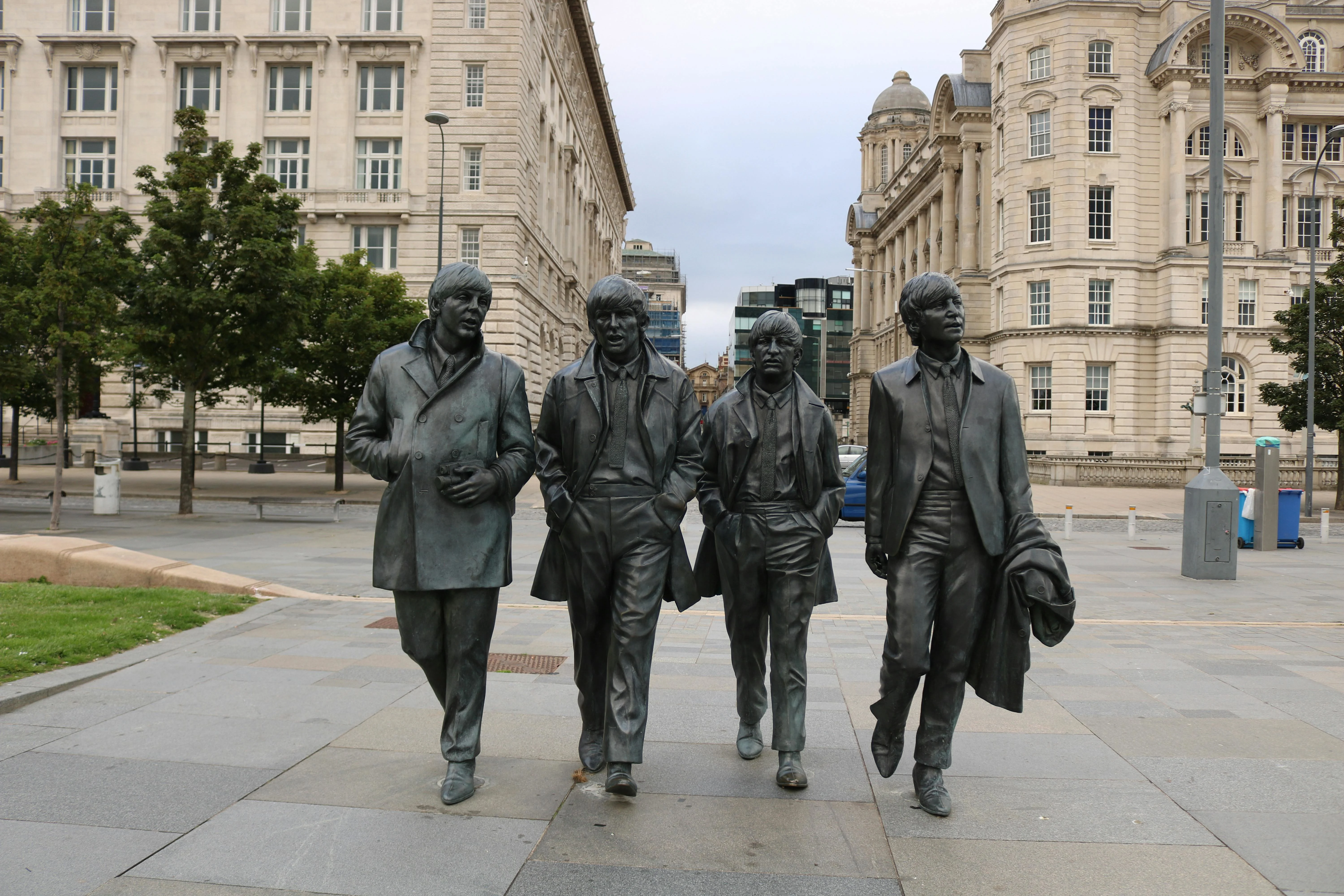
Liverpool Beatles Sites: Where Local Roots Meet Global Sound
I stand outside the famous venue at ten past nine on a bright Tuesday morning in late June. The door is closed, the pavement quiet, no crowds queueing yet. A brass plaque marks the spot where four young musicians first stepped onto a stage together. Across the city, terraced streets climb gentle slopes — red brick houses, narrow lanes, corner shops — the same streets they walked to school, to gigs, to each other’s homes. The music travelled everywhere. The place stayed here, real and unchanged, waiting for you to walk it too.
Why Liverpool Beatles Sites Matter
John, Paul, George, and Ringo grew up here in the 1950s — working-class neighbourhoods, post-war city, limited money but endless music. They learned to play in living rooms, church halls, and cellar clubs, honing their sound night after night on stages across the city and beyond. In the early 1960s they broke through globally, changing popular music forever. Today the sites they lived, played, and wrote in draw visitors from every continent. That fame brings real pressure. Prices rise in once-quiet streets; souvenir shops replace family businesses; and some landmarks feel crowded beyond comfort. The magic is real, but so is the change — the neighbourhoods still belong to people who live here, not just those who visit.
The Best Time to Experience Liverpool Beatles Sites
Late April through May brings fresh green foliage and thinner crowds, temperatures between 7°C and 14°C (45°F to 57°F). Streets stay quiet and days lengthen fast. June and July offer the longest daylight — sky stays light until nearly 9.30 p.m. — and temperatures rise to 10°C and 18°C (50°F to 64°F). This is peak season; popular spots fill by midday and guided tours sell out days ahead. August stays mild at 11°C to 19°C (52°F to 66°F), but rain falls frequently and wind off the Mersey makes it feel cooler. September holds steady at 10°C to 16°C (50°F to 61°F), crowds thin noticeably, and golden light suits the brick terraces beautifully. This is widely considered the best month to visit. October cools to 7°C and 12°C (45°F to 54°F), days shorten fast, and evenings feel crisp and atmospheric. November through February the city quiets. Temperatures sit 3°C to 8°C (37°F to 46°F), venues keep shorter hours, and you may walk past famous doors with almost no one else around. March and April thaw slowly — book ahead; interest picks up fast. Arrive before 10 a.m. any time of year; after that, the day changes completely.
Approximate Budget for a 7-Day Trip
These figures assume a base in central Liverpool, exploring Beatles landmarks and wider city.
- Accommodation: £70–£115 nightly. Budget room or city guesthouse. £490–£805 for 7 nights.
- Food & Drink: £18–£32 daily — breakfasts, casual lunches, pub dinners. £322–£560 total.
- Transport: City walkable; bus day pass £5. Magical Mystery Tour bus £25. £40–£120 total.
- Attractions: The Beatles Story £18. Cavern Club entry varies. Childhood homes combined ticket £25. £45–£90 total.
- Miscellaneous: £10–£18 daily — gifts, drinks, travel. £70–£126 total.
Total estimated 7-day cost: £967 to £1,701
Shops directly beside major landmarks charge premium prices. Walk two streets away — identical items cost less and support local residents.
Essential Liverpool Beatles Sites Experiences
- Visit the childhood homes — Mendips and 20 Forthlin Road preserved exactly as they were. You see where songs were written, lives lived, dreams formed. Skip this without booking; slots vanish weeks ahead and you cannot just turn up.
- Step inside the Cavern Club — The basement venue where they played nearly 300 times. Low ceiling, brick arches, live music most days. Go mid-morning; by afternoon it is crowded and loud with day-trippers.
- Walk the Strawberry Field path — The gate, the gardens, the peaceful wooded space behind. It inspired a song but remains a quiet sanctuary. Pause and listen; imagine the sound that carried across the world.
- See the Eleanor Rigby statue — A simple stone figure sitting alone near the church. She never existed as one person, yet feels universal. Very few visitors stay long enough to feel it.
- Stand on the waterfront — The river, the skyline, the road they left from. The Pier Head offers perspective — this was their home port, their departure point. It feels open and full of possibility.
- Explore the quiet streets — Between landmarks lie ordinary terraces where nothing is marked. They walked these lanes daily. Walking them yourself connects you far deeper than any tour bus.
Hidden Gems Most Travelers Miss
- Forthlin Road quiet stretch — Beyond the gate, the street stays residential. Neighbours go about their day. It feels like a normal place, not a monument. Respect privacy and keep voices low.
- Strawberry Field upper garden — Most visitors stay near the gate. The path winding back through trees stays almost empty. It feels peaceful and private.
- Mathew Street side alley — The famous street fills fast, but a narrow passage leads to a quiet courtyard with original brickwork. This spot is widely shared online now and has become overrated. Go before 10 a.m. if you want it empty.
- Quarry Bank school exterior — The building where they first met and played together. It sits back from the road, unassuming and largely unmarked. Very few fans stop here.
Cultural & Practical Tips
- Book official sites well in advance. National Trust homes and major exhibitions sell out weeks ahead. Walk-in entry is rarely possible.
- Respect residents. People live in these streets. Do not block driveways, loiter on pavements, or photograph windows. This is home, not a film set.
- Walk whenever you can. The bus tours cover ground fast but you feel nothing. Slow walking lets you see the details — doorsteps, fences, street corners — that shaped their world.
- Distinguish original from replica. The Cavern was rebuilt after demolition; the frontage is true but the space differs slightly. Know what you are visiting and enjoy it for what it is.
- Listen to local voices. Guides, bus drivers, and residents often share stories you will not find on signs. Ask gently and listen well.
- Go beyond the Beatles. Liverpool holds art, history, music, and food far beyond one band. Stay extra days and get to know the city itself.
Essential Visitor Information
Location & Access: Sites spread across Liverpool — city centre, south suburbs, waterfront. Three transport options: train to Liverpool Lime Street then walk/bus; bus to suburban stops; guided tour bus covers scattered homes.
Tickets & Booking: Exteriors & streets free. The Beatles Story £18; childhood homes £13 each or combined £25. Book online in advance.
Operating Hours: Public streets accessible always. Venues generally 10 a.m.–6 p.m.; childhood homes run timed slots, fewer in winter.
Visit Duration: Minimum 1 day for city centre highlights. 2 days including suburban homes and quieter spots.
Family Suitability: Fully accessible. Keep children close in crowded lanes. Public toilets at major venues and shopping centres.
Timing: Best season May or September. Early morning before 11 a.m. offers quietest streets and best light.
Highlights: Childhood home interiors, Cavern Club at opening, Strawberry Field gardens, quiet residential streets, waterfront perspective.
Nearby & Day Trip: Albert Dock — 10 minutes; Anfield — 15 minutes; Chester — 45 minutes; Manchester — 1 hour; North Wales — 1 hour 15 minutes.
Conclusion: Travel with Roots, Not Just Fame
These four musicians did not start famous. They started here — in houses, clubs, streets just like yours — learning, practising, dreaming. The music went everywhere. The place stayed human. When you visit, see beyond the legend. What will you take home that truly matters?
Comments
Post a Comment