Lucca: Where Wall Crown Meets Tile Roof
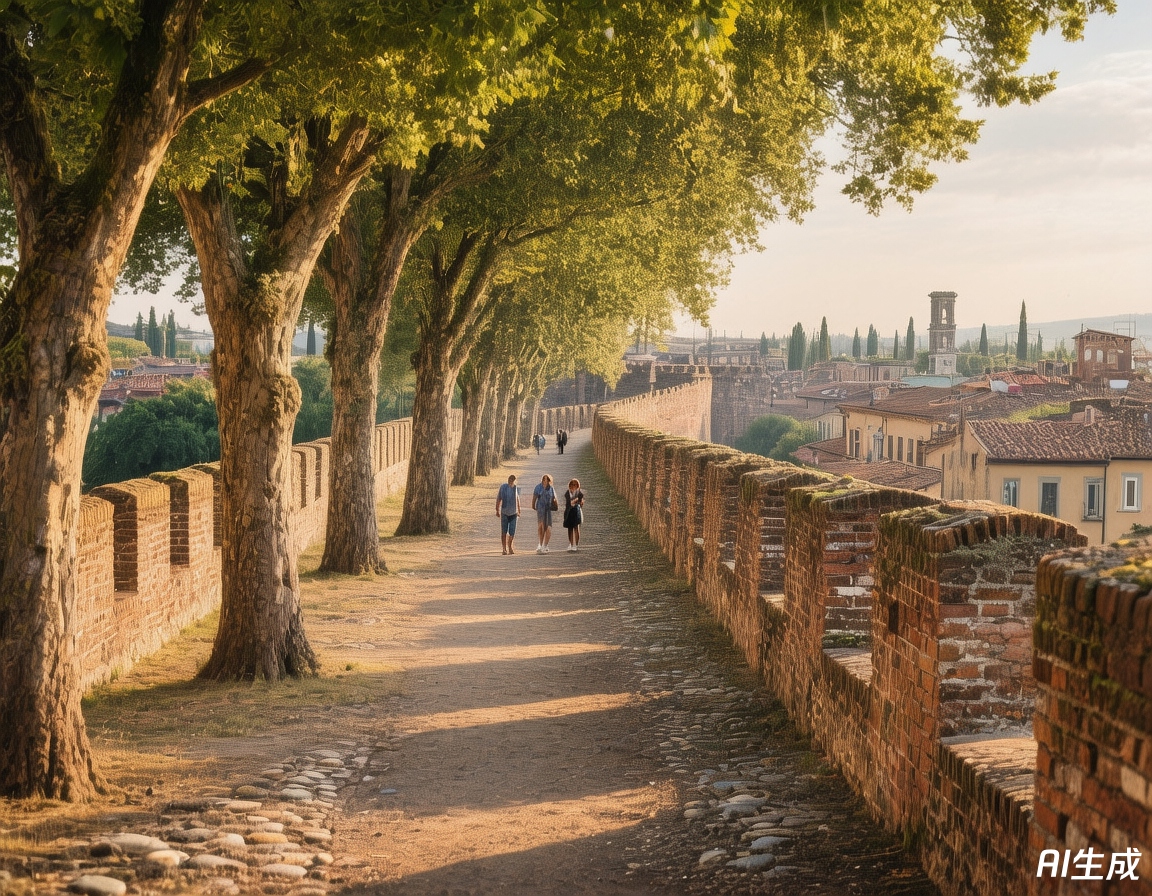
I stand on the rampart at 8:00 on a June morning. The air smells of cypress and cut grass. An espresso costs one euro thirty at a kiosk tucked beneath a shady tree. I look inward — the walls form a perfect unbroken ring, ten metres high and wide enough for carriages to pass, with avenues of linden and pine lining the top, and below, terracotta rooftops cluster close together, church domes and slender towers rising above them. Lucca sits in north-western Tuscany, the only major Italian city whose defensive circuit survived entirely intact. People come to cycle the top. They find something rarer — a barrier that became a balcony, a fortress that turned into a park, and a place that never fell.
Why Lucca Matters
The first stone circuit went up in the 12th century, rebuilt and strengthened repeatedly as rival cities fought across the region. By the 16th century the present massive ramparts took shape — brick and earth, wide earthen banks, bastions at each angle, designed to resist cannon fire. Lucca stood independent for centuries, a small stubborn republic between Florence, Pisa, and Genoa, and the walls were never breached. When railways arrived in the 19th century, other cities tore down their fortifications; Lucca preserved them as a public promenade. Today they remain the heart of the city. That fame brings its own strain. The busiest stretches feel crowded by midday. Heavy traffic presses against the outer gates. Some inner lanes lose residents. The walls protect, but they also frame — and the city within must breathe.
The Best Time to Experience Lucca
Late April through June brings fresh leaves, blooming wisteria, and thin crowds. Temperatures sit between 11°C and 24°C (52°F–75°F). The ramparts feel cool and shaded even at midday. July and August warm to 19°C and 31°C (66°F–88°F). Sun beats down on exposed sections and cyclists fill the upper path. September offers golden light and settled weather — 15°C to 26°C (59°F–79°F). The air stays mild and visitors thin out. Early October remains pleasant — 12°C to 21°C (54°F–70°F) — but evenings cool fast. Winter holds quiet, crisp days: 5°C to 12°C (41°F–54°F). The walls are nearly empty and beautifully still. Arrive before 9:30 AM any time of year — that is when the ring feels most yours and the light falls softest on the rooftops.
Approximate Budget for a 7-Day Trip
Prices below are per person, in euros, based on staying inside Lucca.
- Accommodation: 7 nights inside the walls — €85–195 per night. Total: €595–1,365. Staying just outside costs 30–40% less; walking in takes 5–10 minutes longer.
- Food & Drink: Breakfast, two meals daily — €28–55 daily. Total: €196–385. Restaurants right beside main gates charge premium prices; walk two lanes inward for tortelli lucchesi, roasted meat, and local white wine at fair rates.
- Transport & Tickets: Train from Pisa — €5–10 return; train from Florence — €10–18 return; bicycle rental — €3–8 per hour. The walls themselves are free to access.
- Activities: Cathedral, museums, countryside day trips — €25–55.
- Miscellaneous: Water, hat, comfortable shoes — €12–22.
Total estimated 7-day cost: €831–1,849
"Private guided wall tour" packages are often overpriced. The full circuit is clearly signed and entirely free. Rent a bike, set your own pace, and you will see everything without paying extra.
Essential Lucca Experiences
- Cycle the Full Circuit — Ride the 4.2-kilometre ring. Bastions, gateways, changing views inward and outward, and a steady gentle incline that never feels steep. It takes about an hour without stops — longer if you pause. It is the defining experience, entirely free and open to everyone. Skip if you have limited mobility; walking is equally rewarding and benches line the whole route.
- Cathedral and Square — Step inside the Romanesque cathedral. Simple striped stone, carved facade, and calm nave. The square outside stays quiet early — a masterpiece of understated medieval grace.
- Piazza dell’Anfiteatro — Walk into the oval square built atop a Roman amphitheatre. Houses curve around the ancient outline, doors and windows following the old curve. It feels intimate, continuous, and layered — ancient shape still shaping daily life.
- Torre Guinigi Climb — Ascend the tower with oak trees growing on the roof. The view stretches across red tiles to the Apuan Alps. It puts the walls in perfect perspective — a pale wide ring enclosing thousands of roofs.
- Quiet Inner Lane Stroll — Wander the residential streets away from main routes. Laundry hangs, cats nap, and sunlight filters through narrow gaps. This is the real Lucca — not a backdrop, just home.
- Tuscan Lunch — Eat tortelli lucchesi with meat sauce or roasted lamb. Simple, rich, hearty food suited to this northern edge of Tuscany. It tastes of the surrounding hills — honest and grounding.
Hidden Gems Most Travelers Miss
- The northern stretch of the ramparts runs shadier and quieter. Fewer cyclists pass, and benches face the Apuan Alps. Sit here and you will watch light move across the peaks without crowds.
- The small botanical garden inside the eastern gate has ancient trees, quiet paths, and a stone fountain. It sits off the main loop — peaceful and almost overlooked.
- The narrow lane beside the amphitheatre square leads to a tiny chapel and shaded courtyard. Most visitors turn back at the square — walk ten steps further and you find stillness.
- The "Lucca VIP Exclusive Rampart & Private Garden Tour" is overpriced. Every bastion, view, and quiet path is open to all. Arrive early, cycle slowly, and turn down one unmarked lane — that is how you truly experience the city.
Cultural & Practical Tips
- Arrive before 9:30 AM. The best light, quietest ramparts, and genuine atmosphere happen early. After 11:00 AM the dynamic shifts noticeably.
- Rent a basic bike, not a fancy one. Simple city bikes work perfectly here — you do not need premium gear to enjoy the circuit.
- Keep to the right on the ramparts. Families, elderly walkers, and slow cyclists share the path. Pass gently and never cut across.
- Do not bring large suitcases inside. Cobblestones are uneven and narrow lanes make rolling bags awkward. Stay just outside and walk in light.
- Respect quiet courtyards. People live here — keep voices down, especially in the evenings. Sound echoes between close stone walls.
- Check gate openings. Some smaller pedestrian gates close late at night — confirm your exit if you plan to stay out after dark.
- Walk at least one stretch. Cycling is wonderful, but walking lets you pause, touch the brickwork, and notice small details — carvings, old plaques, and moss in the stone.
Essential Visitor Information
Location & Access: Lucca, Tuscany, Italy. Coordinates roughly 43.84° N, 10.50° E. Three ways to arrive: train from Pisa — 25 mins; train from Florence — 1 hour 20 mins; drive from Florence — 1 hour 30 mins.
Tickets & Booking: Ramparts free. Cathedral — donation; museums/towers — €4–10. Bike rental — €3–8 per hour. No booking needed for ramparts; reserve special exhibitions ahead.
Operating Hours: Ramparts always open. Attractions roughly 9:30 AM to 6:00 PM; some close one day weekly — typically Monday.
Visit Duration: Minimum 1 full day. Recommended 2–3 days to cycle the full circuit, explore inner lanes, and take day trips without rushing.
Family Suitability: Excellent. Flat ramparts suit strollers and young cyclists; inner lanes are quiet and safe. Benches and shade make long stops easy.
Timing: Best seasons are late April–June and September. Best time of day is before 9:30 AM or late afternoon.
Highlights: Full rampart circuit at dawn, cathedral, Anfiteatro square, Guinigi tower view, northern bastion, quiet residential lanes.
Nearby & Day Trip: Pisa — 25 mins. Florence — 1 hour 20 mins. Montecarlo wine region — 20 mins. Versilia coast — 30 mins.
Conclusion: Travel with Slow Wheels, Not Just Fast Steps
Lucca gives you walls that never fell — not because they were unbreakable, but because they were preserved. You can cycle the circuit and leave. Or you can walk slowly, keep to the right, respect the people who live inside, and remember — these walls were built to protect a community, not to entertain visitors. Honouring that quiet, steady purpose is the finest gift you can give. What is the one gentle, enduring place you would visit promising to treat it like home?
Comments
Post a Comment