Lynton & Lynmouth Cliff Railway: Where Steep Incline Meets North Devon Coast
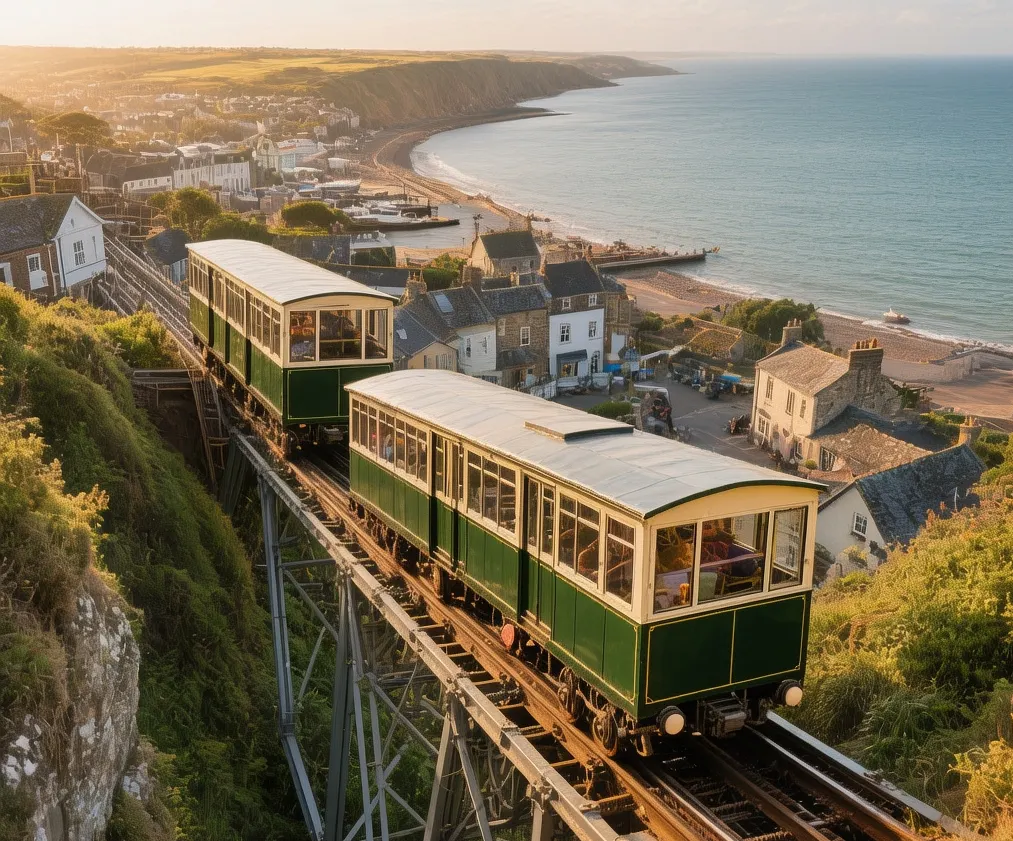
I stand at the lower station at ten past nine on a bright Tuesday morning in early June. The wooden car waits polished and ready, its varnished panels glowing in sunlight. Two steel cables stretch taut up the sheer green slope, vanishing into trees. The sea glints blue beyond the harbour wall. A bell rings soft. The car glides upward slow and steady, no engine noise, just the quiet hum of water and gravity. The view opens wider with every foot — rooftops, harbour, waves stretching to the horizon. It feels like floating.
Why Lynton & Lynmouth Cliff Railway Matters
Built in 1890, this is the world’s oldest fully water-powered funicular railway — a marvel of Victorian engineering that still operates exactly as designed. Water fills a tank beneath the top car until it outweighs the lower one; gravity pulls it down, lifting the other car up. When the top car reaches the bottom, its water empties into the river and the cycle reverses. For over 130 years it has linked Lynton, perched high on the cliff, with Lynmouth down by the sea — no road connects them easily. It remains entirely independent, owned and run by a local trust. That survival brings real strain. Parts are no longer made; skilled mechanics keep vintage machinery running; and heavy visitor traffic wears tracks and stations faster than funds can replace. It works because people care — not because it is easy.
The Best Time to Experience Lynton & Lynmouth Cliff Railway
Late April through May brings fresh foliage and thinner crowds, temperatures between 8°C and 15°C (46°F to 59°F). The gorge turns vivid green and days lengthen fast. June and July offer the longest daylight — sky stays light until nearly 9 p.m. — and temperatures rise to 11°C and 19°C (52°F to 66°F). This is peak season; queues form by midday and cars fill quickly. August stays mild at 12°C to 20°C (54°F to 68°F), but rain falls frequently and the coastal path can turn slippery. September holds steady at 11°C to 17°C (52°F to 63°F), crowds thin noticeably, and golden light suits the wooded gorge beautifully. This is widely considered the best month to visit. October cools to 8°C and 13°C (46°F to 55°F), days shorten fast, and autumn leaves flame bright down the slope. November through March the railway runs reduced hours — temperatures sit 5°C to 9°C (41°F to 48°F) — and you may ride with almost no one else. Check opening times before travelling; winter closure periods vary. Arrive before 10 a.m. any time of year; after that, queues build fast.
Approximate Budget for a 7-Day Trip
These figures assume a base in Lynton or Lynmouth, exploring the railway, coast, and Exmoor.
- Accommodation: £85–£140 nightly. Guesthouse or cottage within walking distance. £595–£980 for 7 nights.
- Food & Drink: £22–£36 daily — breakfasts, harbour lunches, pub dinners. £350–£630 total.
- Transport: Local bus £4 single. Railway return £4.50. Car recommended for Exmoor — £45–£70 daily. £40–£130 total.
- Attractions: Railway return £4.50. Valley of Rocks free. Watersmeet free. Exmoor walks free. £15–£40 total.
- Miscellaneous: £12–£20 daily — gifts, drinks, coastal supplies. £84–£140 total.
Total estimated 7-day cost: £1,084 to £1,920
Cafes directly beside the lower station charge premium prices. Walk two streets inland — same fresh food costs less and queues are shorter.
Essential Lynton & Lynmouth Cliff Railway Experiences
- Ride up on the first car — Before day-trippers arrive, the ascent feels calm and unhurried. Trees brush close, birdsong fills the air, and the sea unfurls below. Skip this after 12 p.m. in summer; queues stretch long and cars feel crowded.
- Walk down the zigzag path — A steep footpath winds through woodland beside the railway. You see the machinery close up, watch cars pass, and pause at viewpoints most riders never notice. Wear sturdy shoes; the ground is uneven and damp.
- Stand at the top station terrace — The view stretches across rooftops, harbour, and open sea. Benches sit quiet beneath trees. It feels like a balcony above the coast. Stay past midday; most people ride straight back down.
- Visit the engine room display — Tucked beside the upper tracks, simple panels explain how water and gravity move everything. No electricity, no motors — just weight and balance. It feels elegant and surprisingly simple.
- Ride down at sunset — Golden light floods the carriage and the sea glows deep orange. The descent feels slow and peaceful. Arrive 30 minutes early; the last few trips fill fast.
- Walk between villages by coast path — A rugged cliffside trail connects Lynmouth and Lynton. It takes 45 minutes, offers constant sea views, and shows why the railway was so desperately needed. Go early; the path narrows and becomes busy later.
Hidden Gems Most Travelers Miss
- Upper station woodland — Behind the ticket office, a short trail leads into trees with quiet benches overlooking the line. Almost no one walks here. You can sit and watch cars glide up and down undisturbed.
- River path below the station — Beside the lower car park, a paved walk follows the river inland. The railway towers loom above through foliage. It feels private and wild.
- Valley viewpoint above Lynton — A five-minute climb from the top station leads to a grassy ledge. The railway, both villages, and the sea all fit in one frame. This spot is widely shared online now and has become overrated. Go before 9.30 a.m. if you want it empty.
- Harbour side evening light — Most visitors leave by late afternoon. Stand on the quay as the sun dips low; the railway cars pass gold and red against the green gorge. It feels entirely your own.
Cultural & Practical Tips
- Buy a return ticket. Single fares are almost the same price. It saves queueing twice and costs barely more.
- Do not rely on the only connection. The railway occasionally closes for maintenance or river flooding. Check the notice board before planning your day.
- Wear non-slip shoes. Carriage floors and station platforms stay damp and polished smooth. Trainers or walking shoes are safest.
- Respect residential quiet. Houses sit close to both stations. Keep voices low, especially early morning and evening. This is their daily backdrop.
- Leave the car behind. Parking in Lynmouth is limited and expensive. Ride the bus or walk down from Lynton — it is cheaper and less stressful.
- Visit mid-week. Saturdays and Sundays feel crowded and hurried. Tuesday or Wednesday feel like a different place entirely.
Essential Visitor Information
Location & Access: Lynton & Lynmouth Cliff Railway, Lynmouth EX35 6EQ — North Devon coast. Three transport options: train to Barnstaple then bus — 1 hour; bus from Ilfracombe — 45 minutes; car via A39 — narrow scenic road, allow extra time.
Tickets & Booking: Return £4.50 adult. No advance booking — pay on arrival. Queues form in peak season.
Operating Hours: Generally 10 a.m.–6 p.m. spring/summer; shorter hours winter; closed some January–February weekdays.
Visit Duration: Minimum 15 minutes round trip. Half day including both villages, walks, and viewpoints.
Family Suitability: Fully accessible. Short level steps into carriages. Keep children close to platform edges. Public toilets at both stations.
Timing: Best season May or September. First morning trips offer quietest rides and best light.
Highlights: First ascent, sunset descent, woodland path perspective, upper terrace view, coastal trail between villages.
Nearby & Day Trip: Valley of Rocks — 10 minutes; Watersmeet — 15 minutes; Exmoor National Park — 20 minutes; Barnstaple — 45 minutes; Ilfracombe — 50 minutes.
Conclusion: Travel with Balance, Not Just Speed
This railway runs on water and gravity — no fuel, no emissions, just nature doing the work. It has carried people up and down for over a century, gentle and reliable. When you ride, slow down. Let the slope unfold. What simple, timeless thing might you build that serves people for generations?
Comments
Post a Comment