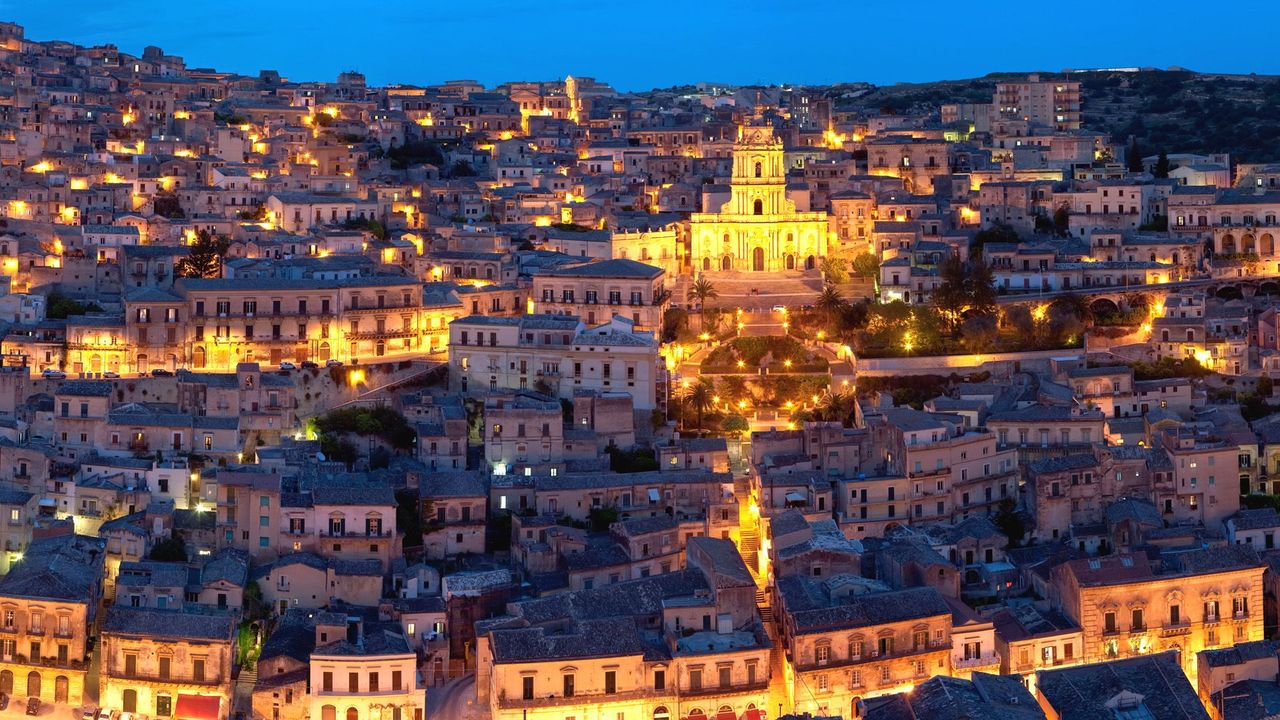
Modica: Where Hillside Baroque Meets Ancient Chocolate
I stand at the upper belvedere at 8:00 on a June morning. The limestone glows warm in early light. An espresso costs one euro thirty at the family-run bar just below the viewpoint. I look down — the town tumbles down a steep valley, church domes rising above clustered rooftops, lanes winding sharply between golden stone buildings. Modica sits in south-eastern Sicily, rebuilt after the 1693 earthquake along deep ravines that define its shape. People come for the architecture. They find a place where rugged terrain, ancient faith, and one extraordinary edible tradition have woven together across centuries.
Why Modica Matters
Before the earthquake, Modica was one of Sicily’s most powerful noble cities — a capital with its own court, laws, and territories. The disaster destroyed almost everything, yet the people rebuilt not on flat ground but right back into the steep ravines. They raised churches and palaces that climb impossibly sheer slopes, creating a landscape unlike anywhere else in the Val di Noto. Alongside this rebirth survives a unique culinary heritage — chocolate made by a method brought by Aztec slaves in the 16th century, unchanged to this day. That fame brings real pressure. The narrow medieval lanes cannot easily handle crowds. Steep paths become congested. Some traditional workshops have become souvenir shops. The town protects its heritage while welcoming visitors — and that balance is delicate.
The Best Time to Experience Modica
Late April through June brings fresh green valleys, mild days, and thin crowds. Temperatures sit between 14°C and 25°C (57°F–77°F). Climbing the steep streets feels comfortable and the light stays soft. July and August warm to 22°C and 33°C (72°F–91°F). The stone absorbs heat and uphill walks feel demanding by midday. September offers golden light and thinner crowds — 18°C to 28°C (64°F–82°F). The air stays clear and the pace softens. October remains mild — 15°C to 24°C (59°F–75°F) — and the valley turns amber. Winter holds cool, quiet days: 9°C to 17°C (48°F–63°F). Some smaller shops close. Arrive before 9:00 AM any time of year to beat the heat and the crowds.
Approximate Budget for a 7-Day Trip
Prices below are per person, in euros, based on staying in Modica.
- Accommodation: 7 nights in a guesthouse or restored townhouse — €65–130 per night. Total: €455–910. Staying in upper Modica costs 25–35% less than the historic lower valley; walking down takes 10 minutes longer.
- Food & Drink: Breakfast, two meals daily, chocolate tastings — €30–52 daily. Total: €210–364. Restaurants directly on Corso Umberto charge premium prices; walk one lane back for home-made pasta and local lamb at fairer rates.
- Transport & Tickets: Church entry €3–6 each; local chocolate tasting €4–8; car rental €30–50 daily. Parking inside the historic centre is extremely limited — park at the upper or lower edges and walk in.
- Activities: Guided chocolate workshop, nearby Ragusa and Scicli, coastal day trip — €25–60.
- Miscellaneous: Water, sturdy shoes, chocolate to take home — €15–25.
Total estimated 7-day cost: €705–1,394
Rooms with direct valley views carry a very large premium. Similar accommodation tucked away in residential streets costs 40–50% less and the best viewpoints are still a short walk away. The "Modica Exclusive Private Chocolate & Palace Tour" is overpriced; every traditional chocolate shop is open to walk-in visitors and self-guided exploration lets you taste and compare freely.
Essential Modica Experiences
- San Giorgio Church & Steps — Climb the broad, steep staircase to the cathedral. The view opens wider with every step — domes, rooftops, and green ravines stretching below. The facade stands tall and bright at the top. Skip if you have knee or heart conditions; the ascent is long and fully exposed.
- Traditional Chocolate Tasting — Sample chocolate made the ancient way. It is grainy, less sweet, and holds pure cocoa flavour — no conching, no extra oils, just the recipe passed down through generations. It tastes unlike anything you have tried.
- Valley Floor to Upper Town Walk — Wind upward through the lanes. Old stone doorways, quiet courtyards, and small family workshops appear along the way. You see how the town clings to the slope — houses built into rock, one above another.
- San Pietro Sunset — Stand before the twin-towered church as the sun dips low. The facade glows deep gold and the valley fills with warm light. Most visitors have left — the scene feels entirely yours.
- Belvedere Evening Calm — Sit at the viewpoint after dark. The town lights climb the hillside like scattered stars. It is quiet, peaceful, and unforgettable. No ticket needed — just a moment of stillness.
- Local Dinner — Eat in a simple room off the main corso. Order pasta with ricotta and pistachio, slow-cooked lamb, and a small square of dark chocolate for dessert. The flavours are honest, strong, and rooted in this land.
Hidden Gems Most Travelers Miss
- The steep lane running behind San Giorgio leads to quiet residential terraces. The view back across the church and valley is magnificent — and almost entirely free of crowds.
- The smaller chocolate workshops in upper Modica make their product in tiny batches. They do not have big signs or displays, but the flavour is deeper and the price is fairer.
- The old water channel path follows the base of the valley past stone arches and hidden gardens. It stays cool even in summer and feels like a secret world.
- The "Modica Premium Handmade Chocolate Gift Box" sold at tourist kiosks is overpriced. Buy directly from the workshop counters — it is fresher, cheaper, and supports the makers directly.
Cultural & Practical Tips
- Wear proper walking shoes. Modica is built on steep slopes and worn stone. Cobblestones, uneven steps, and long climbs are everywhere. Thin soles and heels will hurt by midday.
- Arrive before 9:00 AM. The best light, quietest lanes, and freshest chocolate are found early. After 11:00 AM the town fills and the atmosphere shifts.
- Respect residents. People live and work in these lanes. Keep voices low, do not block doorways, and step aside for those carrying shopping or going about their day.
- Chocolate does not travel well in heat. If visiting in summer, carry it in an insulated bag and keep it out of direct sun. It melts easily — plan purchases for the end of your trip.
- Do not rush the climb. Stop often, rest in shade, and enjoy the view. Modica rewards slow walking — not hurried rushing between sights.
- Check church opening times. Many close between 1:00 PM and 4:00 PM. Plan your route to match — or simply wander the lanes during those hours.
- Book accommodation 2–3 months ahead in April–June and September. Modica is compact and rooms sell out fast.
Essential Visitor Information
Location & Access: Modica, Province of Ragusa, South-Eastern Sicily, Italy. Coordinates roughly 36.8500° N, 14.7700° E. Three ways to arrive: drive from Ragusa — 20 mins; drive from Scicli — 20 mins; drive from Noto — 30 mins.
Tickets & Booking: Streets and viewpoints free. San Giorgio and San Pietro €3–6 each. Chocolate tasting €4–8. No booking needed for individuals; reserve accommodation ahead.
Operating Hours: Town always accessible. Churches roughly 9:30 AM to 12:30 PM and 4:00 PM to 7:00 PM. Some close one day weekly — typically Monday.
Visit Duration: Minimum 1 full day. Recommended 2 days to explore upper and lower town, taste chocolate, and walk at leisure without rushing steep slopes.
Family Suitability: Good for older children. Steep, uneven terrain makes strollers difficult — carriers are better. Chocolate tasting keeps younger ones happy.
Timing: Best seasons are late April to June and September. Best time of day is before 9:00 AM or late afternoon.
Highlights: San Giorgio steps, ancient chocolate, valley climb, San Pietro sunset, belvedere night view, local home cooking.
Nearby & Day Trip: Ragusa Ibla — 20 mins. Scicli — 20 mins. Noto — 30 mins. Sampieri beach — 25 mins.
Conclusion: Travel with Patience, Not Just Speed
Modica gives you beauty that had to be built slowly, on difficult ground, by people who refused to leave. You can climb the steps, buy chocolate, and leave. Or you can walk slowly, respect the slopes, taste simply, and remember — this town was not designed for your visit. It grew from struggle, survival, and stubborn pride. Honouring that is the best gift you can give. What is the one place you would visit promising to take your time?
Comments
Post a Comment