Cattedrale di Monreale: Where Golden Mosaic Meets Mountain Slope
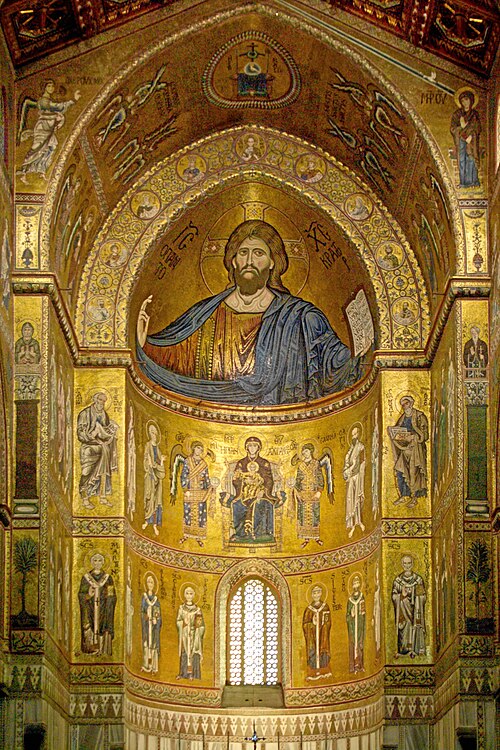
I stand on the broad stone steps at 8:00 on a June morning. The sun strikes the golden mosaics above the main portal, and the light reflects outward across the valley. An espresso costs one euro thirty at the small family bar just below the entrance terrace. I look upward — the cathedral rises solid and broad, its stone walls thick and warm, the apse glowing with glass and gold that has shone here for eight and a half centuries. Monreale sits on a green slope above Palermo, built by Norman kings who wove together Western, Byzantine, and Arab traditions into something entirely new. People come for the gold. They find a place where faith, power, and art merged to create one of the most extraordinary buildings in Europe.
Why Monreale Cathedral Matters
Construction began around 1174 under King William II, at a time when Sicily stood at the crossroads of civilizations. Norman rulers brought political structure from northern Europe; Byzantine craftsmen laid the glass and gold mosaics; Arab engineers designed the arches, ceilings, and water systems. The result is not one style but a seamless meeting of three worlds — a visual language of unity that feels as bold now as it did then. The interior holds over six thousand square metres of mosaics, covering every main wall and vault. They tell stories from the Bible in glowing gold and vivid colour, created for a population that could not read. That universal appeal brings real pressure. The nave fills fast in summer. Footfall wears the ancient stone floors. Some areas see crowd congestion that limits quiet reflection. The cathedral welcomes visitors while remaining an active place of worship — and that balance is delicate.
The Best Time to Experience Monreale
Late April through June brings fresh green hills, clear light, and thin crowds. Temperatures sit between 14°C and 25°C (57°F–77°F). The golden mosaics catch the morning sun most beautifully then. July and August warm to 22°C and 32°C (72°F–90°F). The valley below holds heat and queues form early. September offers soft amber light — 18°C to 28°C (64°F–82°F). The pace slows and the hills stay green. October remains mild — 15°C to 24°C (59°F–75°F) — but light fades faster in the afternoons. Winter holds cool, quiet days: 9°C to 17°C (48°F–63°F). You may have the nave nearly to yourself. Arrive before 9:00 AM any time of year — the light hits the apse directly and the atmosphere is most peaceful.
Approximate Budget for a 7-Day Trip
Prices below are per person, in euros, based on staying in Palermo or nearby Monreale.
- Accommodation: 7 nights in Palermo — €65–135 per night. Total: €455–945. Staying in Monreale itself costs 25–35% more; the cathedral is on your doorstep but dining options are fewer.
- Food & Drink: Breakfast, two meals daily — €30–55 daily. Total: €210–385. Restaurants directly opposite the cathedral charge premium prices; walk two lanes back for home-made pasta, grilled meat, and local wine at fairer rates.
- Transport & Tickets: Combined cathedral, cloisters, and terrace entry €12–18; local bus from Palermo €1.50 per ride; shared shuttle €4–6 one way. Parking near the cathedral is very limited and expensive — use public transport.
- Activities: Palermo historic centre, nearby Palatine Chapel, Monreale hill walks — €30–65.
- Miscellaneous: Modest clothing for entry, water, hat — €10–20.
Total estimated 7-day cost: €705–1,435
Guided tours with "special access" are often overpriced. Every mosaic and cloister is fully visible with standard entry. You will see more by wandering slowly at your own pace than by following a group.
Essential Monreale Experiences
- Nave & Apse at Morning Light — Stand in the centre aisle before 9:30 AM. Sunlight streams through the high windows and gilds the gold backgrounds. Christ Pantocrator looks down from the half-dome above the altar — immense, calm, unmistakable. Skip if you arrive late; crowds block the view and the light shifts away.
- Walk the Mosaic Story — Follow the panels along the walls. They run from creation through prophets, kings, and the life of Christ, arranged in bands meant to be read from below. It is a complete visual library, laid out across centuries. Move slowly and look upward.
- Cloister Columns & Gardens — Step into the quiet courtyard beside the cathedral. Two hundred and twenty-eight slender columns line the walkways, each carved differently — some with patterns, some with figures, some with smooth stone. The central fountain still flows. It feels like a world apart.
- Terrace View Over Valley — Climb to the upper terrace. The cathedral sits high above the Conca d'Oro — the Golden Shell — the fertile plain stretching down to Palermo and the sea. The scale of the foundation becomes clear from up here.
- Simple Meal in Town — Eat in a quiet trattoria away from the main approach. Order pasta with local vegetables or slow-cooked lamb. The food is plain, honest, and affordable — a good counterpoint to the grandeur nearby.
- Respect the Space — Sit quietly in a side chapel or empty aisle. The cathedral is not only a monument. It is a living church. To pause and let the silence settle is as meaningful as looking at the art.
Hidden Gems Most Travelers Miss
- The smaller side chapels hold quieter, softer mosaics and old paintings. They sit just off the main nave but almost no one stops. The light is gentler there.
- The upper lane leading toward the mountain has old stone walls, orange groves, and wide views back across the cathedral and valley. It takes ten minutes to walk up and stays peaceful all day.
- The fountain square below the western entrance is where locals gather in the evening. No tour groups come here. It is the best place to sit and let the day’s impressions settle.
- The "Monreale Exclusive VIP Tour & Private Viewing" is overpriced. Every part of the site is open to standard ticket holders. Arrive early and stay late — that is the true secret to experiencing it well.
Cultural & Practical Tips
- Dress modestly. Shoulders and knees must be covered. Carry a light scarf or shawl — you will not be admitted otherwise. This is strictly enforced.
- Arrive before 9:00 AM. The light is best, the atmosphere is reverent, and queues do not exist. After 10:30 AM the dynamic shifts noticeably.
- Do not touch or lean on the mosaic walls. The glass and gold are fragile. Even light contact damages the surface that has survived eight centuries.
- Check mass times. Services are held regularly — during those times certain areas close to visitors. Plan accordingly or join respectfully.
- Take the bus or shared shuttle. Driving up means searching for scarce parking and navigating narrow lanes. Public transport is straightforward and drops you close to the entrance.
- Step off the main approach. The best food, calmest streets, and clearest views are found by walking just one or two lanes away from the cathedral front.
- Book tickets 1–2 days ahead in July and August. Morning slots sell out fastest. Same-day entry may involve long waits.
Essential Visitor Information
Location & Access: Cattedrale di Monreale, Piazza del Duomo, Monreale, Sicily, Italy. Coordinates roughly 38.0800° N, 13.2900° E. Three ways to arrive: bus from Palermo — 30 mins; shared shuttle from central Palermo — 20 mins; drive from Palermo — 25 mins via scenic winding road.
Tickets & Booking: Cathedral only — free during mass, donation suggested; combined cathedral, cloisters, terrace — €12–18. Booking recommended in summer.
Operating Hours: Cathedral roughly 8:30 AM to 12:30 PM and 3:00 PM to 7:00 PM. Cloisters and terrace open 9:00 AM to 7:00 PM; shorter hours off-season. Some areas close for services.
Visit Duration: Minimum 2 hours. Recommended 3–4 hours to explore nave, cloisters, terrace, and surrounding lanes without rushing.
Family Suitability: Good overall. Wide open spaces inside. Stone floors are smooth but hard — bring small cushions if sitting long. Strollers work but crowds make manoeuvring difficult in peak season.
Timing: Best seasons are late April to June and September. Best time of day is 8:30 AM to 10:00 AM.
Highlights: Morning apse light, biblical mosaic cycle, carved cloister columns, valley terrace view, quiet side chapels, evening fountain square.
Nearby & Day Trip: Palermo — 30 mins by bus. Palatine Chapel — 30 mins. Bagheria — 40 mins. Segesta — 1 hour.
Conclusion: Travel with Wonder, Not Just Glance
Monreale gives you gold that was meant to shine for centuries. You can walk the length, take photos, and leave. Or you can arrive early, dress respectfully, look slowly, and remember — this building was created to tell stories to everyone, not just visitors. Honouring that shared heritage is the finest gift you can give. What is the one great sacred place you would visit promising to look slowly and keep it quiet?
Comments
Post a Comment