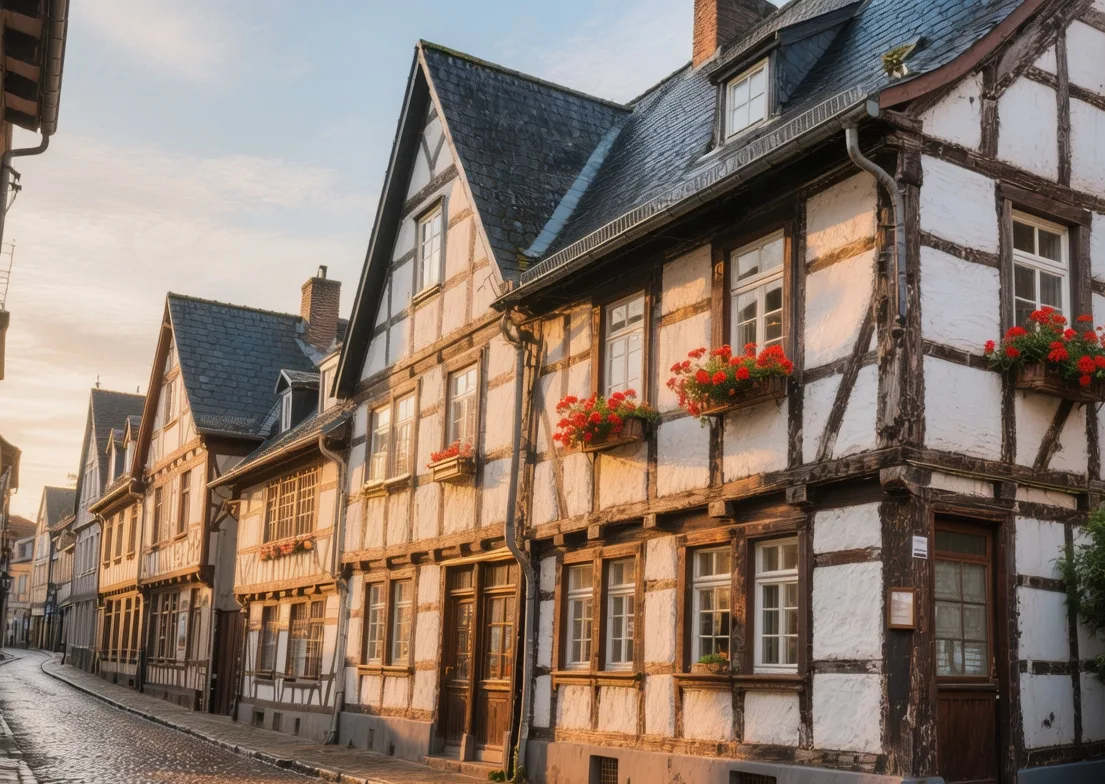
Monschau: Where Timbered Tradition Meets Quiet Valley Life
I walked down the cobbled slope at ten past eleven on a Saturday morning. The Rur River rushed clear and fast beside the path. I paid nothing to enter the old town itself. Timbered houses leaned close above me, their beams dark and weathered. I expected a preserved museum piece. What I found feels lived-in and genuine. Not every wall has been sanded smooth. Some doorways remain narrow and worn. That is where the real character lives.
Why Monschau Matters
This town sits deep in the Eifel mountains, tucked into a narrow valley where the Rur curves through. For centuries it lay on important trade routes between the Rhineland and Belgium. Cloth making brought wealth in the 17th and 18th centuries, and the prosperity shows in the carefully built homes lining every lane. Because roads were difficult to build, modern development passed Monschau by. Today it stands as one of the best-preserved historic towns in Germany, with more than 300 listed buildings. One honest criticism: the valley shape means steep slopes everywhere. Steps and cobblestones make movement slow. Visitors with limited mobility will find many streets difficult or impossible. On weekends in summer the compact centre fills quickly. Finding space to walk or sit can take patience.
The Best Time to Experience Monschau
May through September brings 10°C to 20°C / 50°F to 68°F. The riverbank stays pleasant and trees line the slopes green. Weekday mornings before 11:00 offer quietest streets. July and August draw largest crowds; arrive early. September holds 8°C to 16°C / 46°F to 61°F. Forests turn gold and the river runs clear. October through March brings 0°C to 6°C / 32°F to 43°F. Winter brings snow to the surrounding hills and the town feels quiet and still. The Christmas market is famous but extremely crowded. Tuesdays and Wednesdays stay calm year-round.
Approximate Budget for a 7-Day Trip
Costs below are per person based on staying in Monschau or nearby villages.
- Accommodation: 448 euros — Clean room in a guesthouse or historic inn. Hotels right on the main market square charge 195 euros or more per night and feel overpriced; stay one street back or just outside the centre for better value and quieter evenings.
- Food: 266 euros — Hearty regional dishes, bakery lunches, and evening meals in traditional dining rooms.
- Transport: 91 euros — Regional bus and train pass covering Eifel area. Local buses connect Monschau to nearby towns and hiking trailheads.
- Attractions: 49 euros — Castle entry, museum visits, and guided walks. The old town streets and river paths cost nothing.
- Miscellaneous: 56 euros — Drinks, small purchases, and parking fees.
Total: 910 euros. Branded souvenirs in the most central shops carry high markup. Buy local honey, mustard, or handcrafted items from smaller workshops instead. They cost less and come directly from the area.
Essential Monschau Experiences
- Market Square and Central Lanes — Cobbled streets radiate from the square. Half-timbered houses stand close together, their facades painted soft colours. Walk slowly; notice how each house differs in detail and age. Skip if you dislike crowds; this area fills fast on summer afternoons.
- Monschau Castle — Perched above the town, the 13th-century fortress offers broad views across rooftops and forested hills. The museum inside explains local history and the castle's role in border wars. The climb up is steep; allow extra time and wear sturdy shoes.
- Riverbank Promenade — A level path follows the Rur through the whole town. Water rushes beside old mills and weirs. It stays cooler here in summer and feels peaceful even when the streets are busy. This is the best route for slower walking.
- Red House Museum — A wealthy cloth merchant's home preserved from the 18th century. Furniture, paintings, and everyday objects show how families lived and worked. The building itself feels grand yet intimate. Allot one hour minimum.
- Hall Ruine and Forest Path — Above the town stand remains of a 14th-century mansion. Walls and arches frame views across the valley. The walk up winds through trees. It feels quiet and removed from the town centre.
- Perpetual Adoration Chapel — A small church tucked beside the river. Its plain stone interior contrasts with the decorated streets outside. It has stayed open continuously for centuries. Sit quietly for a moment before leaving.
Hidden Gems Most Travelers Miss
- Upper Rur Path — Beyond the castle, a trail follows the river upstream. Old mill races and stone walls show where industry once ran on water power. Few visitors walk this far.
- Little Staircase Lane — A narrow stepped path cuts between two main streets. It appears in almost no guidebooks. Look up; the houses lean together overhead.
- Klosterstraße Viewpoint — A short walk uphill from the square opens onto a bench facing the full length of the town. The so-called "official panorama" nearby is often overrated; it sits beside a car park and lacks this quiet framing.
- Lower Mill Gateway — Downstream, an old stone arch marks where the valley narrows. The river passes beneath it and the view back toward town feels different from any other angle.
Cultural & Practical Tips
- Wear non-slip shoes. Cobblestones and stone steps become slippery when wet. Many streets slope steeply. Smooth-soled footwear causes falls every week.
- Respect quiet hours. Many guesthouses and homes observe afternoon and evening rest. Keep voices low and avoid loud music outdoors.
- Park outside the centre. The historic core is largely car-free. Use designated parking areas at the edge and walk in. Driving inside is restricted and slow.
- Carry cash. Many small cafes, workshops, and guesthouses do not accept cards. This surprises first-time visitors.
- Check opening days. Some museums and smaller shops close Mondays or Tuesdays year-round. Arriving to find doors shut happens often.
- Do not climb on walls or ruins. Many old structures remain unstable. Fences protect both you and the heritage.
Essential Visitor Information
Location & Access: Monschau, Eifel Region, Germany. GPS 50.5572, 6.2417. Regional bus from Aachen takes roughly 50 minutes. From Cologne: 1 hour 30 minutes by train and bus. From Brussels: 2 hours. Driving from Aachen takes 35 minutes; from Düsseldorf 1 hour 15 minutes.
Tickets & Booking: Castle entry 6 euros. Red House Museum 5 euros. Combined ticket available. Booking not required for individuals. Groups of 15 or more should contact ahead.
Operating Hours: Town streets open year-round. Castle and museum: Tuesday–Sunday 10:00 to 17:00. Closed Mondays. Shops generally open 11:00 to 17:00; Sundays vary by season.
Visit Duration: Minimum 4 hours. 1 full day lets you explore lanes, climb the castle, and walk river paths without rushing.
Family Suitability: Children welcome. Many streets and steps are uneven. Stroller access is limited to the river path and main square. Restrooms near the market square.
Timing: May, June, September best. Arrive before 11:00. Late afternoon light warms the timber and stone beautifully.
Highlights: Market square, castle, river promenade, Red House museum, hall ruins, chapel.
Nearby & Day Trip: Aachen Cathedral 35 minutes drive. Rur Reservoir 20 minutes. Eifel National Park trails 15 minutes. Belgian border towns 25 minutes; makes a relaxed half-day trip.
Conclusion: Travel with Slowness, Not Just Sightseeing
Monschau will not feel fast or loud. It grew slowly, tucked away in the valley. Time moves differently here. The houses have stood for centuries. The river has run unchanged longer still. Walk at its pace. Notice the beams, the water, the quiet between buildings. What will you build that stands as long as these walls?
Comments
Post a Comment