
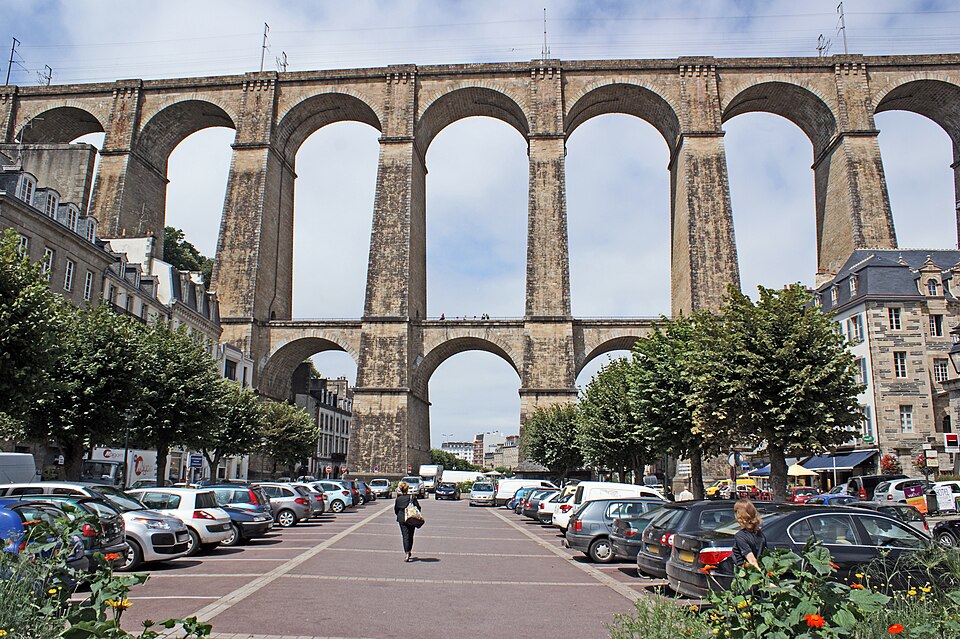
Morlaix Viaduct Engineering Grace Meets Breton Light
The first encounter arrives not with fanfare, but with revelation. As dawn breaks over the Morlaix River valley, the viaduct emerges from morning mist like a stone serpent woven through the landscape—its 78-meter-high arches casting long shadows across the water while trains glide silently overhead. The air carries the scent of wet stone and chestnut trees, mingling with the distant chime of church bells from the medieval town below. This isn't infrastructure as intrusion but engineering as poetry—a structure that honors the valley rather than dominating it. Built to solve a practical problem of connecting Paris to Brest, this 1863 masterpiece became something more: a testament to human ingenuity that respects natural beauty. In 2026, the Morlaix viaduct remains Europe's most elegant solution to mountainous terrain—not through brute force, but through architectural harmony.
Why Morlaix Viaduct Embodies Engineering Poetry
Morlaix viaduct represents more than technical achievement—it embodies a philosophical shift in how humanity interfaces with nature. Conceived during France's railway boom of the 1850s, this 535-meter structure was designed by engineer Joseph Locke to overcome the steep Morlaix valley without disrupting the historic town below. Completed in 1863 after five years of construction, its 27 limestone arches rise 78 meters above the river—the highest railway viaduct in France—yet maintain astonishing grace through precise proportions and local materials. Unlike industrial infrastructure elsewhere, the viaduct demonstrates that elegance and utility need not compete: its foundations occupy minimal valley floor space, its arches frame panoramic views rather than blocking them, and its stone was quarried locally to blend with the surrounding landscape. Crucially, it solved multiple problems simultaneously—connecting Brest to the national rail network while preserving Morlaix's medieval character and allowing river navigation to continue unimpeded. Today, as high-speed trains still cross its span every 30 minutes, the viaduct stands as a lesson in sustainable engineering that prioritizes harmony over hubris.
The Best Time to Experience Morlaix Viaduct
For optimal conditions—dramatic light on weathered stone, manageable crowds, and authentic maritime atmosphere—visit between May 20 and June 15 or September 12–28. Daytime temperatures average 16–22°C (61–72°F), creating ideal conditions for exploring viewpoints without summer's intensity. Mornings between 8:00–10:00 AM offer the most magical illumination: low-angle sun transforms the limestone arches to honey-gold while casting long shadows that accentuate the structure's geometric precision—a critical window before day-trippers arrive from Brest. September provides a second excellent opportunity: departing crowds, stable weather, and autumn light that intensifies the valley's emerald tones while mist rises from the river below. Avoid July 15–August 20 when temperatures exceed 25°C (77°F), making viewpoint paths uncomfortably warm and popular photography spots congested. Note that the viaduct remains operational year-round except during extreme weather—real-time conditions available at morlaix-tourisme.com.
Approximate Budget for a 7-Day Trip (2026)
Based on 2025 benchmarks adjusted for 4% inflation (per INSEE and Bretagne Tourism Board projections), a realistic mid-range budget for a Morlaix-focused itinerary requires €1,300–€1,800 per person excluding international flights. Accommodation ranges from €85–€125 nightly for family-run guesthouses in the historic center or boutique hotels near Place des Otages—essential for experiencing viaduct views after day-trippers depart. Daily food costs average €80–€95: breakfast at local crêperies (€6), lunch of fresh seafood at harbor taverns (€22–€28), and dinners featuring locally caught fish with Muscadet wine (€42–€52). Transportation is straightforward: Morlaix's compact size makes walking optimal, though regional trains connect to coastal sites like Roscoff.
- Accommodation: €85–€125 per night for a family-run guesthouse in Morlaix historic center or boutique hotel near Place des Otages—essential for experiencing viaduct views after day-trippers depart.
- Food: €80–€95 per day—breakfast at crêperie (€6), lunch of fresh mussels and cider at harbor tavern (€24–€30), dinner featuring grilled sea bass with Muscadet wine (€45–€55).
- Transportation: €28 for a 7-day regional bus pass. Train from Paris Montparnasse to Morlaix (4h15, €65–€95 one-way via SNCF Connect). Walking is optimal for viaduct exploration.
- Attractions: Viaduct viewpoints: free. Musée de Morlaix: €7. Boat tour of river valley: €22. Guided engineering history tour: €14. Allocate €95 total.
- Miscellaneous: €55 for artisanal Breton honey, locally woven woolens, or donations to the Viaduct Conservation Association.
Total Estimated Cost: €1,300–€1,800 for seven days, excluding international flights.
5 Essential Morlaix Viaduct Experiences
- Quai Dupleix Viewpoint: Stand beneath the central arches at 8:30 AM when morning light illuminates the limestone texture while trains cross overhead—experience the engineering marvel from its most dramatic perspective.
- Rue du Vaucelle Panorama: Climb this steep medieval street at 9:00 AM for the classic postcard view where the viaduct frames the entire valley—watch how the 27 arches create perfect symmetry against the river below.
- Viaduct Underpass Walk: Follow the riverside path directly beneath the structure at 10:00 AM—feel the vibration of passing trains while observing how the foundations integrate seamlessly with the natural rock formations.
- Place des Otages Sunset: Return to the main square at 7:30 PM when golden hour light transforms the viaduct into a silhouette against the western sky—capture the contrast between medieval town and industrial masterpiece.
- Guided Engineering Tour: Join the 11:00 AM English-language session to understand how Joseph Locke's 1858 design solved complex terrain challenges using only 19th-century technology and local limestone.
3 Hidden Gems Most Travelers Miss
- Chemin de la Gare Secret Path: Behind the train station, follow an unmarked footpath (look for weathered blue marker near kilometer post 1) to a secluded viewpoint where the viaduct appears to float above the valley—locals call it "le balcon des ingénieurs" (engineers' balcony).
- Jardin des Plantes Overlook: Accessible only during weekday mornings, this municipal garden offers an elevated perspective where the viaduct's arches align perfectly with the river's curve—request permission at the garden entrance for access.
- Atelier du Tailleur de Pierre: A stone-carving workshop hidden in a vaulted cellar at 9 Rue Brémond d'Ars—observe artisans restoring viaduct masonry using techniques unchanged since the 1860s (open Tuesday mornings by appointment: +33 2 98 62 11 34).
Cultural & Practical Tips
- Photography Safety: Never attempt drone flights—the viaduct sits beneath active railway airspace and within protected urban zones. Tripods permitted only on designated viewpoints before 10:00 AM.
- Railway Etiquette: Maintain safe distance from tracks—trains travel at 160 km/h with minimal warning. Never climb on viaduct structures; fines up to €1,500 apply for trespassing on operational railway property.
- Learn Key Phrases: "Demat" (hello in Breton), "Trugarez," and "Pegoul eus ar viaduc?" (Where is the viaduct?) show respect in this proudly Breton community.
- Weather Preparedness: Brittany's microclimate shifts rapidly—carry waterproof layers even in summer. Morning mist often burns off by noon, but afternoon showers can appear without warning.
- Support Preservation: Purchase souvenirs only from certified artisans in Place des Otages rather than souvenir shops—revenue funds the Viaduct Conservation Association's structural monitoring program.
Conclusion: Travel with Engineering Reverence, Not Just a Lens
Morlaix viaduct endures not as monument to human dominance, but as testament to thoughtful coexistence with landscape. As a conscious traveler, your presence should honor this philosophy: ascend slowly to appreciate the engineering that solved complex terrain without scarring it, support local stonemasons preserving ancestral techniques, and understand that your footsteps tread ground where 19th-century visionaries chose harmony over hubris. Sit quietly on the Quai Dupleix bench at dusk and watch the last train cross the arches—the same route that connected isolated Brittany to modern France while preserving its soul. By approaching the viaduct not as backdrop for achievement, but as teacher of balance, you help ensure such projects continue prioritizing dialogue with nature over domination—for those who recognize that the most advanced engineering doesn't conquer terrain, but converses with it.