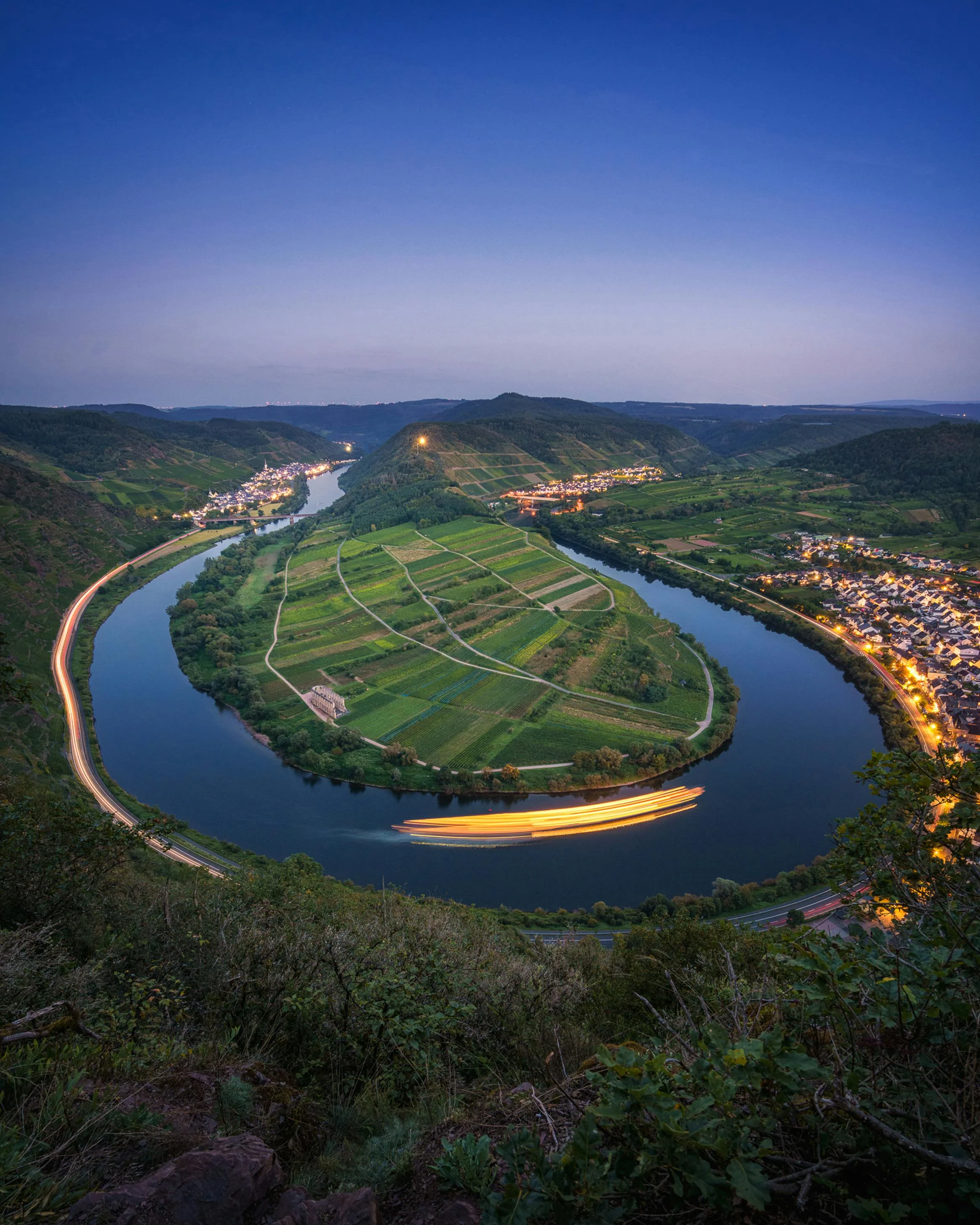
Moselle Valley Vineyards: Where Steep Slopes Meet River Curves
I stand on a terrace above Bernkastel-Kues just after nine in the morning. Rows of vines climb sharply upward, held by stone walls built centuries ago. The river loops far below, silver and still. Sunlight touches the tops of the slopes first, leaving the valley floor cool and green. A tractor crawls slowly along a narrow track high above. The air smells like damp earth and cut grass. It feels quiet and ancient. But by midday the main promenade fills tight. Tasting rooms near the square charge extra just for location. Some guided tours cost nearly double what you pay at a family estate five minutes away.
Why Moselle Valley Vineyards Matters
Wine has grown here for nearly two thousand years, planted first by Roman settlers who saw how these south-facing slopes caught and held warmth. Today roughly 8,300 hectares produce wine, and more than half of that is Riesling — the region’s signature grape. Many slopes sit at angles beyond 30 degrees; some reach 60 degrees. Machinery cannot work everywhere so people tend vines by hand, carrying baskets and tools up and down steep paths. This is one of the world’s most demanding wine-growing places. That difficulty brings real tension. Young people leave for easier work elsewhere. Some families struggle to keep small plots alive. The valley looks timeless from the river, but maintaining these terraces costs time and money that fewer people have. You see abandoned sections slowly turning back to scrub on less accessible ridges.
The Best Time to Experience Moselle Valley Vineyards
Late May through June brings fresh green foliage and mild days. Temperatures sit between 10°C and 21°C (50°F–70°F). Blossom covers fruit trees and the air feels soft. Crowds stay lighter than in summer. July and August see 15°C to 26°C (59°F–79°F). Wine festivals happen in village squares most weekends. Accommodation fills fast and prices rise accordingly. September and early October offer 11°C to 20°C (52°F–68°F). Harvest takes place then — the valley hums with real work. Vine leaves turn gold and amber. This is the most atmospheric time to visit. November through March runs 1°C to 7°C (34°F–45°F). Most small wineries and river boat services close. The valley stays quiet and cold, though Trier’s Roman sites remain open year round. Rain and mist can settle in for days any time from October onward. Pack layers and waterproof shoes.
Approximate Budget for a 7-Day Trip
Prices below are per person in euros, mid-range spending.
- Accommodation: River-view hotels cost €115–€240 per night. Guesthouses in smaller villages like Graach or Zeltingen run €70–€145. Apartments in towns slightly off the main route drop to €50–€100.
- Food & Drink: Expect €33–€55 daily. Restaurants right on the Bernkastel and Cochem waterfronts are overpriced. A meal there costs €12–€18 more per person than places two streets back. Local taverns serve hearty dishes with a glass of wine included for €14–€20.
- Transport: Train from Koblenz or Trier round trip €15–€28. Local bus along the valley €4–€7 per day. Bicycle rental €10–€15 daily. Car rental €35–€60 daily — worth it if you plan to visit smaller villages. Parking at popular spots €6–€10 daily.
- Attractions: Most vineyard walks free. Guided tasting €10–€25 per person depending on estate and number of wines. River cruise €14–€28. Reichsburg Castle entry €9–€11. Roman sites in Trier €5–€10 each.
- Miscellaneous: Bottles to take home average €12–€35. Shops in the main tourist centres mark up prices by 20 to 30 percent. Buy directly from the winery door for fair rates and better selection.
Total estimated for 7 days: €430–€970 per person. The tasting rooms right on Bernkastel’s market square charge premium rates. Walk five minutes up the lane and find equal quality at lower prices.
Essential Moselle Valley Vineyards Experiences
- Walk a terraced vineyard trail. Paths wind between rows, past low stone walls and ancient vines. You feel the steepness underfoot and see how the valley unfolds below. Skip it if you have bad knees or if rain makes stone steps slippery — sections get very steep.
- Taste Riesling at a family estate. Try wines from different single vineyard sites to taste how soil and slope change the flavour. Most producers welcome visitors; call or email ahead to confirm. Go midweek for the most personal welcome.
- Cycle the river path. The Mosel Radweg runs roughly 311 km total, flat and smooth along the water. You drift past villages, castle ruins, and endless rows of vines. Pick a short stretch between two towns rather than trying too much at once.
- Take a slow river cruise. Seeing the steep slopes from water gives a completely different perspective. Cruises run between Koblenz, Cochem, Bernkastel, and Trier. Pick an early morning sailing when light hits the slopes best.
- Visit during harvest season. Late September through early October. Grapes come in, presses run, and cellars smell like sweet fermenting juice. Many estates hold open days with food and music. Book ahead — popular events fill fast.
- Climb to a high viewpoint at sunset. Several trails lead to ridges overlooking broad bends. The light turns gold and the river glows. Bring a jacket — temperatures drop quickly once the sun dips behind the ridge.
Hidden Gems Most Travelers Miss
- The Calmont ridge path between Bremm and Ediger-Eller. Europe’s steepest vineyard slope sits here. The view down across the river bend feels breathtakingly vast. Few people walk the full route so it stays quiet.
- Piesport and its Roman wine press site. Ancient stone basins and foundations show winemaking from nearly two thousand years ago. The village sits tucked away and sees far fewer day visitors.
- Beilstein village between Cochem and Koblenz. Half-timbered houses cluster below a ruined castle. It feels like a scene from an older time and stays peaceful even in summer.
- The main market square tasting rooms in Bernkastel are overrated. They charge more and serve simpler wines. The best experiences happen in cellars tucked down narrow lanes or in villages just out of sight.
Cultural & Practical Tips
- Wear sturdy non-slip shoes. Vineyard paths mix stone, earth, and grass — they stay slippery long after rain.
- Do not walk into vineyards without permission. These are working farms, not public parks. Trespassing damages crops and creates friction.
- Book tastings ahead. Walk-ins work at larger places but small family estates often have limited staff. A quick message saves disappointment.
- Do not assume every village takes cards. Many family-run cellars and small taverns prefer cash.
- Respect quiet hours after 22:00. Sound carries clearly across water and narrow lanes. Loud groups draw complaints quickly.
- Pick up a reusable water bottle. Tap water stays clean and cold everywhere. Buying bottled water adds up fast and creates unnecessary waste.
Essential Visitor Information
Location & Access: Moselle Valley stretches between Trier and Koblenz, Rhineland-Palatinate, Germany. From Frankfurt 2 hours by car or train. From Luxembourg City 1 hour. From Cologne 2 hours. Three options: train to Koblenz or Trier then regional line to valley stations; car via B53 riverside road; river boat between major towns and villages.
Tickets & Booking: Most vineyard walks free. Tasting €10–€25 per person. Castle entry €9–€11. River cruise €14–€28. Booking ahead recommended for tastings and accommodation May through October.
Operating Hours: Valley paths open all year. Wineries generally 10:00–18:00, shorter hours winter, closed Mondays and Tuesdays off-season. Castles 10:00–17:00, reduced or closed January–February.
Visit Duration: Minimum two days to see core sights. Three to five days lets you explore slowly, taste at leisure, and take day trips to Trier or Koblenz.
Family Suitability: Welcomes children of all ages. Riverside cycle paths suit strollers well. Vineyard trails are steep and uneven — carry young children or use a sturdy carrier. High chairs available at most village taverns.
Timing: Best seasons May–June and September–October. Arrive before 10:00 for quiet slopes and easier parking.
Highlights: Terraced vineyard walks, family estate Riesling tastings, riverside cycling, harvest season atmosphere, Calmont ridge views.
Nearby & Day Trip: Trier Roman sites 45 minutes; Koblenz Deutsches Eck 1 hour; Burg Eltz 45 minutes; Luxembourg City 1.5 hours. All make comfortable half-day or full-day outings.
Conclusion: Travel with Patience, Not Just Speed
Moselle Valley Vineyards do not reveal their best side to people rushing from one photo spot to the next. The real magic lies in the work — the hands that tend these impossible slopes, the families who stay even when it gets hard. Slow down. Walk up one narrow path. Taste and listen to the story behind the wine. What is the thing you most look forward to tasting when you visit a place known for its food or drink?
Comments
Post a Comment